
Vera C. Rubin Observatory begins historic campaign to unravel the mysteries of the Universe in 10 years

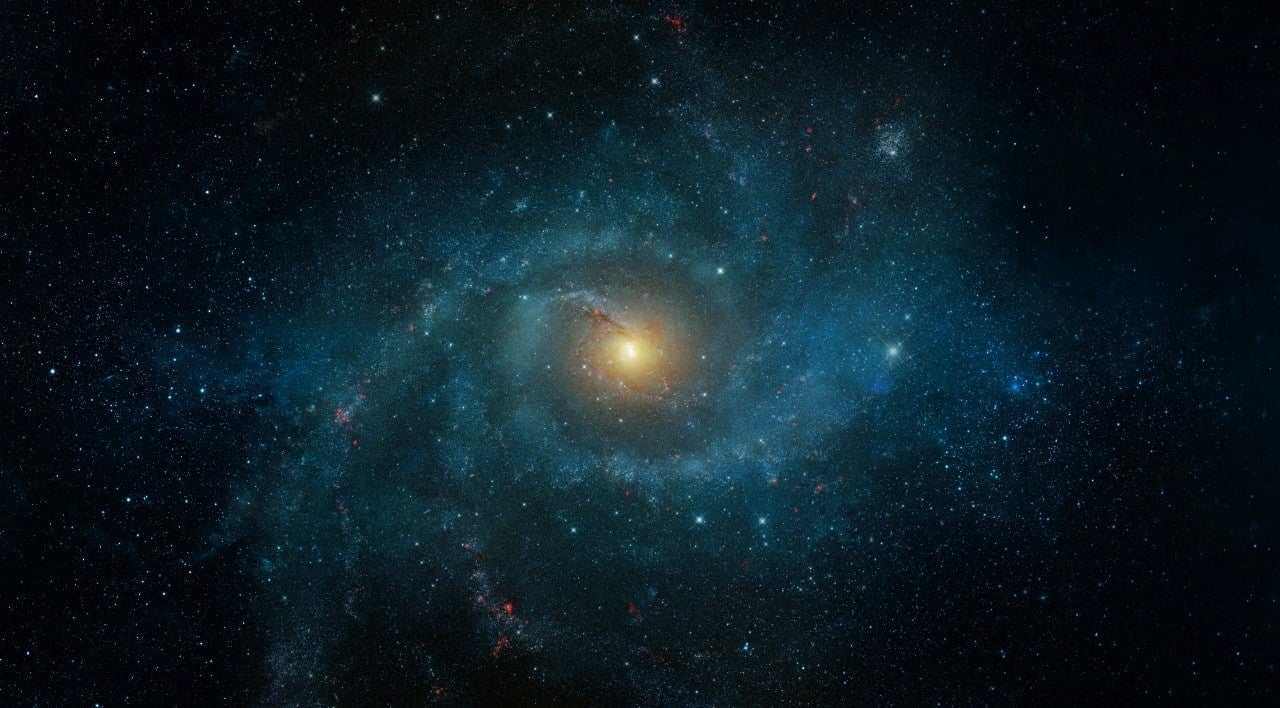
A decade-long cosmic observation campaign powered by a groundbreaking telescope has officially begun to explore the universe in a never-before-seen way.
This moment represents an exciting advance for the scientific community, promising to unravel long-unanswered celestial mysteries. In addition, audiences can look forward to a vast collection of spectacular images of the cosmos.
The Vera C. Rubin Observatory, located in Chile and jointly operated by the United States, has begun its landmark mission, which aims to compile the most comprehensive record of the universe ever produced. A June 30 press release described the project as the “biggest cosmic film ever made.”
Over the next decade, the Rubin Observatory will enable unprecedented understanding of space by revealing details about stars, supernovae, galaxies and other celestial phenomena in previously unattainable ways.
Below, we present essential information about the initiative and some of the first images captured by the Rubin Observatory.
Details that differentiate the Vera C. Rubin Observatory
Over the next ten years, the Vera C. Rubin Observatory will be intensely dedicated to investigating the enigmas of the cosmos with a level of precision never before seen.
The observatory’s name honors the renowned astronomer Vera Rubin, who became famous for her fundamental contribution to the discovery of evidence of dark matter, a pillar that drives the current quest to unravel the great mysteries of the universe. The structure houses a large telescope with an exclusive design and a colossal digital camera, comparable to the size of a car. With 3,200 megapixels, this is the largest camera in its category globally, and each record it captures covers a portion of the sky equivalent to 45 full moons, according to astronomers’ data.
The observatory is funded and operated by the National Science Foundation, in partnership with the Department of Energy’s Office of Science.
Strategic location of the Vera C. Rubin Observatory
The Vera C. Rubin Observatory was installed at the top of a mountainous elevation in northern Chile, at the base of the Andes Mountains. This location was chosen by astronomers because of its altitude and dry conditions, which guarantee clear skies ideal for cosmic observation.
Observatory’s ten-year mission begins to unravel the cosmos
More than a year after its first public display, the Vera C. Rubin Observatory formally began its decade-long mission. The objective is to observe and collect data from the night sky in the southern hemisphere, covering both the Milky Way and more distant regions.
The observatory’s central goal is to produce the “Legacy Survey of Space and Time”, a work that aims to be a “film” of the universe in ultra-wide and very high definition. This will be achieved by completely scanning the sky every few nights. With the daily capture of thousands of images, the observatory will build a time-lapse record, promising to be the “largest astronomical film of all time”, as indicated on its own page.
The telescope is expected to discover countless cosmic wonders, including thousands of uncatalogued asteroids, stellar supernova explosions and millions of distant galaxies. Additionally, the equipment could provide new clues about the enigmas of dark matter and dark energy.
“When we dedicate ourselves to deciphering the complex phenomena of energy and dark matter, our intention goes beyond simple star observation; it is an effort to understand the primordial laws that dictate our very existence,” said Darío Gil, undersecretary for science at the US Department of Energy, in an official statement.
Rubin Observatory reveals asteroids and other early discoveries
Despite having recently begun its main phase of operation, the Vera C. Rubin Observatory has demonstrated considerable activity since its public unveiling in June 2025.
In February, an alert system was implemented on the telescope, which allows researchers to receive notifications of significant discoveries in near real time, facilitating the rapid coordination of subsequent observations. Since then, millions of alerts have been generated and forwarded to automated systems that are responsible for classifying and categorizing each astronomical event and change detected in the night sky.
Recently, the Rubin Observatory identified more than 11,000 previously unseen asteroids, including 33 near-Earth objects and 380 trans-Neptunian objects orbiting beyond Neptune. This detection followed the discovery, in January, of a colossal asteroid, with dimensions approaching eight football fields, and which was confirmed as the large asteroid with the fastest rotation ever recorded.
In June, the Rubin Observatory released a vast cosmic representation, called an “ocean of stars”. The remarkable image displays millions of stars of diverse colors dotting the Milky Way, with a backdrop of countless galaxies.
This skyscape is one of many that scientists will have the opportunity to re-examine over the next decade, using Rubin’s resources to monitor significant transformations.





