
Europe records 1,300 deaths from extreme heat and breaks historical temperature records

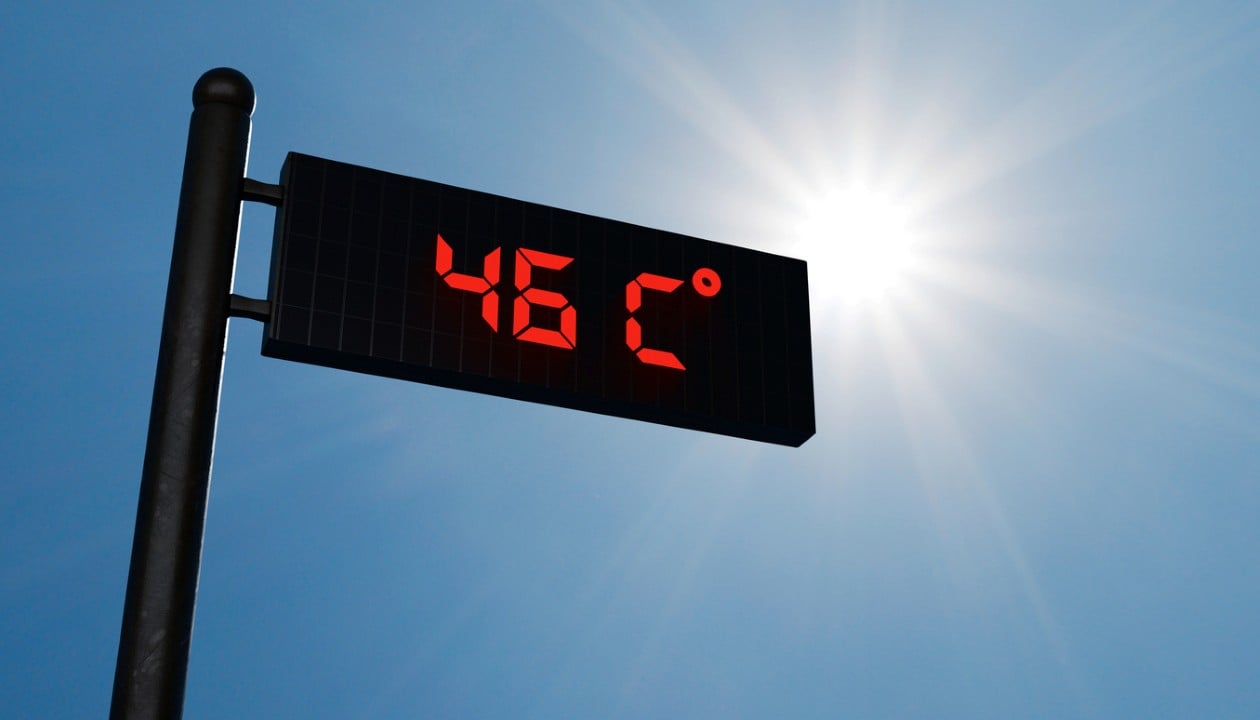
Europe is experiencing an unprecedented heat wave that has pulverized several historic temperature marks, generating serious consequences for public health, the environment, agricultural production, infrastructure and the economy. This adverse climate scenario is complemented by occurrences of intense storms and, in certain regions, the intensification of drought and the imminence of forest fires.
To mitigate impacts and safeguard lives, the World Meteorological Organization (WMO), together with its members and collaborators, is implementing early warnings and articulated action strategies. The objective is to manage health risks arising from heat and provide support for decisions that minimize economic and social losses.
According to projections by the Intergovernmental Panel on Climate Change (IPCC), the incidence, strength and persistence of extreme heat waves are expected to intensify. It is observed that the European continent is warming at a faster rate globally.
John Kennedy, head of climate information at the WMO, highlighted that “heat waves similar to this are a reflection of what is projected for a changing climate.” He detailed that, in the last five decades, Europe as a whole has recorded an increase of approximately two degrees Celsius since the historic heat wave of 1976. The European continent stands out as the fastest warming continent, and temperature peaks have grown in parallel.
In an update released on June 28, the director-general of the World Health Organization, Tedros Adhanom Ghebreyesus, reported that intense heat in Europe has already been linked to more than 1,300 excess deaths since June 21. It is estimated that more than 150 million individuals on the continent were impacted.
The climate phenomenon, which originated in the Iberian Peninsula, shows a tendency to expand to other areas.
Forecasts from Climate Watch, one of the WMO’s regional climate monitoring centers supervised by the Deutscher Wetterdienst (DWD), indicate the occurrence of rain until June 30 in vast areas of Western, Central, Southern Europe and the Balkans.
The data generated by the regional Climatic Observatory aims to provide guidance to the National Meteorological and Hydrological Services, which are the entities responsible for issuing alerts and warnings in their jurisdictions.
Impressive heat records in several European countries
The WMO Secretariat is compiling and constantly updating an overview of new temperature records. This compilation is a non-exhaustive overview, with preliminary data, and seeks to function as an informative resource for the press, elucidating the intensity of the extreme heat wave.
Germany saw temperature records break for three days in a row, reaching 41.7°C on June 28 in the eastern city of Coschen, close to the Polish border. In total, 252 weather stations documented the highest temperatures ever recorded. The German Meteorological Office (DWD) reported that, as of June 27, 46 stations in German territory recorded temperatures above 40°C.
Night temperature records were also broken. A weather station in eastern Saxony recorded a minimum temperature of 29.4°C overnight. DWD called the heat episode “historic.”
In Hungary, a new record of 40.7°C for the month of June was measured near the capital Budapest on June 28, with projections of intensifying heat. Poland also set a new temperature benchmark, provisionally at 40.5°C, as did the Czech Republic.
Austria reached a new record for June, recording 40.0°C in the city of Vienna, where the red alert persisted on June 29, according to information from Geosphere Austria.
The UK has surpassed the June temperature record for three consecutive days, with 37.3°C measured in southern England on June 25 — a preliminary figure subject to upward revision. The British Met Office reissued red warnings for extreme heat on June 26, marking the first time in the warning system’s history that this level has been triggered for three days in a row.
This comes just weeks after May also saw daily temperature records broken in the UK.
In the Netherlands, the national meteorological service, KNMI, issued an unprecedented red alert for extreme heat in eight provinces on June 26. In addition to several new station records, the country recorded a new national mark of 39.4°C for June.
Denmark documented a new all-time high of 37.0°C in two locations, surpassing a 1975 record, according to the Danish Meteorological Institute.
Switzerland set a new temperature record for June, with 39°C in the city of Basel, in the north of the country, according to Meteo-Suisse.
Copernicus Sentinel-3 satellite images, captured on June 23, 2026, at 09:54 UTC, showed high temperatures on the Earth’s surface in red, highlighting a heat wave affecting France and neighboring regions. These values indicate the temperature of the soil surface, not the air, and although correlated, they can present significant differences.
In France, June 24 was the hottest ever recorded in the country’s history, surpassing the previous day’s record, with a national average temperature of 30.0°C, above the previous peaks of July 2019 and August 2003, according to Metéo-France. Temperatures reached 43.8°C in the city of Pulluau, in western France. Overnight lows also set a new national record of 22°C.
A maximum level red alert has been issued for a record number of 58 departments, covering most of French territory. Authorities have warned of the high risk of forest fires amid the worsening drought. Highlighting the dangers of extreme heat, around 40 people reportedly drowned in France.
Spain experienced its hottest days of June on the 23rd and 24th. In several locations, temperatures exceeded 40°C, setting new records for the month, according to the State Meteorology Agency (AEMET). The city of Bilbao reached 42.7°C, the highest temperature ever recorded for June.
Critical impacts of extreme heat on public health
Often referred to as a “silent killer”, extreme heat has its real impact underreported in several nations. Model-based projections indicate that from 2000 to 2019, there were approximately 489,000 annual deaths attributed directly to heat-related conditions.
Thermal stress arises when the body absorbs an amount of heat greater than its capacity to dissipate it. Under normal circumstances, body temperature is regulated by perspiration and increased blood flow to the skin. However, in environments with heated air, and particularly humid air, these cooling processes become less effective, leading to an increase in the body’s core temperature.
“Continuous exposure for several days, especially on nights with high temperatures, causes the body to start the next day already in a state of stress”, explained Lachlan McIver, Health Consultant at the Joint WHO-WMO Office of Climate and Health. Although the elderly, children, pregnant women, external workers and people living on the streets or with chronic illnesses are among the most susceptible, any individual can be affected by heat stress in prolonged extreme conditions.
The concern lies not only in the high daytime temperatures, but also in the lows recorded at night. In regions such as Europe and parts of Asia, the concept of “tropical night” has become popular, describing nighttime periods when thermometers do not drop below 20°C (68°F). During periods of intense heat, these nights become increasingly frequent, especially in urban centers.
Armel Castellan, Technical Consultant for Extreme Heat Services at the Joint WHO-WMO Climate and Health Office, details that nighttime is the ideal time for the body to recover. During sleep, the core body temperature decreases, the cardiovascular system relaxes and the stress accumulated throughout the hot day begins to dissipate. However, when the nights remain hot, this essential recovery is compromised, and the body remains in a state of continuous tension.
“For this reason, when analyzing the health effects of a heat wave, minimum temperatures may be more indicative than the maximum afternoon peak,” the expert emphasized. He illustrated the difference: a day that reaches 38°C but drops to 18°C at night differs significantly from a day with 36°C that remains above 25°C overnight. The second scenario presents a substantially greater health risk.
During periods of extreme heat, the urban heat island phenomenon intensifies the thermal sensation by multiple degrees, accentuating the existing danger. A temperature of 35°C recorded in a region can convert into 38°C or even 40°C on densely built urban roads, devoid of shade or green spaces. Furthermore, the nights, which should provide some relief, remain warmer in these areas compared to the surrounding regions.
Global response and initiatives of the World Meteorological Organization
The extreme heat scenario served as the context for a special statement by the UN Secretary-General, António Guterres, delivered on June 23 during London Climate Week.
“We have witnessed the eleven hottest years ever documented. Climate disasters are becoming increasingly frequent, devastating and costly,” declared Guterres. “The World Meteorological Organization has warned that the worst is yet to come. El Niño is not a mere threat; it promises to disrupt everything, intensify the heat, compromise water and food supply systems and have a greater impact on the most vulnerable groups.”
An update on the El Niño phenomenon, published by the WMO in June, indicated that its rapid development will influence climate and meteorological patterns in the coming months. Historically, the effects of El Niño tend to be more pronounced in other parts of the globe than on the European continent.
The WMO is among the ten specialized UN entities that endorse the Call to Action on Extreme Heat, launched by the United Nations Secretary-General. This initiative aims to strengthen global cooperation and minimize the effects of heat through scientific improvement, the implementation of early warning systems, the expansion of public awareness and the coordination of actions.
With the Early Warnings for All initiative, the World Meteorological Organization and its members work to ensure that vulnerable populations receive timely warnings and preventive guidance in advance of the arrival of dangerous heat waves.
In collaboration, the WMO and the World Health Organization (WHO) created health-focused guidelines and early warning systems for extreme heat. These tools are fundamental to Heat Action Plans, strengthening governance structures and assisting governments, health agencies and communities in preparing for and responding to these events. The Joint WHO-WMO Program on Climate and Health ensures that climate, meteorological and environmental data are available in an accessible and useful way for public health decisions.
Leading the Global Health and Heat Information Network (GHHIN), WMO and other United Nations partners intensify efforts to strengthen governance in situations of extreme heat. The aim is to equip national authorities and local governments with the essential technical guidance and practical tools so that they can prepare and respond effectively to this growing risk.



