
Fernando Alonso fires shots at new F1 cars: Less power than F2 doesn’t need talent

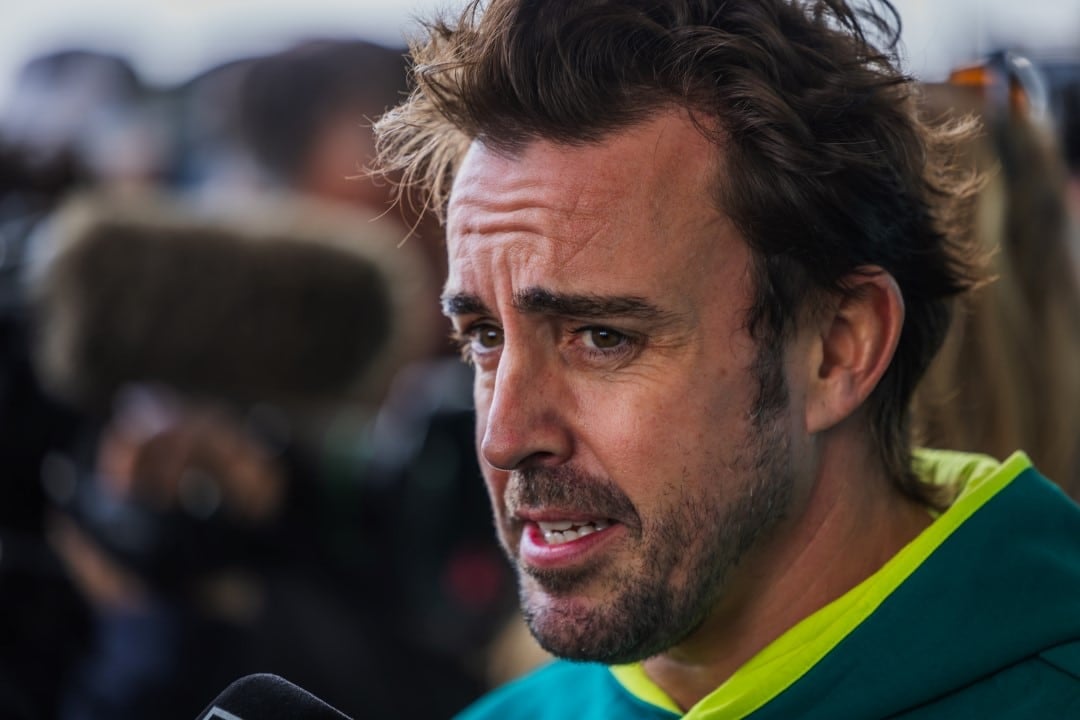
Experienced driver Fernando Alonso once again expressed his discontent with the rules governing Formula 1 vehicles in 2026. After the British stage of the championship, the two-time world champion stated that the instability in the power delivery of F1 cars makes them less powerful than those in Formula 2, suggesting that overtaking depends less on the skill of the drivers today.
In an outburst after the race, Alonso questioned the purpose of the sport, highlighting what he observed in replays of the sprint race. He emphasized that the ease with which some drivers overtake, driven solely by the advantage of the battery, diminishes the value of skill. For the competitor, current mechanics eliminate the need for complex maneuvers, precise braking or calculated risks, transforming overtaking into a simple button press for those with a more efficient engine. This dynamic, according to him, distorts the essence of talent and human intervention in the dispute.
Alonso’s recent statements are nothing new, as the Aston Martin racer has consistently criticized the features of this year’s cars. Electrical energy management and recovery have become dominant aspects of vehicle performance. Previously, during the pre-season, the driver even made fun of the situation, stating that even a team cook could drive the cars under the current conditions.
At the Japanese Grand Prix, the third race of the 2026 season, the Spaniard had already expressed his dissatisfaction. On that occasion, he highlighted that the driver’s individual competence was overshadowed by the constant concern about recharging the car’s battery, an essential measure to avoid sudden loss of energy during the race.
From 2026 onwards, Formula 1’s new power units will incorporate a significant portion of electrical energy generation, corresponding to 43% of the vehicle’s total power, while the combustion engine accounts for 47%. This configuration imposed on the drivers the challenge of balancing competitive driving with the need to actively recover energy through specific techniques, generating a wide debate and much criticism in the paddock.
How Formula 1 rules were changed after intense criticism
Faced with widespread disapproval, the International Automobile Federation (FIA) implemented several changes to the regulations, which came into effect after the Miami Grand Prix in May. The federation also announced that, by the year 2028, there will be a progressive increase in the power of combustion engines.
However, as had already been predicted by Fernando Alonso, the energy issue resurfaced with force at the recent British Grand Prix. Many drivers expressed concern in the days leading up to the dispute at the Silverstone Circuit. In Saturday’s sprint race, in particular, there was an excessive number of overtaking and counterattacks due to the abrupt reduction of energy in the engines.
Alonso himself, who warned about the situation at Silverstone, projects that the Belgian Grand Prix, to be held next week, will face similar dilemmas.
“The Silverstone and Spa-Francorchamps circuits are extremely demanding in terms of energy,” explained the driver. He highlighted the impossibility of using maximum power on the straights in Spa, warning that full use between turns 1 and 5 would compromise the remainder of the lap. The strategy involves saving to activate the power from Turn 14 to the Chicane. However, even with ideal use on these two straights, there is a considerable stretch without full use. “We cannot ignore that, this year, the power is significantly lower than the previous year and even lower than in Formula 2”, he added.
Alonso’s observation about the power disparity in relation to Formula 2 echoes a notorious complaint he made nine years ago. In 2015, while defending McLaren, equipped at the time with a Honda engine – the same manufacturer that today supplies Aston Martin and faces similar challenges – the two-time champion made an iconic outburst over the team radio, expressing his frustration with the lack of battery power. This repetition of complaints at different times suggests a recurring problem in the relationship between regulation and performance.
At the time, his exclamation of “GP2 engine! GP2 engine!” was recorded. The GP2 series was, at the time, the main category for access to Formula 1, and is now known as Formula 2.





