


Archaeological excavations in Israel, led by the Israel Antiquities Authority (IAA) and the University of Haifa, continue to unearth traces of ancient history. This year, several important discoveries have come to light, from 1,500-year-old bronze scales to tunnels beneath Jerusalem’s ancient walls. Such findings reiterate the region’s unique position as a crossroads of civilizations over millennia, explaining the constant revelation of its multifaceted past.
Yoram Elgrabli, Tourism Commissioner for North America at the Israel Ministry of Tourism, emphasizes the country’s uniqueness. He highlights that few nations provide the chance to see history unfold in real time, highlighting the deep local cultural and historical richness. Elgrabli asserts that each new discovery adds chapters to the millennia-old narrative, from the first signs of human life to the religions and societies that shaped the contemporary world. Visiting Israel allows for a deep connection with events and cultures that defined humanity.
Ancient Roman statues emerge from excavation near Binyamina
During excavation work for a high-speed coastal rail project, the Israel Antiquities Authority (IAA) revealed two marble statues dating back to the Roman Empire. The sculptures, which depict Greco-Roman historical figures, were buried in a wine collection pit from an ancient Roman-Byzantine press. One of the pieces has an inscription in Greek with the name “Lycurgus”. These works will be presented at the archaeological conference “Center VII – The Domestic House”, at the MUZA Museum – Eretz Israel, in Tel Aviv, and will be on display to the public in the summer months.
Rare 1,500-year-old scale item found in Susya
An unusual bronze scale from the late Roman-Byzantine period was located in a communal excavation in the residential and commercial area of ancient Susya. The discovery, the result of collaboration between the Israel Antiquities Authority (IAA) and regional partners, occurred when an elementary school student and his father spotted the artifact. The object is part of a portable suspended scale known as a trutina, a common instrument in commerce in ancient Israel used to weigh items. The researchers indicate that the piece, with perforations for suspension ropes, offers important data about the economy and measurement methods of the time.
Hellenistic sling bullet with defiant message appears near the Sea of Galilee
Archaeologists from the University of Haifa have unearthed a rare slingshot from the Hellenistic period near the ancient city of Hippos. The artifact bears a Greek inscription, “Learn”, interpreted as a possible sarcastic or mocking message directed at an enemy. Experts point out that, in the Hellenistic era, sling bullets were produced on a large scale, using simple lead molds for quick manufacturing, even in wartime contexts. The find reveals psychological aspects of ancient conflicts and the effectiveness of slings as long-range weapons, possibly used by the defenders of Hippos.
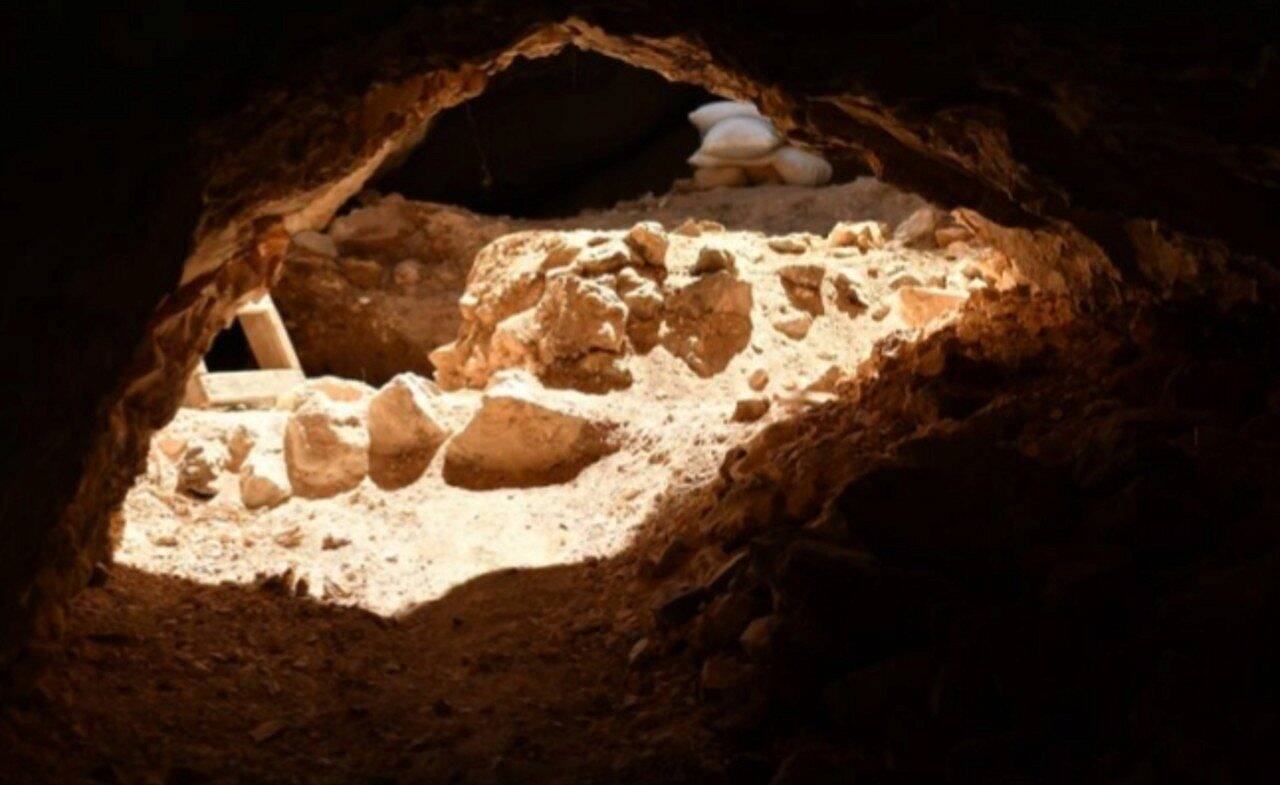
Discovery in Haifa reveals prehistoric cave 400,000 years old
A prehistoric cave, estimated to be between 400,000 and 250,000 years old, was recently discovered on the outskirts of the city of Fureidis, south of Haifa. Exploration of the site revealed a true time capsule, which had remained untouched for hundreds of thousands of years. This period dates back to the Acheulo-Yabrudian culture, immediately preceding the rise of modern humans in the world. The archaeological site is considered one of the most significant of its kind, offering new insights into early human life at a crucial stage in humanity’s evolution.
Extensive underground tunnels revealed beneath Jerusalem
A new excavation led by the Israel Antiquities Authority (IAA) has resulted in the discovery of monumental ancient tunnels located near Kibbutz Ramat Rachel in Jerusalem. Researchers are still seeking clarity on the exact purpose of these passages, which measure approximately 4.8 by 3 meters. The most accepted theory is that they were used to access a layer of chalk, used to extract construction stones or produce lime. The presence of a ventilation shaft in the ceiling and extraction debris on the floor support this hypothesis, but the definitive interpretation is still under study.
1,300-year-old marble bowl found in Golan Heights
In a cathedral located in the Golan Heights, a team of archaeologists from the University of Haifa located a 1,300-year-old marble bowl. Experts suggest that the container was used as an offering table by the first Christian settlers who inhabited the region of Israel.





