

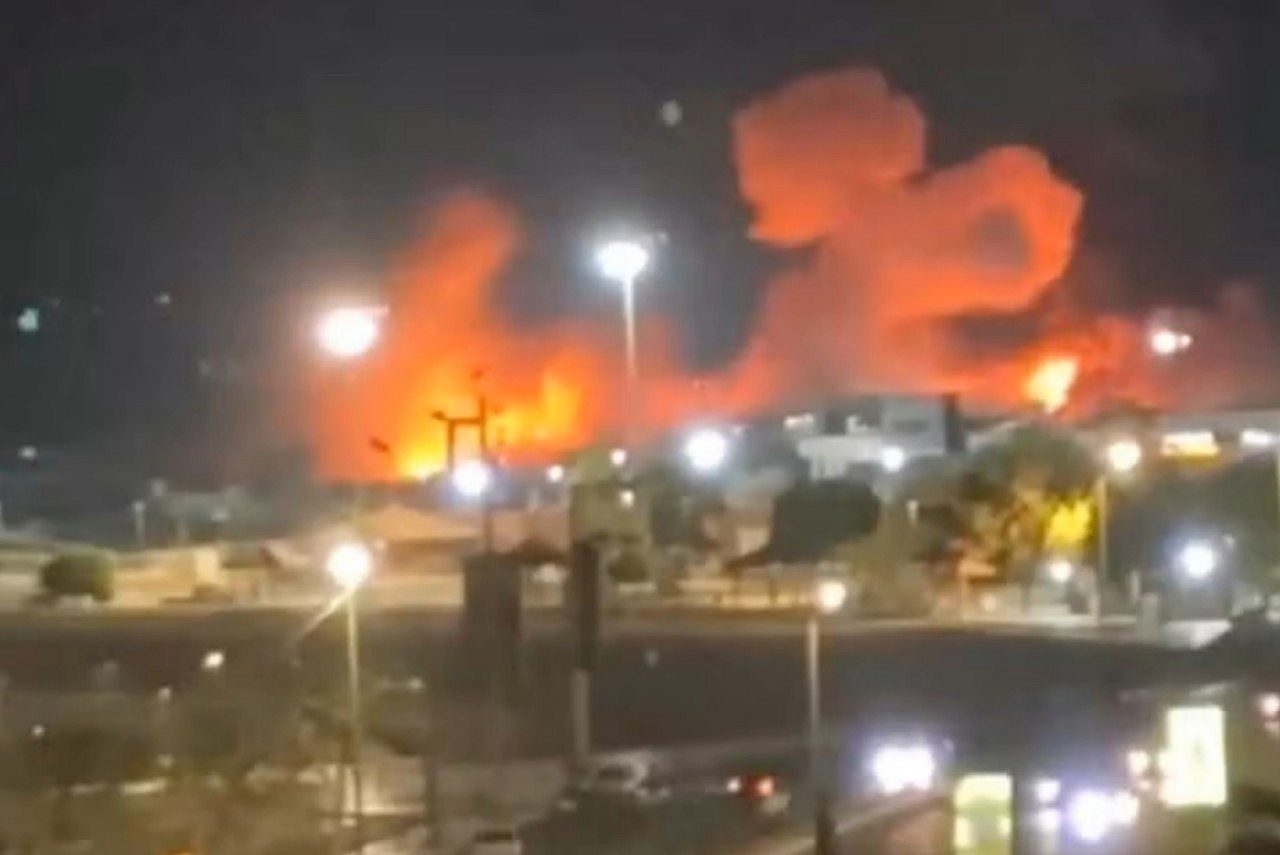
The escalation of tension in the Middle East reached a new level this Wednesday, July 8, with a series of military attacks conducted by the United States against Iranian territory. The offensive, officially confirmed by the Central Command of the American Armed Forces (Centcom), marks the definitive collapse of a recent non-aggression pact established between the two nations. Intense explosions were recorded along the Asian country’s extensive coastline, signaling a drastic and immediate change in Washington’s foreign policy towards the region.
American military operation focuses on the security of global maritime traffic
According to the statement issued by senior US military officials, the new wave of bombings follows a direct order from the commander-in-chief. The central objective of the tactical mission is to neutralize Tehran’s military capacity and prevent the country from continuing to threaten free navigation in the Strait of Hormuz. This maritime passage is considered one of the most critical logistical bottlenecks on the planet, through which a significant portion of all oil consumed globally passes daily.

The American government justified the war operation as a necessary containment and accountability measure. The White House argues that Iranian forces committed completely unjustified acts of aggression against commercial vessels and civilian crews using the sea route in recent days. Protecting these vital commercial thoroughfares has become the primary public justification for the use of lethal force on the Persian Gulf coast.
International security experts point out that control of the Strait of Hormuz has always represented a geopolitical asset for the Iranian government in times of diplomatic crisis. By targeting an adversary’s coastal infrastructure, the U.S. military attempts to send a clear message of deterrence. The strategy seeks to ensure that the flow of hydrocarbons to Western and Asian markets does not suffer abrupt interruptions, which would inevitably destabilize the global economy and inflate energy prices.
Impact of missiles and destruction of civil and military infrastructure
The repercussions of the armed incursion were immediately felt in several Iranian provinces. Local state media reports confirmed that airspace was violated by surprise and detonations echoed in strategic cities such as Jask, Bushehr, Bandar Abbas and Sirik, as well as the island of Abu Musa. The geographic scope of the attacks demonstrates broad coordination on the part of American intelligence to hit multiple targets simultaneously.
Tehran’s official government television dedicated its programming to showing the damage caused by projectiles fired by United States forces. Local authorities reported with outrage that the damage was not limited to strictly military installations. The offensive also ended up reaching areas of civil use, compromising essential services in different parts of the national territory and generating panic among residents.
- Shrapnel from heavy weapons hit the premises of a hospital complex in the city of Chabahar, putting patients at risk.
- A maritime traffic control tower suffered severe structural damage, leaving the entire port region without electricity supply.
- The airport located in Iranshahr, in the southern part of the country, was the target of bombings that resulted in the tragic death of a firefighter who was on duty.
- A railway bridge crucial for the logistical transport of cargo and passengers in northern Iranian territory ended up being attacked and rendered unusable.
Faced with the scenario of widespread destruction, Iran’s military leadership raised its alert level to the highest level. Media outlets linked to the State reported that the country’s Armed Forces have already completed their preparations to launch large-scale retaliation. The target of this imminent counteroffensive would be the military bases that the United States maintains spread across several countries in the Middle East, which has the potential to drag neighboring nations into the center of an unprecedented regional conflict.
End of diplomacy and direct threats from the American president
The military action occurred just hours after a blunt statement by Donald Trump, which publicly buried any hope of maintaining peace. The President of the United States spoke to journalists in the American capital and declared that the diplomatic agreement reached previously was officially closed. During the press conference, he adopted an extremely bellicose tone and promised that the night would be marked by heavy attacks against Asian opponents.
In a show of strength before the press, the Republican leader detailed how far the Armed Forces could go if the situation got out of control. He warned that, if there was a tactical need, the American military would have prior authorization to destroy Iran’s electricity distribution network and water treatment plants. Trump stressed, however, that this was not his administration’s initial desire, but rather an ace up his sleeve.
The immediate justification for breaking the peace agreement, which had been announced with great optimism in June, was a maritime incident that occurred on Tuesday, July 7th. Donald Trump confirmed that the hail of missiles was a direct and proportionate retaliation for the Iranian bombing of commercial ships. The head of state used his social media to warn that any new attack on vessels will result in an even more devastating American response. Cities such as Sirik and Bandar Abbas had already been targeted by the Pentagon in previous days, showing that the truce was extremely fragile from the beginning.
Tehran’s reaction and the escalation of rhetoric between governments
The clash was not limited to the physical battlefield, quickly extending to the diplomatic and digital arena. Abbas Araghchi, Iran’s foreign minister, took the lead in the country’s institutional response. Using platform
Araghchi made a point of extolling the resilience and long history of his people when responding to the derogatory comments made by the American president. The diplomat highlighted that the use of offensive language to refer to a civilized and courageous nation does not in any way diminish the greatness of Iran. He emphasized that the local population is recognized worldwide for its ancient culture, civility and unshakable moral values, drawing a purposeful contrast with the stance adopted by the White House.
The exchange of barbs reached its peak when the Iranian minister declared that the country would not respond to vulgarity with more vulgarity, but rather with actions based on courage and bravery. This speech was a direct response to the heavy adjectives used by Donald Trump, who had classified Iranian leaders as “scum” and “crazy”. The president of the United States even stated that he had no interest in negotiating with people he considered sick, cruel and violent, closing the doors to dialogue once and for all and paving the way for a period of extreme military instability.





