
Venus Aerospace secures $90 million to advance hypersonic rocket engine

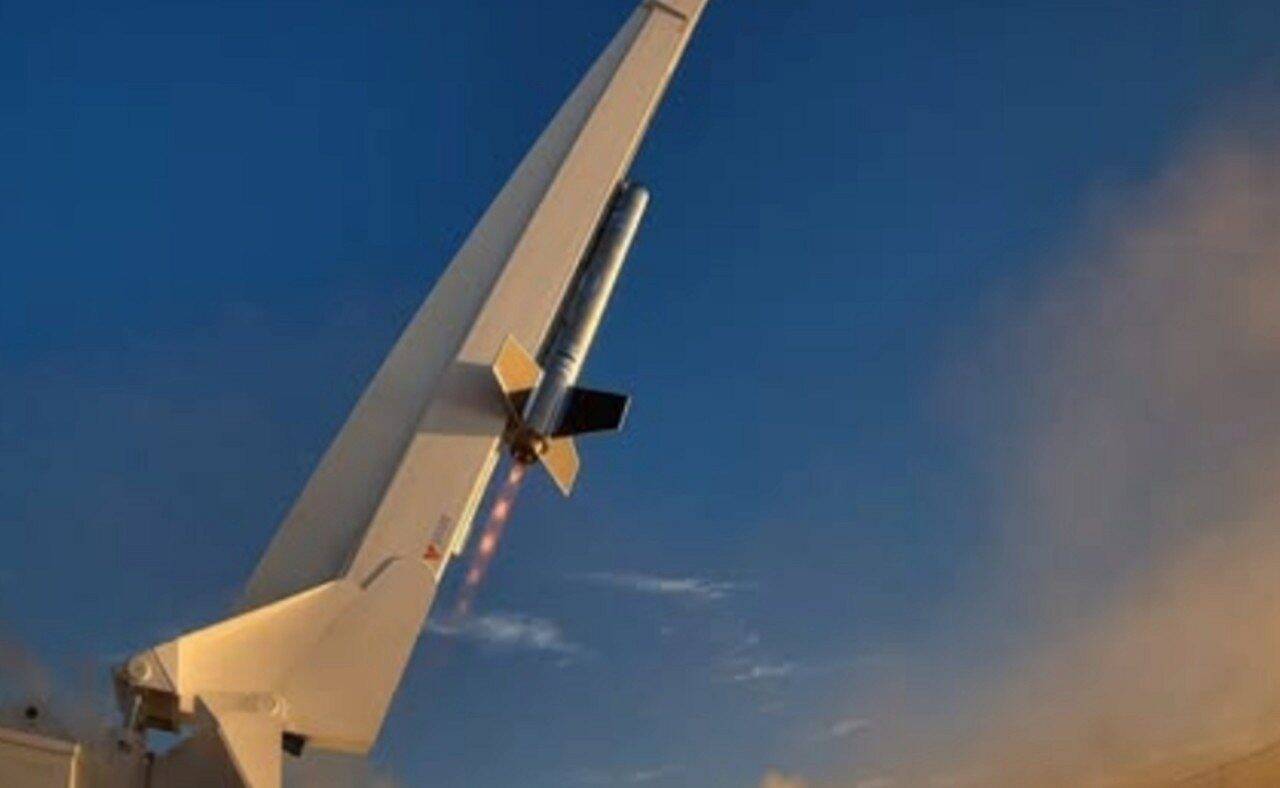
The company Venus Aerospace, which seeks innovations in propulsion, attracted market attention after advancing in the development of its Rotary Detonation Rocket Engine (RDRE). This model is recognized for its high efficiency for aerospace missions.
Founded in 2020 by Sassie Duggleby, CEO, and Andrew Duggleby, CTO, the company initially aimed to create environmentally friendly hypersonic jets for passenger transport. However, the successful demonstration of the engine last year redirected the company’s objectives.
According to Sassie Duggleby, the global reaction after the test flight in May was one of surprise and commercial interest. The CEO explained that the demand for her functional RDRE was not the team’s initial expectation.
Currently, Venus Aerospace’s priority is on improving hypersonic weapons and creating propellants that replace solid rocket motors in missiles. In addition, the company develops high-speed space vehicles, meeting growing interest in the military.
Andrew Duggleby highlighted in a statement that Venus Aerospace’s propulsion technology integrates efficiency, controllability, reusability and manufacturing simplicity. The CTO highlighted the commitment to transform technological advancement into safe operating systems for defense and space applications.
Today, Venus revealed the completion of a Series B funding round, raising $90 million. The financial contribution aims to push the company towards its objectives, paying for tests and the development of specialized vehicles in collaboration with potential buyers. Mercury Fund led the round, which also included investments from Lockheed Martin Ventures, MESH, PEAK6, Draper Associates, Starboard Star Venture Capital and Green Sands Equity.
The challenge of rotary detonation propulsion
The Rotary Detonation Rocket Engine (RDRE) was theoretically conceived in the mid-20th century as a more effective alternative for launching rockets. Unlike conventional systems that burn propellants in a chamber, RDRE generates a continuous wave of supersonic combustion that moves in a circular loop. Although it promised lower fuel consumption, the complexity of its physics made its control and understanding quite challenging for decades, especially due to the difficulty in controlling the detonation wave and managing the extreme heat.
Technological advances drive the RDRE engine
This scenario began to change in recent years, driven by innovations such as 3D printing and more advanced computer simulations. The first functional test of RDRE was recorded in 2020 at the University of Central Florida. In 2021, the Japanese space agency JAXA performed an engine launch for a few seconds into space, and NASA demonstrated an RDRE on the ground in 2022. Venus plans for its 2025 test to be the first to launch an RDRE rocket into space.
Sassie Duggleby explained that Venus’ initial objective was to develop an unprecedented rocket engine, capable of generating greater heat, more thrust and efficiency, without suffering meltdown. The CEO stated that much of the last four years of work was dedicated to solving the challenge of the engine’s thermal integrity, a problem that, according to her, has been overcome.
Next steps and the new testing platform in Texas
This year, the Texas Space Commission awarded the company funding to build a new, expanded test platform. This feature is crucial to Venus’ ambitions, given that the maximum engine operating time in 600 previous tests was 32 seconds. However, to meet the demands of future customers, the thruster will need to operate continuously for a period of between six and fifteen minutes.



