
Space agency deciphers chemical secrets of comet 3I/Atlas in new phase of cosmic studies

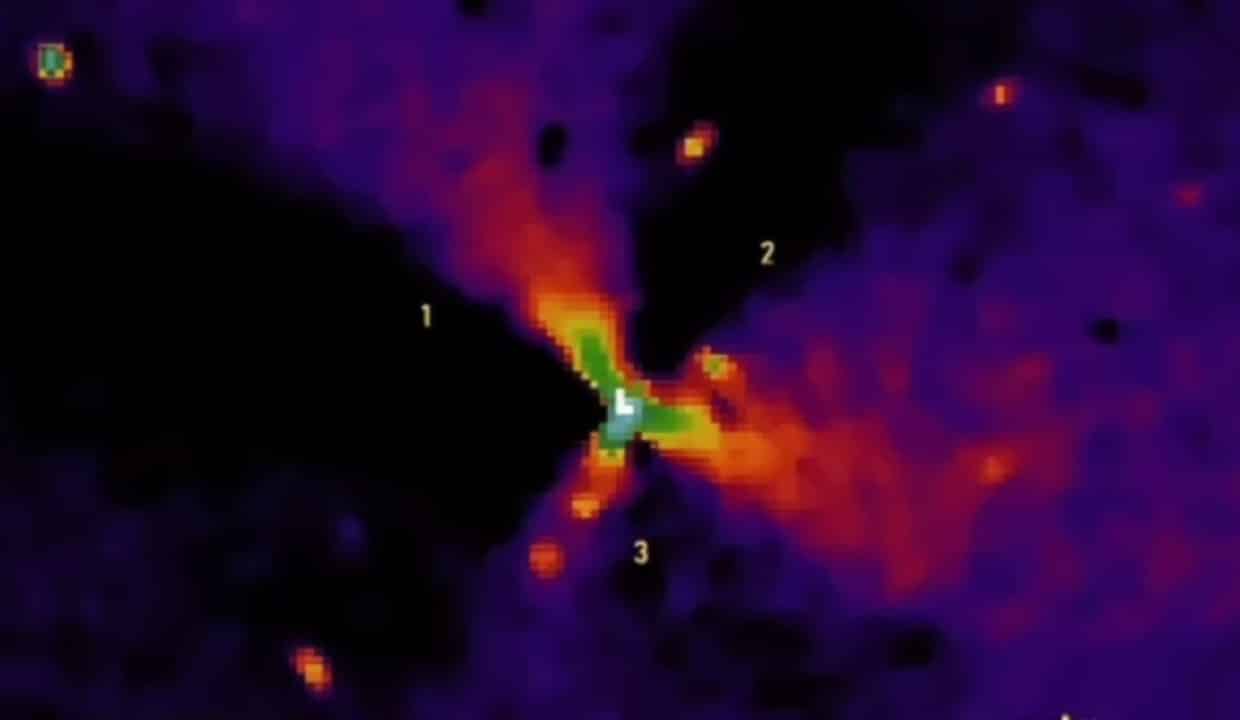
The celestial body 3I/Atlas, a mysterious traveler from distant stellar neighborhoods, maintains its position as one of the priority targets of global astronomy in the year 2026. Since the object crossed our radars, the United States space agency (NASA) has taken the forefront of research to map its exclusive properties, giving humanity an unprecedented view into the chemistry of systems outside our domain. The constant scans and cross-referencing of unprecedented information provide evidence that forces theorists to rewrite the traditional primers on how planets are born and how cosmic dust spreads across the galaxy.
The path of this intruder through our space backyard has been monitored by a veritable technological arsenal, which ranges from gigantic lenses fixed to the Earth to state-of-the-art satellites in orbit. With each telemetry update, experts adjust calculations of its route, acceleration and, most importantly, its chemical and structural identity. Unlike the icy stars that inhabit the Oort Cloud — located up to 100,000 astronomical units from the Sun — or the Kuiper Belt, this piece of rock and ice acts like an ancient flash drive, bringing intact records of an unexplored corner of the Milky Way.

First records confirm the route of a visitor from outside our system
The initial capture of 3I/Atlas marked a historic chapter for space science, validating in practice that blocks of matter navigate freely between different suns. The hyperbolic design of its orbit, traced with mathematical rigor by American supercomputers and foreign partners, swept away any hypothesis that it was a local neighbor. This episode highlighted the firepower of current technology in catching and following errant bodies that, until a few decades ago, existed only on the blackboards of theoretical physicists.
The scarcity of this type of event makes the star a perfect testing ground for researchers. While the icy bodies orbiting our Sun were born from the same primordial soup that spawned Earth, this traveler boasts chemical DNA shaped in the light of another star. This discrepancy authorizes a direct parallel that helps to unravel the differences in the mixtures of gases and dust that form other worlds, providing answers about the multiplicity of planetary arrangements spread across the universe.
Gravitational dynamics that expelled the celestial body from its mother star
The most striking feature of this body is precisely its alien birth certificate. The speed with which it tears through the vacuum and the angle of its approach indicate that it was thrown from its original cradle, possibly after a violent gravitational push caused by gas giants or by the approach of a neighboring star, beginning an exile in darkness. This solitary journey, which lasted countless millennia, culminated in the invasion of our territory, generating a golden chance for science.
Orbital mapping confirmed that the star does not suffer enough magnetic attraction from the Sun to be trapped here, the greatest proof of its foreign origin. In direct contrast to Oumuamua, which opened the list of known interstellar interlopers, this new target displays a bright trail of gas and dust, a behavior typical of traditional comets, indicating a nucleus packed with volatile elements that evaporate when they feel the solar heat.
This disparity in the level of evaporation between the two visitors shows that the family of galactic nomads has an immense variety of backgrounds and ages. If the predecessor resembled a dry stone cigar, the current visitor wears the classic outfit of a comet, even if he carries a passport from another neighborhood. Understanding this plurality is a mandatory step in mapping the amount of debris that wanders aimlessly through deep space.
Joint space telescope effort led by government agencies
The North American space institution took the lead when it came to organizing the target-oriented cosmic espionage schedule. Activating a complex system of lenses spread across the continents and its own satellites, the entity managed to stack terabytes of records, encompassing clear photographs and readings of light emitted by the nucleus and the glowing trail. This total encirclement tactic is the key to drawing the full anatomy of the invader.
Legendary equipment like Hubble and the James Webb Super Machine (JWST) proved their invaluable value in this hunt. The JWST, operating with its infrared heat sensors, delivered crucial results by scrutinizing the types of ice and carbon chains present in the cloud that surrounds the rock, elements almost invisible to the eyes of ordinary telescopes. The captures generated a chemical barcode never seen in the history of space exploration.
Adding strength to the machines in orbit, complexes fixed to the Earth’s ground, such as the Very Large Telescope (VLT) in the Chilean desert and the W.M. Keck Observatory at the top of Hawaii, delivered essential measurements. The crossing of captures made by these different technological matrices ensures that academics are able to cross angles, confirm suspicions and assemble a three-dimensional model of the object, circumventing the restrictions that any lens would have if it worked alone.
Teamwork between nations formed the backbone of this endeavor. Researchers located in laboratories in dozens of countries share spreadsheets and theories in real time, shortening the path to conclusions. This global effort proves the weight that the star carries for the evolution of human knowledge, breaking down political and bureaucratic barriers in the name of the search for answers about the mechanics of the universe.
Unexpected chemical elements reveal the composition of the frozen core
The breakdown of the light reflected by the body revealed a curious chemical recipe, which differs in several places from the ice rocks that orbit our Sun. The detection of gases and dust in non-standard quantities indicates that the stellar furnace where it was forged operated under different rules. Such anomalies deliver the heat levels, the force of gravity and the ingredients available in the solar system that ejected it on a platter.
The laboratories confirmed the signature of routine compounds in this type of star, including:
- Water in solid state;
- Carbon monoxide and dioxide;
- Methanol and other volatile substances.
However, the exact dosage of these materials, coupled with the discovery of highly elaborate carbon chains, left experts on alert. As these structures are considered the fundamental building blocks of biology, finding them in a foreign piece of rock reignites the debate about how easily life can sprout in other corners of the Milky Way.
Technical obstacles to tracking a target traveling at extreme speed
Analyzing a target that crosses space at speeds that often exceed 80,000 kilometers per hour requires unprecedented technological gymnastics. The short time in which it remained visible in sunlight prompted immediate reactions from the ground teams. To make matters worse, the colossal distance and shifting brightness, masked by sudden jets of dust, made it difficult to capture clean images. To overcome the situation, engineers used virtual simulators that anticipated the movements of the rock, adjusting the focus of the lenses to the millimeter. Cleaning up visual noise required robust programming codes capable of separating the comet’s actual brightness from background light pollution, ensuring that the final reports were shielded from misinterpretation.
The impact of discoveries on validating theories about new worlds
The scientific weight of this lightning pass lies in the chance to collect a virtual sample of an alien environment without having to send a probe there. With this data in hand, academics are able to test theories about how dust coalesces to form worlds in other galaxies, expanding understanding of the scenarios that allow the emergence of habitable spheres and, perhaps, living organisms far beyond our visual range.



