
Alopecia areata: high cost and lack of access to modern treatment affect the mental health of patients

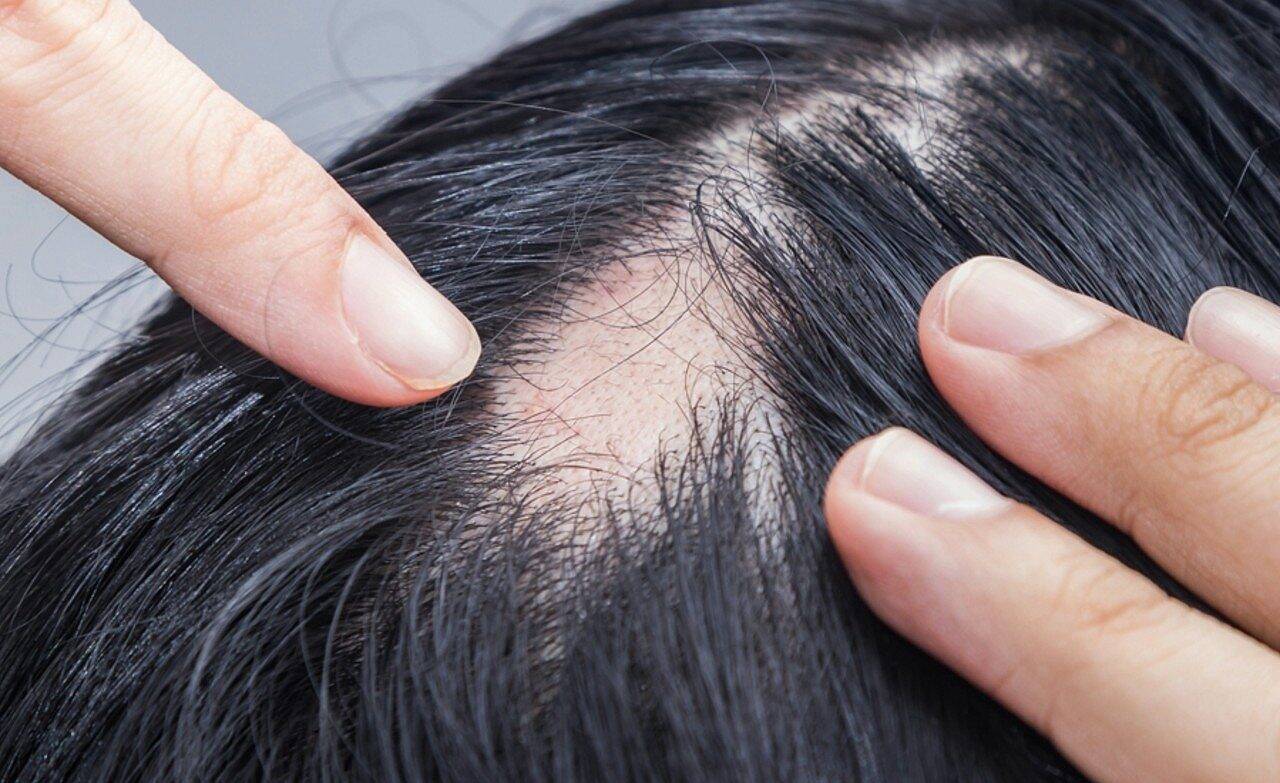
Personal trainer Karina Lucco, mother of singer Lucas Lucco, used her social networks on Thursday, July 10, 2026, to reveal the return of a crisis of alopecia areata. In an emotional video, she narrated that she noticed the rapid appearance of new flaws on her scalp after months of recovery, expressing her frustration, but confirming that she will continue with the treatment.
Karina Lucco’s experience highlights the volatile nature of the disease: even after periods of improvement, alopecia areata can reactivate. According to experts, this is a chronic and unpredictable autoimmune condition, which temporarily suspends the activity of the hair follicle without destroying it, which often allows hair regrowth.
Doctors indicate that approximately 2% of the global population, or about one in every 50 people, will develop alopecia areata at some point in their lives. In addition to the physical impact, the disease has a strong psychological component and can seriously affect individuals’ self-esteem, personal identity and mental well-being.
Experts emphasize that, although there are now effective and approved therapies, the main challenge is no longer scientific research, but rather accessibility. The high cost of the most advanced medication available, which is around R$1,800 per month, and the lack of public policies for the disease, make treatment for serious cases inaccessible for the majority of those affected.
Understanding alopecia areata: the immune system’s attack on hair follicles
Alopecia areata is characterized as an autoimmune disease, in which the body’s own defense system attacks the hair follicles, responsible for hair growth.
Trichologist Ludmila Vieira explains that the follicle is not destroyed, but enters a state of rest. As there is no permanent damage or scar formation, there is significant potential for recovery, which can, in many cases, lead to complete hair restoration.
- Small rounded areas without hair on the scalp.
- Total alopecia, which involves the complete loss of hair on the head.
- Alopecia universalis, which extends to hair loss over the entire body, including eyebrows and eyelashes.
Pedro Henrique de Almeida, a hair transplant specialist, observes that the affected regions generally have smooth skin, without redness or flaking, and that hair can grow back even after years, precisely due to the preservation of the follicle.
Unpredictable condition behavior
The nature of alopecia areata is often described by experts as unpredictable. The disease can go into remission spontaneously, remain stable for long periods or reactivate after phases of improvement.
Karina Lucco reported that, less than a year after starting treatment and showing signs of improvement, new scalp flaws quickly appeared. She was informed by her doctor that reactivation of the disease is a possibility, but expressed confidence in recovery and continued treatment.
Factors that trigger alopecia areata
There is no single cause for the development of alopecia areata. Experts say the condition is primarily the result of a genetic predisposition combined with an autoimmune response.
The disease can also be associated with other health conditions, such as thyroiditis, rheumatoid arthritis, celiac disease, lupus, multiple sclerosis, psoriasis, vitiligo and type 1 diabetes, in addition to atopic conditions such as rhinitis, asthma and atopic dermatitis.
Doctors emphasize that stress is not considered a direct cause of the disease, but can act as a trigger in genetically predisposed individuals.
Who is prone to developing alopecia areata?
Alopecia areata can affect men, women and children of all ages, with a lifetime risk of approximately 2% of the population. The prevalence at a given time varies between 0.1% and 0.2%, with the most severe forms, such as total and universal, representing around 5% of cases.
Although it can occur at any age, experts are concerned about cases that appear in childhood.
Trichologist Ludmila Vieira points out that when alopecia appears early, especially before the age of 6 or 12, there is a greater likelihood of progression to more extensive forms of the disease.
Pedro Henrique de Almeida adds that around 20% of cases of alopecia areata begin in childhood.
How is the diagnosis of alopecia areata established?
The diagnosis of alopecia areata is generally made in the office, through clinical evaluation and a detailed examination of the scalp.
- Exclamation point hair.
- Black dots.
- Yellow dots.
According to experts, biopsy is generally reserved for situations where there are diagnostic doubts.
They also highlight the importance of distinguishing alopecia areata from other hair conditions, such as telogen effluvium, trichotillomania and scalp infections, as each requires different therapeutic approaches.
Ludmila Vieira explains that “alopecia” refers to flaws, thinning or progressive loss of hair density, while “effluvius” indicates a sharp loss of hair. Both conditions can coexist.
The doctor explains: “A person can have androgenetic alopecia and, simultaneously, an effluvium caused by surgery, postpartum, inadequate diet, nutritional deficiency or stress. Therefore, hair loss should not be treated as a single, undifferentiated phenomenon.”
Alopecia areata treatment: cost challenges and access to advanced medication
Treatment options for alopecia areata vary depending on the extent and severity of the disease.
- Use of topical corticosteroids.
- Corticosteroid infiltrations.
- Clinical monitoring, as some plaques may regress spontaneously.
In more extensive situations or those that do not respond to initial treatments, the most notable advances have been seen with medications known as JAK inhibitors.
These drugs act by blocking the signaling pathway that stimulates the immune system to attack hair follicles. Examples include ritlecitinib (sold as Litfulo) and baricitinib (Olumiant), both already approved by the National Health Surveillance Agency (Anvisa).
As they are immunosuppressants, these medications require strict medical monitoring and laboratory monitoring throughout the treatment period.
Experts also clarify that these therapies control the progression of the disease, but do not offer a definitive cure.
Ludmila Vieira emphasizes that ritlecitinib represented a significant milestone in the treatment of the condition, but its high cost still prevents it from being accessible to all patients in need. Monthly treatment, even with discounts offered by the laboratory, costs around R$1,800, and the Unified Health System (SUS) still does not offer this medication.
In response to questions, the Ministry of Health announced that there is, to date, no request for the National Commission for the Incorporation of Technologies into the SUS (Conitec) to analyze the inclusion of ritlecitinib for the treatment of alopecia areata. The ministry also informed that both individuals and legal entities have the right to request Conitec to incorporate, change or exclude any technology in the SUS.
Beyond aesthetics: the psychological impact of alopecia areata
Health professionals emphasize that alopecia areata transcends aesthetic issues, becoming a condition with profound repercussions.
Ludmila Vieira highlights that the disease can trigger an intense psychological impact, severely affecting self-esteem, the perception of one’s own image and the mental health of individuals. She shares experiences of patients who have developed severe depression and suicidal ideation, as well as children who have suffered school bullying.
Pedro Henrique de Almeida adds that the levels of anxiety and depression observed in patients with alopecia areata are comparable to those recorded in diseases considered clinically serious, which makes psychological support an essential part of treatment.
The case of a child highlights the challenges of the disease
The family of Maria Eduarda Miranda, resident in Minas Gerais, experienced the rapid progression of alopecia areata in their daughter. Rodrigo Miranda, the girl’s father, reported that Maria Eduarda began to experience small hair defects at the age of 7. Just two years later, she lost all her hair in a period of 15 days, including eyelashes and eyebrows.





