
Historian revisits 1932 and calls the São Paulo movement a ‘counter-revolution against workers’

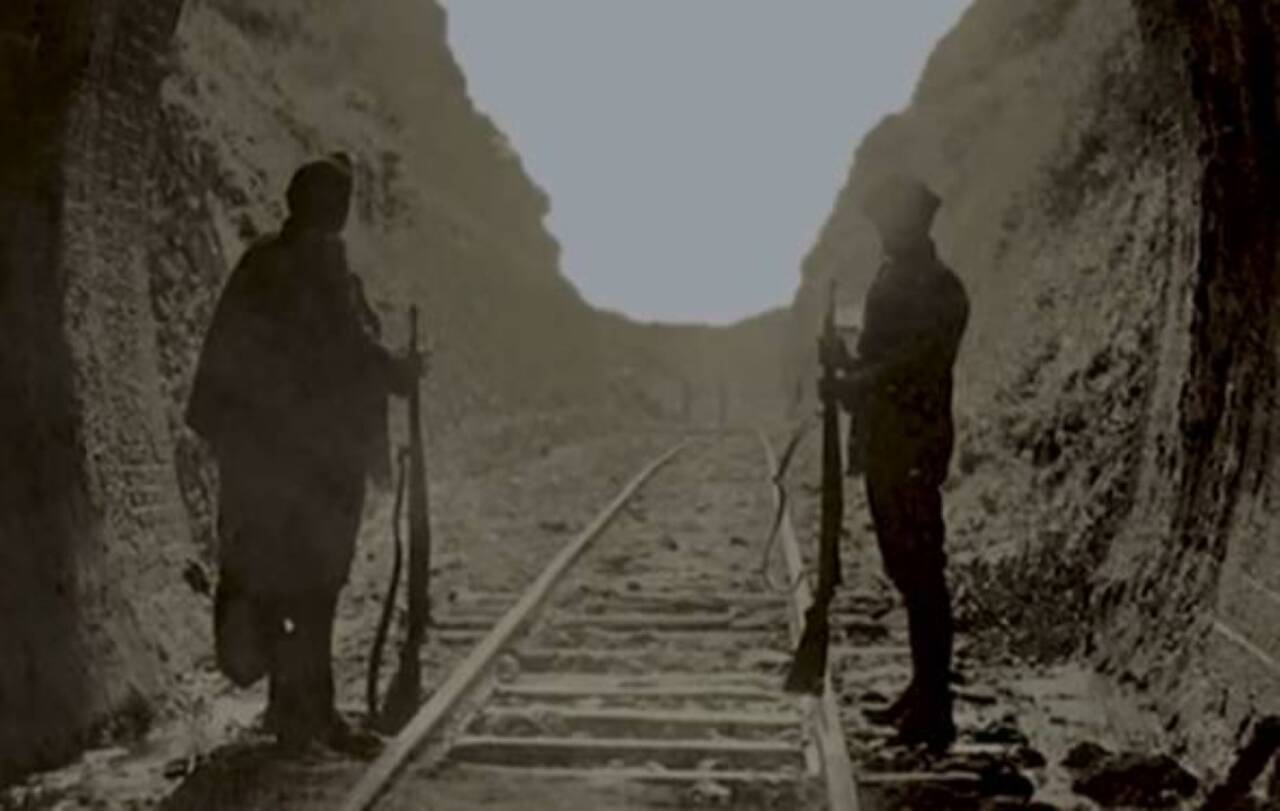
This Tuesday, July 9th, was the celebration of the so-called Constitutionalist Revolution of 1932, a period in which São Paulo’s elite rose up against the government of Getúlio Vargas. The armed confrontation, which resulted in 2,100 deaths, is often remembered by many as an event of great heroism.
However, a more in-depth analysis reveals that the mobilization represented, in fact, a counter-revolution orchestrated by São Paulo elites, aiming to prevent the expansion of basic rights for the working class. Researcher Jullyana Luporini de Souza explores these points in her work “Revolution and Counter-Revolution: the São Paulo industrial bourgeoisie and the Vargas government”, launched by Maria Antonia Edições in 2025.
This counter-revolutionary wave actually began with the fall of Washington Luís in 1930, an event that definitively ended the Oligarchic Republic, dominated by the coffee elites of São Paulo and Minas Gerais, and culminated in the rise of Getúlio Vargas as head of the provisional government.
During his term, Vargas began a phase of centralization of power. Among its first measures, the creation of the Ministry of Labor stood out, a body responsible for intermediating relations between employers and employees.
After two years, São Paulo’s agricultural elite joined forces with the state’s industrial bourgeoisie to try to regain control. In an interview, Souza clarifies that, despite their different origins, the two groups allied themselves against a “common enemy”: the popular classes.

There is a heterogeneity in the composition of this São Paulo industrial bourgeoisie, which sometimes makes a clear ideological position difficult. However, in periods of high tension, such as in 1932, they adopted a discourse identical to that of the coffee-growing bourgeoisie, importers and large traders. The common point that united them was the rejection of any working class movement that could lead to a more comprehensive democracy, the historian details, noting that this alliance of elites is a recurring pattern in Brazilian history.
The initial years of the Vargas government were characterized by intense social unrest. There was an effort to recognize the presence of factory workers and the working class in the political scene, demanding representation. This perception, absent in previous periods, created an environment conducive to mobilizations. Thus, there was an increase in strikes, as the working class identified the chance for negotiation, something unacceptable for the bourgeoisie, according to the analysis.
Due to these factors, the historian classifies the 1932 uprising as a counter-revolution. She highlights that a period of crucial transformation was going on, especially in the dynamics between capital and labor. The Vargas government, especially in its provisional phase, was not a popular regime, having its own interests. It was essentially a confrontation for power and hegemony, according to his explanation.
Along this line of reasoning, Jullyana Luporini de Souza examines the nickname “father of the poor” attributed to Getúlio Vargas. Despite having implemented significant measures for workers, such as the Consolidation of Labor Laws (CLT), the historian argues that Vargas was, in fact, a “man of the system”. Since the provisional government, he has acted to articulate and mediate relations with the elites. Souza also draws a parallel between the 1932 movement, the 1964 civil-military coup and the 2016 institutional coup against former president Dilma Rousseff. She notes that, in all these episodes, elites played a central role in maintaining reactionary discourses. In the São Paulo scenario, Fiesp stands out in all these historical moments. It is remarkable, as she points out, how the demands remain similar. Even in recent debates, such as the end of the 6×1 scale, the business community, especially Fiesp – a federation of historical importance due to the size of the industry in São Paulo – reiterates the same arguments. “The speeches don’t change much”, concludes Souza.



