
Space agency details biggest sunlight blockage of century with peak in Egypt

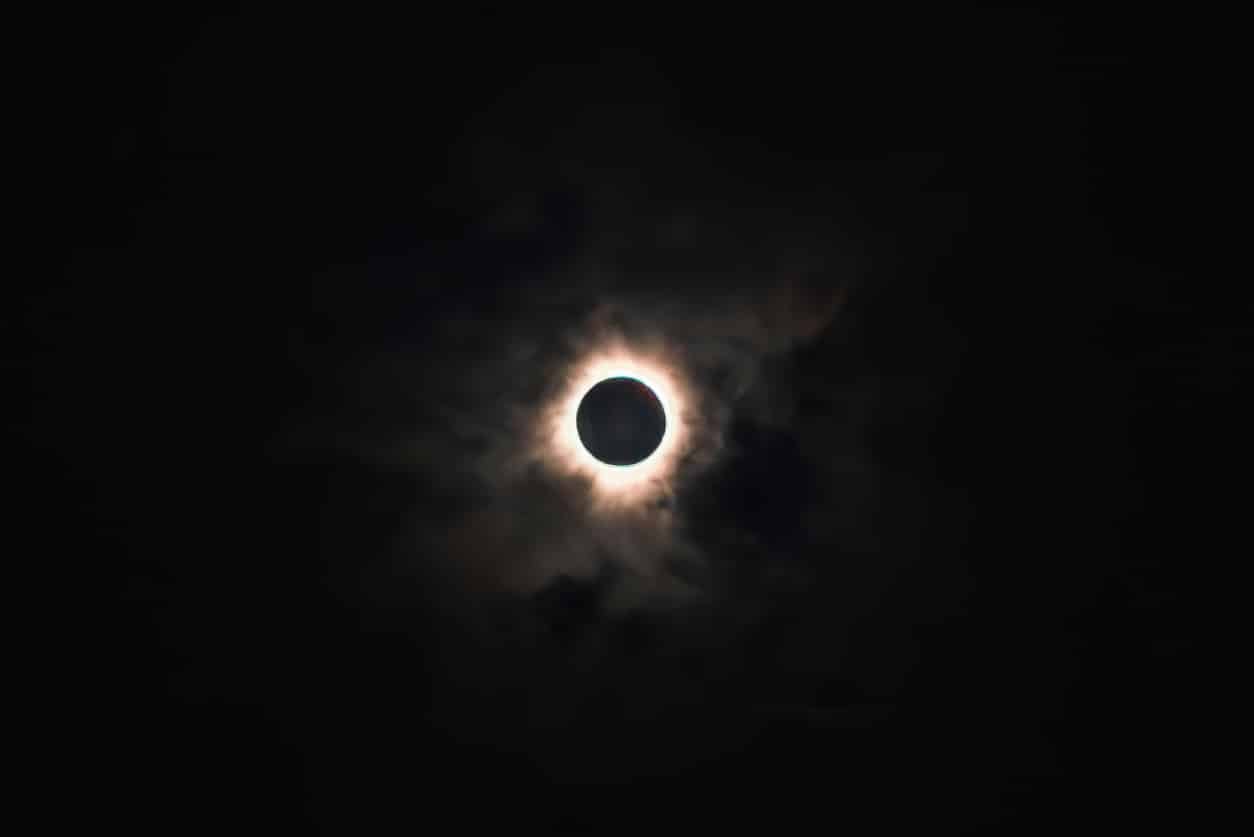
The American space agency recently released the official parameters for the most anticipated astronomical event of the coming decades, scheduled for August 12, 2027. This is an exceptional cosmic alignment that will completely block the light from our main star for a record period in the current century. Observers from different parts of the globe are already beginning to organize themselves to monitor the moment when the Moon will completely obscure the solar disk. This specific celestial configuration promises to deliver an unprecedented observation window for the international scientific community.
The great difference of this event lies in its extraordinary duration, which significantly exceeds the usual patterns recorded in similar phenomena. While most total occultations offer only a brief window of two to four minutes, the 2027 event will provide an extended immersion in the dim light. Researchers highlight that this temporal anomaly is directly linked to the orbital position of the stars at that specific time of the year. The combination of the Earth at its furthest point from the Sun and the Moon at its closest approach will create the perfect conditions to maximize the apparent diameter of the natural satellite.
Orbital factors that guarantee a record duration for cosmic alignment
To understand the magnitude of this celestial spectacle, it is necessary to analyze the orbital mechanics that govern our planetary system. The phenomenon belongs to the famous Saros 136 series, a family of eclipses known for producing the longest totalities of our era, including the unforgettable event of July 1991. When the celestial bodies reach exact synchronization in August 2027, the shadow cast across the Earth’s surface will travel at a speed calculated to prolong the visual experience as long as possible. Experts in celestial mechanics point out that alignments with this mathematical precision only occur a few times each millennium.
During these precious minutes of daytime darkness, the Earth’s environment will undergo immediate and noticeable physical transformations. The ambient temperature will suffer an abrupt drop, local winds will change direction and the fauna will show behaviors typical of the night, such as gathering birds and singing nocturnal insects. Amateur and professional astronomers will have the chance to view bright stars and planets during business hours, an experience that tends to leave a deep impression on all spectators present in the band of totality.
Lunar shadow route will cross strategic territories between Europe and the Middle East
The path of absolute darkness will begin its journey over the waters of the Atlantic Ocean, gaining strength before touching European soil. The Iberian Peninsula will be the first inhabited region to witness the darkening of the sky, with the southern portion of Spain offering excellent observation points in the first hours of the journey. After crossing the Strait of Gibraltar, the lunar umbra will begin a long sweep across the north of the African continent, where August weather conditions usually guarantee completely cloud-free skies.
The trajectory of solar blocking will cover a vast territorial extension, connecting different cultures and landscapes under the same astronomical spectacle. Governments of several nations are already analyzing detailed maps provided by research institutes to identify the cities that will be exactly in the center of the totality band. The shadow’s progression will follow a fascinating geographic route, encompassing the following countries on its main route:
- Spain, marking the entry of the phenomenon into the European continent with excellent observation points in the Andalusia region.
- Morocco and Algeria, offering vast desert plains ideal for setting up astronomical camps.
- Tunisia and Libya, where the duration of totality will begin to approach its maximum time limit.
- Egypt, the great stage of the astronomical summit with the largest window of darkness projected for the entire route.
- Saudi Arabia and Yemen, closing the cycle of absolute visibility in the Middle East.
Meteorologists point out that nature’s choice of this specific route offers an invaluable advantage for scientific observation. The month of August in North Africa and the Arabian Peninsula is historically characterized by almost zero rainfall and low atmospheric humidity. This climate stability drastically reduces the risk that cold fronts or sudden storms will block the view of the sky, a problem that often frustrates astronomical expeditions in other parts of the world.
Preparations in Egyptian territory for the largest flow of scientific tourism in history
The culmination of all this celestial movement will take place in the ancient lands of the pharaohs, more specifically in the Luxor region. In this historic location, home to the famous Valley of the Kings, darkness will reach an impressive six minutes and twenty-three seconds. The coincidence of an astronomical event of this magnitude occurring exactly over one of humanity’s most important archaeological sites is generating unprecedented expectations in the global tourism industry.
Egyptian authorities are already working on developing robust logistical plans to accommodate the flood of visitors expected for the summer of 2027. Hotel infrastructure projects, improvements to access roads and special security schemes are being designed years in advance. The local government’s goal is to transform the event into not only a scientific but also an economic landmark, capitalizing on the massive interest of enthusiasts who travel all over the world exclusively to hunt for eclipses.
Travel agencies specializing in astrotourism report that packages to Luxor and surrounding areas are already beginning to receive advance bookings, even though the event is years away. Nile River cruises are adapting their itineraries to ensure vessels are anchored exactly on the centerline of totality at the moment of peak. This early mobilization demonstrates the power of attraction that great natural phenomena exert on the public, generating millions of dollars in services and hospitality.
Unprecedented research window to unlock the mysteries of the solar corona
When compared to recent events, the qualitative leap for science is undeniable. The solar block that crossed North America in April 2024, for example, delivered a maximum of four minutes and twenty-eight seconds of darkness in Mexican territory. The addition of almost two full minutes in the 2027 edition represents a monumental increase in the time available for collecting sensitive data. High-precision instruments need prolonged stability to capture detailed images and light spectrums that are invisible under normal conditions.
Researchers’ main target during these precious minutes will be the solar corona, our star’s outer atmosphere that holds fundamental secrets about space weather. This superheated region can only be studied from Earth when the Sun’s main disk is perfectly hidden. Understanding the dynamics of solar winds and coronal mass ejections is vital for protecting communications satellites, power grids and future manned missions to deep space against geomagnetic storms.
The countdown to August 2027 already guides the calendar of space agencies and universities around the planet. State-of-the-art equipment is being developed specifically to be tested during this long period of darkness in the Egyptian desert. As the date approaches, the expectation is that new international partnerships will be signed to ensure that every second of this historical darkness is used to expand human knowledge about the cosmos.



