
Escalation in the Gulf: Iran launches missiles at US allies after American offensive and closes Hormuz

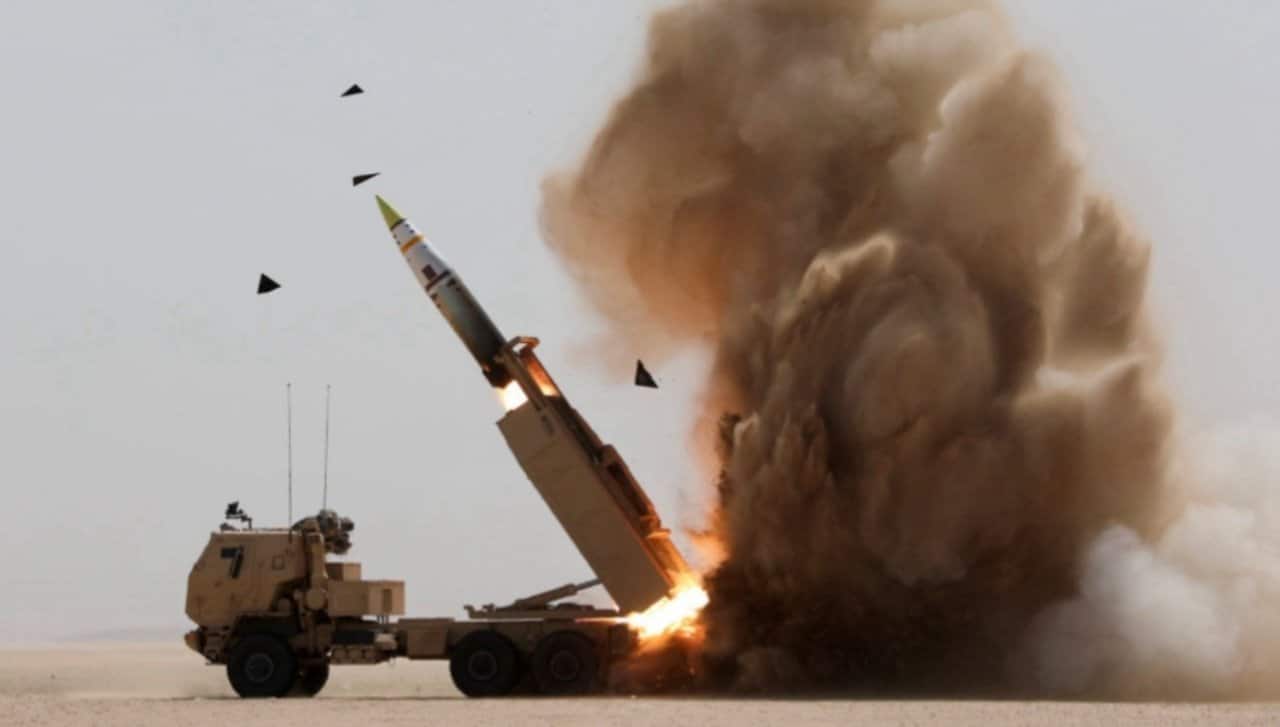
Iran carried out a series of attacks against positions associated with the United States in three Persian Gulf nations on Sunday, July 12. The Iranian action occurred in response to a recent military offensive launched against its own territory.
- Through an official statement, the Iranian Revolutionary Guard not only announced the blockade of the Strait of Hormuz, but also detailed the actions carried out:
- The destruction of a command and control center, as well as drone hangars, in Jordan, a US ally.
- The bombing of an American radar located in Kuwait.
- The attack on US-owned aircraft carrier support and refueling platforms in Oman.
- The neutralization of a jet maintenance center and command facility in Qatar.
With regard to the United Arab Emirates, local authorities reported the interception of missiles and drones originating in Iran. Later, however, it was confirmed that the threats were detected outside the country’s territorial borders. At the same time, warning sirens were activated in Bahrain.
The Qatari government, in turn, also confirmed the interception of missiles and revealed that three individuals, including a child, suffered minor injuries caused by shrapnel from the attacks. The Arab nation strongly condemned Tehran’s aggressions against its neighbors, describing them as a “serious escalation that complicates efforts to contain tensions in the region.”
Jordan’s state news agency reported that three missiles launched from Iranian territory caused only minor material damage, with no fatalities reported.
Iran’s offensive comes after American attacks and escalating friction in the Strait of Hormuz
These incidents mark a significant escalation point in already existing tensions in the region.
On Saturday, July 11, the United States Armed Forces Central Command declared that it had bombed 140 Iranian military targets. This was part of an operation that totaled more than 300 attacks over three nights, aimed at “damaging Iran’s ability to attack civilian sailors and commercial vessels freely transiting the strait.”
US Secretary of Defense Pete Hegseth commented on the situation on the social network X, stating that “Iran made a bad choice. Now it is paying the price.”
Reports from Iranian state media indicated the occurrence of explosions in several locations in the south of the country, including the cities of Bandar Abbas, Sirik and Jask, on the island of Qeshm, in addition to the province of Khuzestan, which borders Iraq. Initially, no victims were reported as a result of these incidents.
Sources including Mehr and Tasnim news agencies, which cited a local official, reported that the US-led offensive resulted in the death of an Iranian soldier.
“Lieutenant Hamidreza Dehghani of the Islamic Republic Armed Forces Navy was martyred during the criminal terrorist attack carried out last night by the United States on the port of Jask,” the statement read.
In response to the bombings, Iran declared the closure of the Strait of Hormuz and announced that it had fired warning shots at vessels in the area.
The Revolutionary Guard detailed the incident, stating that “several vessels attempted to follow an unauthorized route and ignored our warnings and signals. One vessel that compromised maritime security by disabling its systems was hit by warning shots and detained.” The corporation also emphasized that “the Strait of Hormuz will remain closed until further notice and until the conclusion of US operations in the region. No vessels will be permitted to pass.”
On the same Sunday, the British maritime security agency UKMTO (United Kingdom Maritime Trade Operations) reported that an attack, which occurred approximately 17 kilometers east of the Musandam Peninsula, Omani territory, caused a fire on a vessel. The situation led the crew to evacuate the ship in a lifeboat.
A statement issued by Omani authorities reported that 23 crew members from the GFS Galaxy ship were rescued. However, search operations for a crew member who remains missing continue.
Ishaq Dar, Pakistan’s foreign minister, who plays a mediating role in the conflict, appealed to both sides to “exercise restraint.”
Diplomacy and peace agreements amid worsening tensions in the region
Before the recent series of Iranian attacks against neighboring nations on Saturday, Iran and Oman were involved in negotiations focused on the war situation and navigation in the Strait of Hormuz. A delegation from Qatar, which also plays a mediating role, participated in these talks.
Iranian diplomatic officials stated that “future arrangements for managing traffic in the Strait of Hormuz should be jointly worked out by the two coastal states”, referring to Iran and Oman. They “agreed to continue discussions at the political, technical and legal levels to reach a consensus on the safety of navigation in the Strait.”
Despite dialogue efforts, diplomatic initiatives have not shown great effectiveness. On June 17, Washington and Tehran had signed a memorandum of understanding, which included a 60-day ceasefire to seek a permanent solution to the conflict.
However, since Wednesday, July 8, the President of the United States, Donald Trump, has publicly reiterated that the aforementioned agreement is “over”, indicating the end of the truce.
The intensification of conflicts dates back to June 7, when the US bombed targets in Iran, under accusations that Tehran had attacked three commercial vessels in the Strait of Hormuz.
Tensions escalated further on Saturday, July 11, after the funeral of Ali Khamenei, father and predecessor of Iran’s current supreme leader. Ali was reportedly killed by the US and Israel at the start of the war, and posters calling for Trump’s death were seen. Mojtaba Khamenei, the current supreme leader, then declared that “revenge” was “inevitable.”
On Friday, amid news of an alleged Iranian plot to assassinate him, the US president accused Iran of conspiracy. He reiterated his promise to “completely decimate and destroy all regions” of the country if the Iranian regime attempts to carry out the threat.



