
Research innovates by detailing how a magnetic field shapes the cradle of solar stars

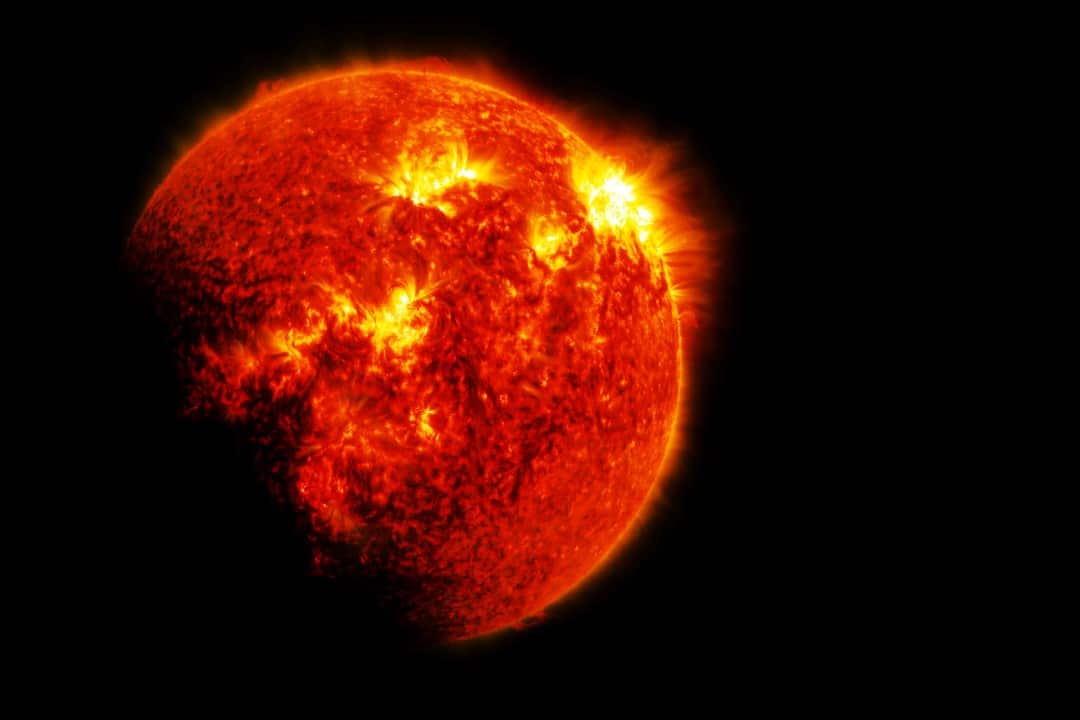
In an unprecedented discovery on Thursday, July 10, 2026, scientists observed for the first time a phenomenon crucial to the birth of stars similar to our Sun. The research revealed how the weakening of magnetic fields in “stellar nurseries” — cold, dense clusters of gas and dust — allows the gravitational collapse that initiates the formation of these stars.
The details of this advance were published in the journal Astronomy & Astrophysics, the result of the work of researchers from Kyushu University and the Max Planck Institute for Extraterrestrial Physics. Until then, the intense magnetic fields present in these pre-stellar cores were seen as an obstacle, capable of delaying or even blocking the gravitational contraction essential for the origin of new stars.
To carry out the observation, the team used the 30-meter telescope of the Institute for Radio Astronomy in the Millimeter Range (IRAM), focusing on L1544, a pre-stellar nucleus located in the vast Taurus molecular cloud. Due to the very low temperatures of these environments, where common molecules solidify into dust, it was necessary to develop and identify new molecular markers.
The markers chosen were the diazenylium-d1 ion (N2D+) and para-monodeuterated ammonia (para-NH2D), both neutral molecules concentrated in areas of high density in the nucleus.

Understand the process of weakening of the stellar magnetic field
Analysis of the collected data revealed a notable distinction in speed of approximately 0.05 km/s between the two observed molecules. This variation was identified as direct evidence of a phenomenon known as ambipolar diffusion.
As the density in the stellar core increases, the ionization rate present decreases. This process causes neutral particles to detach from the magnetic field and be attracted more quickly by gravity towards the center of the nursery. On the other hand, the ions maintain their connection with the field, generating the recorded speed disparity.
As ambipolar diffusion proceeds, the strength of the magnetic field progressively attenuates. Eventually, gravity takes over as the predominant force, culminating in the collapse of the core and giving rise to a protostar, the initial phase of a star.
In order to validate their findings, the scientists plan to expand their observations to other pre-stellar cores, seeking a more detailed mapping of the velocity shift between ions and neutral molecules. This research not only deepens our understanding of star formation, but also touches on essential questions about the origin of life in planetary systems and understanding the cosmos in its entirety.



