The partnership between the Royal Canadian Geographical Society (RCGS) and the Woods Hole Oceanographic Institution (WHOI) resulted in the release of never-before-seen photographs of the Quest. The material, revealed on July 13, 2026, shows the wreckage of the last vessel commanded by legendary explorer Ernest Shackleton. Submerged in the Labrador Sea for more than six decades, the find represents an immeasurable milestone for contemporary marine archeology, bringing to light details preserved by the darkness of the ocean.
Cutting-edge technology reveals hidden details under the sea
To capture these unprecedented images, experts turned to the famous Alvin submersible, the same manned equipment that descended to the Titanic around four decades ago. Operating in conjunction with a remotely operated vehicle (ROV), the team was able to navigate the extreme depths safely. Alvin, which has undergone several structural upgrades over the years to withstand abysmal pressures, allowed for a surgical approach without compromising the integrity of the archaeological site. The modern machinery, equipped with state-of-the-art sensors and extremely high-resolution cameras, ensured impeccable visual documentation of the site.

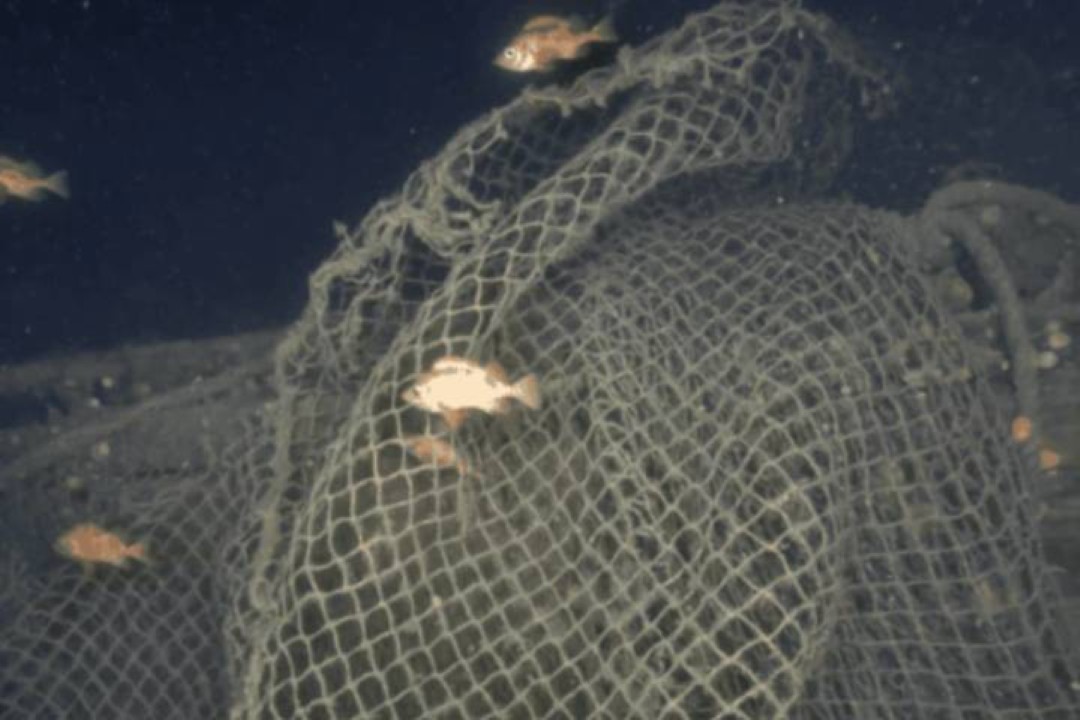
During visual inspections, scientists noted a surprising level of conservation in critical areas such as the deck, bow and several passenger cabins. Although the main mast gave way over time, its structure was readily identified on the sea floor. The environment around the carcass has been transformed into a vibrant artificial reef, home to anemones, octopuses, pink-hued corals and a vast array of fish that now dominate the ghostly scene.
Emotion and challenges during mapping the historic vessel
RCGS executive director and mission leader John Geiger recounted the emotional impact of facing the ship up close. According to the executive, observing the centuries-old wooden structure brings an almost palpable connection with the presence of the British explorer himself. He described how the initial descent was marked by absolute darkness, until the searchlights revealed the majestic silhouette of the bow suddenly emerging from the icy water.
The exact location of Quest had already been confirmed in 2024 by a previous expedition coordinated by the same Canadian institution. On that occasion, however, conditions only allowed the capture of silhouettes via sonar, without clear photographic records. Returning to the site required detailed planning to prevent equipment from becoming entangled in the dense fishing nets covering parts of the structure, thus ensuring a safe analysis of the current state of the hull.
Immediately after collecting the primary images, the schedule establishes three uninterrupted days of detailed scans to map every inch of the wreck. Using underwater photogrammetry technology provided by Canadian company Voyis, researchers aim to compile a definitive three-dimensional model. This digital replica will serve as the basis for future academic studies and can be accessed by students and enthusiasts around the world.
Next steps include the search for another polar exploration giant
Still in July this year, the crew will redirect their efforts to locate the remains of the Terra Nova, a vessel linked to Robert Falcon Scott. The explorer, who rivaled Shackleton during the so-called Heroic Age of Antarctic Exploration, reached the South Pole in 1912, shortly after Roald Amundsen’s team. Scott’s journey ended in fatality, resulting in his death and the loss of four companions to the extreme cold on the return journey.
There is a curious historical intersection between the two sought-after ships, as both ended their service lives operating in the seal hunt in the frigid waters of Newfoundland and Labrador. Before his death, Shackleton himself had drawn up plans to sail the Quest through the Canadian Arctic, a project that ended up being replaced by his final journey towards the Antarctic continent.
Experts from different nations make up the maritime task force
The success of this complex undertaking directly depends on the collaboration of a highly qualified multidisciplinary team. Professionals from different areas of knowledge joined forces to ensure that the memory of polar exploration is rescued with maximum scientific rigor, forming an elite group that includes:
- David Mearns, renowned British shipwreck hunter.
- Antoine Normandin, specialist in oceanography.
- Martin Nielson, official representative of the National Museum of Denmark.
- Deep sea biologists linked to the WHOI institution.
- Senior researchers at the Royal Geographical Society of Canada.
- Jan Chojecki and Craig Corbar, direct descendants of the Shackleton family.
The tragic end of a leader and the final fate of his ship
Ernest Shackleton’s journey aboard the Quest was abruptly interrupted in 1922, when he suffered a fatal heart attack at the age of 47. He was already widely revered globally for his role in the Endurance expedition, where he managed to keep his crew alive for two years after the ship was crushed by ice in the Weddell Sea. His death marked the end of a golden age of discovery and left an unquestionable legacy of resilience in situations of extreme crisis.
Without its original captain, the vessel was acquired by a Norwegian family and spent four decades exploring the Arctic ice on commercial missions. The ship’s life cycle came to an end on May 5, 1962, when the thick layers of ice in the Labrador Sea irreversibly punctured its hull. The wreck swallowed the wooden structure, keeping its secrets in the depths until the recent reunion with modern technology.