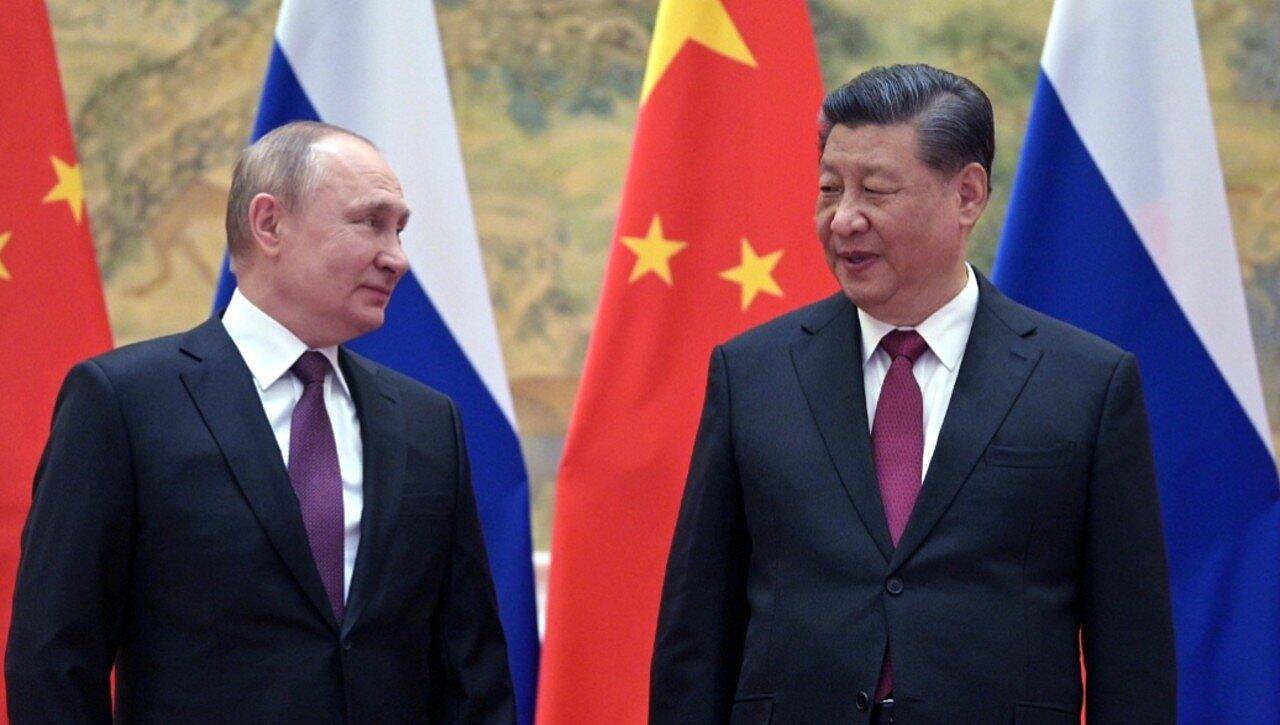
Balance of power between China and Russia shifts as Beijing takes leadership

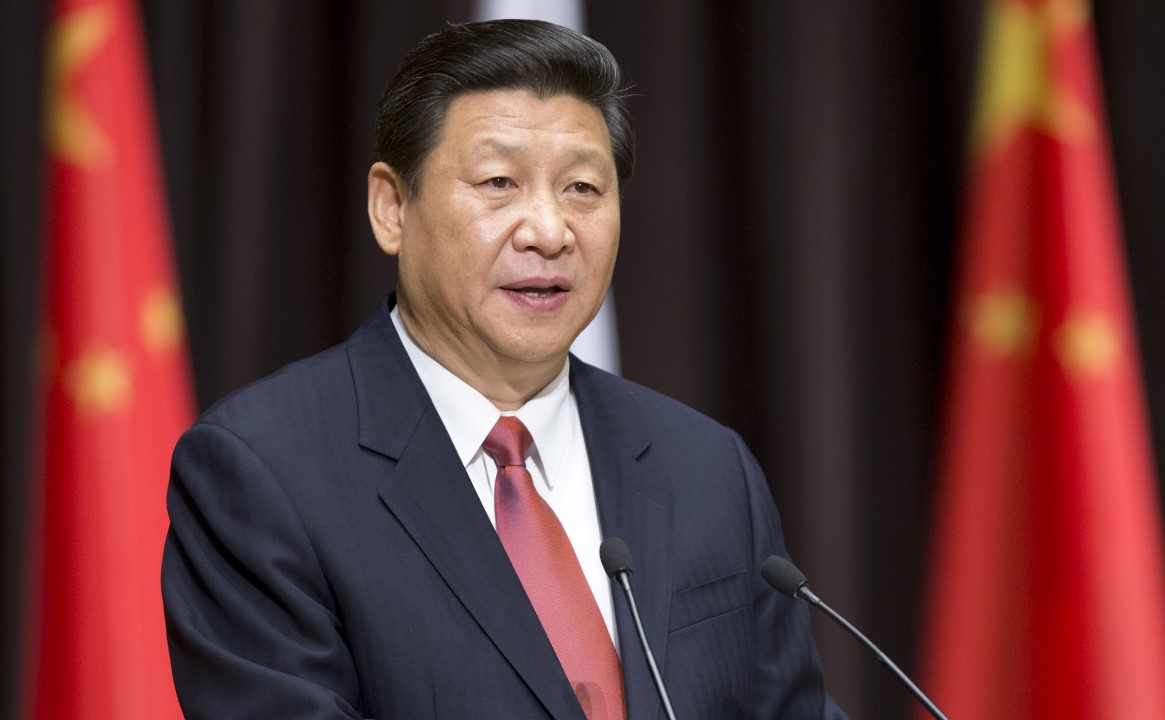
The balance of power between China and Russia has undergone a significant change, with the rise of Russian dependence amid the war in Ukraine and sanctions imposed by the West. Beijing now exerts strong influence on the financial order in Central Asia, dictates the conditions for a new gas pipeline and manages rapprochement between North Korea and Moscow.
As reported by the Wall Street Journal on Monday, July 13, the intensification of the conflict in Ukraine accelerated a reconfiguration of power between the two nations that had already been taking shape.
In May, Russian President Vladimir Putin made his fourteenth trip to China to meet with President Xi Jinping. The central purpose of the visit was to obtain Chinese approval for the “Siberian Force 2” project, a gas pipeline that had been under negotiation for around two decades.
However, the Russian team, which preceded Putin in Beijing, was faced with severe demands from China. People close to the negotiations revealed that Chinese officials informed Gazprom, Russia’s state gas company, that participation in the venture would only occur if the gas was sold at a lower price than the market, equivalent to the sales price for Russian domestic consumption. The Chinese also made it clear that the matter should not be discussed again without changing the conditions.
Despite having returned from Beijing with 42 agreements and a joint declaration, President Putin was unsuccessful in implementing the gas pipeline pact.
Jörg Buttke, a German businessman with a deep understanding of Sino-Russian relations, described the meeting by saying: “President Xi received Putin like an emperor receives a guest in a castle, and then dismissed him.”
The bilateral relationship has evolved substantially since the first meeting in 2013. Sources who followed the discussions during that period recall that President Xi, recently inaugurated as president of China, chose Russia for his first international trip and referred to Putin as his “model to be followed”.
This stance indicated Xi’s high regard for Putin’s ability to govern a natural resource-based economy while maintaining his status as leader of a world power.
Beijing has no incentives to speed up negotiations on the gas pipeline. The forecast is that Chinese consumption of imported gas will reach its peak around 2035, and the execution of the “Siberian Force 2” project would take between five and six years. Additionally, China can purchase gas from multiple nations, which reduces the need to increase its dependence on Russian supplies.
The “Force of Siberia” gas pipeline into operation was established only in May 2014, after 15 years of discussions. This agreement came two months after Russia’s annexation of Crimea, at which time Moscow, faced with a shortage of Western financing, was compelled to accept lower prices from China. The new pipeline venture aims to direct gas previously destined for Europe to the Chinese market. Failure of this deal would be a significant setback to Putin’s strategy of replacing the European market with China.
However, the absence of an immediate consensus does not indicate a breakdown in strategic collaboration between the two countries. Beijing supported the Russian economy during the conflict, purchasing crude oil at a discount and providing essential inputs and financial support for the defense sector. The Chinese Foreign Ministry assured that the presidents developed “a high level of mutual trust and deep friendship.” The Kremlin, in turn, refuted the idea of Russian subordination, insisting on the parity of the relationship.
Economic indicators, however, expose a notable discrepancy between the two nations. In 2013, China accounted for around 10% of Russia’s total trade volume, a figure that currently approaches 40%. While Beijing absorbs approximately a third of Russian exports, Russia’s contribution to Chinese global trade remains less than 4%. This imbalance highlights a growing asymmetry of power, where the Russian economy becomes increasingly dependent on the Asian giant, affecting its strategic autonomy in the long term.
Chinese ascendancy also extended to the financial sphere. Russia approved the proposal to adopt the yuan as the central currency at the Shanghai Cooperation Organization Development Bank (SCO), an entity that seeks to function as a regional bank for development in Central Asia.
For more than ten years, Moscow resisted this initiative, motivated by concern about the expansion of Chinese influence in Central Asia, but reversed its position in the face of worsening financial isolation.
With the creation of the bank, there is a prospect that nations from the former Soviet sphere, such as Kazakhstan and Uzbekistan, will strengthen their ties with China.
President Xi Jinping acts prudently in publicly addressing this power asymmetry. In a photo from May, during the two leaders’ visit to an exhibition on Sino-Russian relations in Beijing, an enlarged portrait of Xi showed him visibly larger than Putin. Chinese diplomats explained that the arrangement was not intended to disqualify the Russian leader. The Wall Street Journal interpreted the situation as a sign that Xi shows respect in public, while seeking advantages in closed-door talks.
Another area where Beijing expresses concern about the expansion of Russian influence is North Korea. China fears that military collaboration between Pyongyang and Moscow, including technology sharing, could boost North Korean nuclear and submarine capabilities.
Such a scenario has the potential to compromise China’s strategy of distancing South Korea and Japan from the United States, deepening the fissures in relations between these nations.
Putin had planned to visit Pyongyang shortly after his trip to Beijing after being re-elected in 2024, but at China’s request he changed his route to Vietnam. The Russian leader met the Chinese demand to prevent the three countries of China, Russia and North Korea from being seen as a cohesive authoritarian bloc.
People with knowledge of the situation reported that Putin later suggested a confidential trilateral summit involving China, Russia and North Korea, but the proposal was rejected by Beijing.
In contrast, President Xi was in Pyongyang in June, marking his first visit in seven years. Analysts interpreted this move as an effort by Beijing to reiterate its role as North Korea’s primary guardian, not Moscow.
Although China maintains the long-term goal of denuclearizing the Korean peninsula, the nation has chosen not to impose denuclearization as an essential condition for expanding ties with North Korea.
Beijing also intensifies its contacts with bureaucrats and members of the elite who could lead Russia after the Putin era. Alexander Gabuev, director of the Carnegie Center for Russia and Eurasia, predicted that it is highly likely that Russia will become, in the future, a nation significantly more dependent on China, seeing Beijing as a benchmark for its own modernization.