

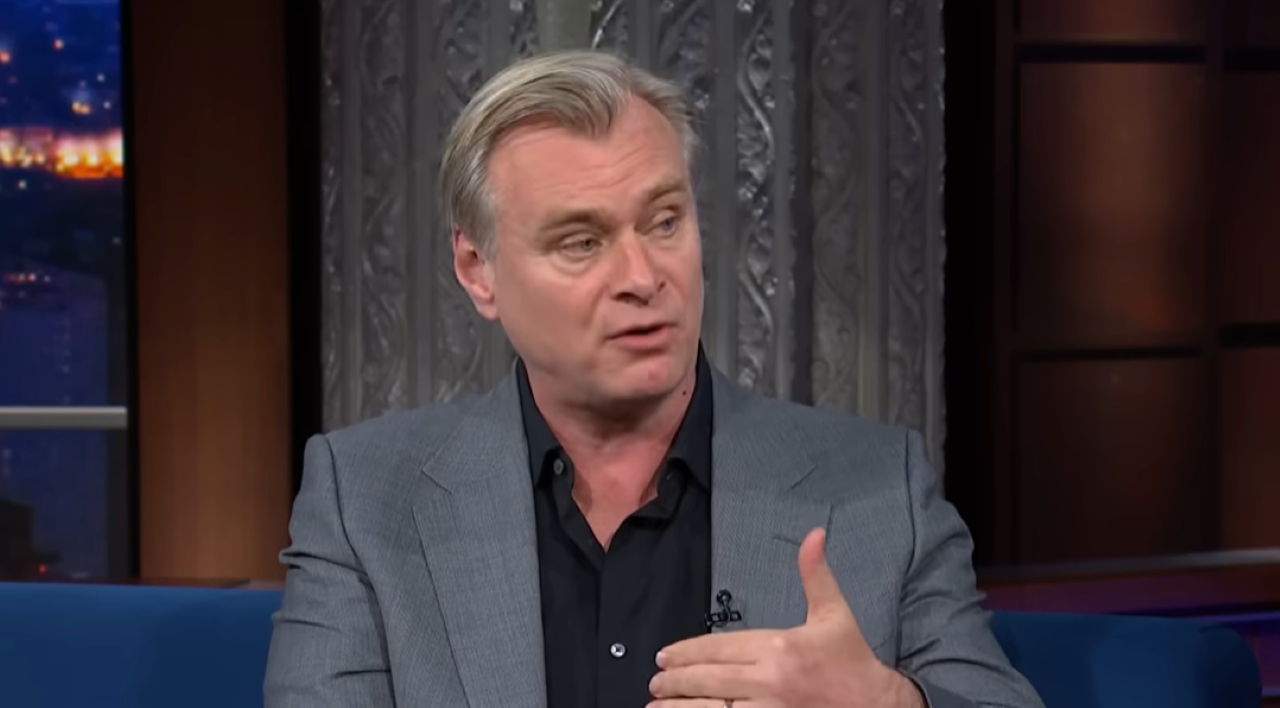
Renowned director Christopher Nolan, the mind behind hits likeOppenheimer, The Origin e Interstellar, surprised by revealing an unusual habit for a professional in his field: he doesn’t have a smartphone. For the acclaimed filmmaker, this choice, which may seem like an anachronism in a hyperconnected world, is in fact a conscious and deliberate strategy to preserve essential time dedicated to creativity and improving thought. The statement was made in a recent interview, a period that precedes the long-awaited premiere of his new film,The Odyssey.
Christopher Nolan’s decision: practicality over philosophy
Nolan’s resistance to smart devices is based on purely practical reasoning rather than a radical philosophical stance rejecting modernity. The Hollywood director argues that smartphones tend to fill the “idle moments” that, for him, are crucial to the creative process. In a world where dependence on QR codes, digital tickets and messaging apps has become intrinsic to everyday life, Nolan chooses a different path to foster his most original ideas.
These moments of inactivity, often seen as “wasted time” by others, are precisely those that Nolan takes advantage of to solve complex narrative problems, develop intricate scenes and plan the next steps of his film projects. While most people fill these gaps with instant access to social media or news, the filmmaker saves them for creative introspection. Such periods include, for example:
- Waiting for a train or other public transport;
- Relax in an airport lounge between flights;
- Arriving early for an appointment, such as dinner.
It is in these digital gaps that the director ofBatman: The Dark Knightfinds the mental clarity necessary to improve his art, transforming what would otherwise be distractions into valuable opportunities for creation and deep reflection.
How technology supports the filmmaker’s narrative vision
Given his reputation as a fervent advocate of practical filmmaking and on-screen effects, many would assume that Christopher Nolan is averse to any form of technology in film. However, his perspective is considerably more nuanced and pragmatic. His most recent work,The Odyssey, exemplifies this approach, incorporating a vast array of digital visual effects alongside large-scale filmmaking techniques, animatronics, puppetry and camera features that capture the action directly, without excessive post-production.
The director has been consistent in his philosophy that “technology should serve as a support and amplifier of the narrative, and never replace it entirely.” This principle is visible throughout his work, from the complex constructions ofThe Originto the spectacular sequences ofDunkirk. Nolan, Oscar winner and one of today’s most influential directors, seeks a meticulous balance, using the most advanced tools to enhance the cinematic experience, not to dominate or dehumanize the act of storytelling.
For Nolan, technological innovation in cinema is valid and even necessary, as long as its purpose is to expand the possibilities of human imagination and emotion, and not to create shortcuts that compromise the authenticity of the visual and narrative experience. It demonstrates that it is possible to embrace the future without losing connection with the roots of cinematographic creation.
Christopher Nolan and the perception of generative artificial intelligence
In the same interview in which he discussed his relationship with smartphones, the filmmaker also expressed his opinions on the industry’s growing and often controversial fascination with generative artificial intelligence. Nolan revealed a particular view on the topic, indicating a distrust regarding AI’s current ability to produce content of lasting artistic value.
He suggested that younger audiences, in particular, have been surprisingly quick to identify and reject what he categorizes as “AI slop” – a term that describes AI content that is low quality, generic, or lacking originality and soul. This observation is crucial, as it points to a possible saturation of the market with superficial productions generated by algorithms.
According to Nolan, his own children can instantly recognize materials generated by artificial intelligence that lack originality or authenticity, often due to small details or the lack of a discernible human touch. This is due, in his analysis, to the fact that they grew up immersed in online and digital culture, developing a keen sense of smell and a keen sensitivity to distinguish the genuine from the artificial, the creative from the merely replicated. For the director, this ability of new generations is an important indication of the limits of AI in the artistic sphere.
The value of moments of introspection in the digital age
Christopher Nolan’s attitude towards smartphones and his defense of creative leisure raise a fundamental reflection on the need for decompression and moments of non-occupation in a hyperconnected world. Constant exposure to information, notifications and digital interruptions can, according to several experts in neuroscience and cognitive psychology, severely compromise the capacity for deep concentration, the formation of memories and fluid creativity.
Recent studies indicate that the human brain requires periods of “mind wandering” and “default mode” – that is, times when we are not actively focused on a task – to process information, consolidate learning and generate original insights. The time dedicated to observing the environment without a defined purpose or to simple introspection is often where great ideas are formed and where innovation is generated.
The director’s decision underscores “why this matters” to the contemporary reader: the ability to focus intensely, daydream productively, and solve complex problems often requires the absence of external distractions. Nolan’s choice serves as a practical and inspiring reminder that to innovate, create, and think truly original, you may need to disconnect from digital devices to reconnect with your own mind and the real world.
The search for a “digital detox” and practices that encourage presence and mindfulness has gained exponential strength in recent years, as more people and professionals from different areas realize the impact of uninterrupted connectivity on their well-being, creative productivity and mental health. The filmmaker’s example demonstrates that this is not just a passing trend, but a valuable and even indispensable strategy for individuals and professionals who depend on originality, insight and deep thinking to excel in their activities.





