
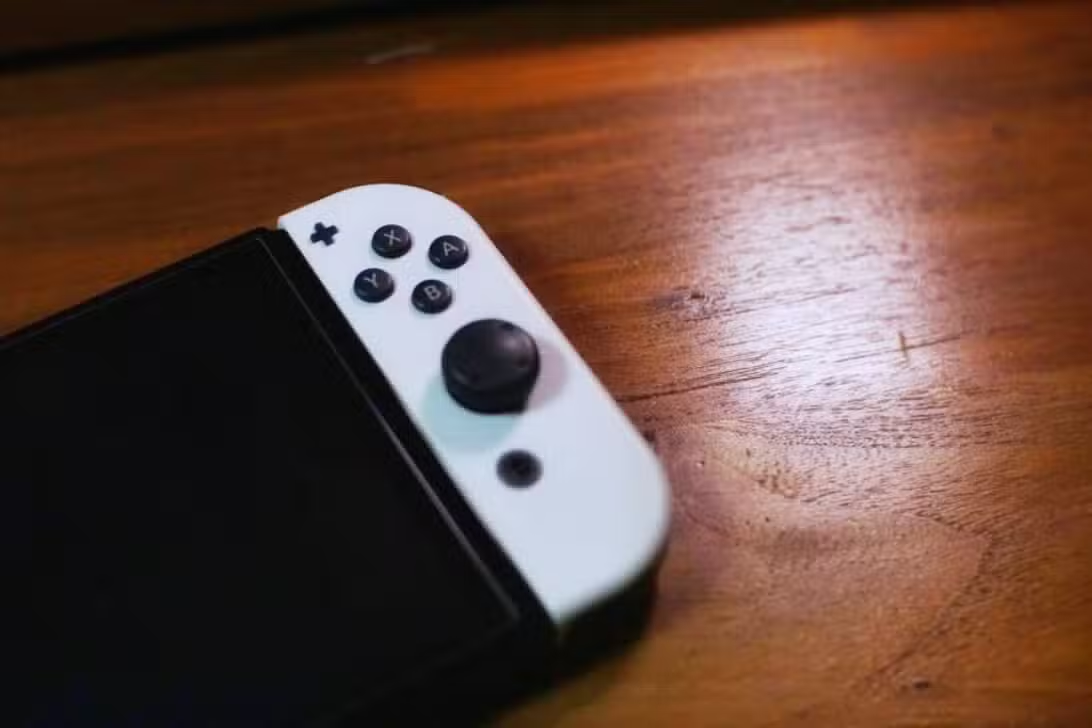
A possible Nintendo Switch 2 model with OLED technology is being evaluated for future release, according to reports. However, the initiative faces a significant obstacle: escalating costs for memory and other components, which could impact the company’s screen upgrade plans.
According to information from July 13, 2026, Nintendo is considering a version of the Switch 2 equipped with a Full HD (1920 x 1080) rigid OLED panel supplied by Samsung Display. This new feature would represent a considerable advance compared to current models.
If the project is approved, development is expected to begin later this year, with the goal of beginning mass production between the end of 2027 and the beginning of 2028. This strategy aims to extend the console’s life cycle, following Nintendo’s tradition of staggered releases.
The completion of this update, however, is not guaranteed. The main barrier lies in the substantial price difference between LCD and OLED panels, a problem exacerbated by soaring semiconductor and memory values across the technology sector.
Nintendo had already recently announced a Switch 2 with a removable battery, scheduled to arrive this fall. Speculation about an OLED variant for the future indicates that the company is exploring several options to improve the gaming experience, increasing the screen resolution to Full HD.

A recent report from ZDNet Korea, released by Jukan05 on Platform
Uncertainty about the upgrade remains due to the sharp cost difference between standard LCD and OLED panels. This factor is especially critical in a period of widespread price increases for essential components such as memory and other semiconductors in the industry.
If the decision is in favor of the launch of a Switch 2 with an OLED screen, the product development process would begin at the end of this year, with large-scale manufacturing projected for the end of 2027 or beginning of 2028.
Historically, Nintendo has adopted a phased release schedule to extend the longevity of its consoles. The first generation of the Switch, for example, saw an LCD model in 2017, followed by the Switch Lite in 2019, and finally the Switch OLED in 2021. While these previous versions had HD resolution, the Nintendo Switch 2, released in 2025, already features a Full HD LCD screen. The transition to an OLED display around 2027 therefore aligns with this company standard.
For now, Nintendo is striking a balance between offering significant improvements in the user experience and dealing with the harsh reality of rising manufacturing costs, which pose considerable challenges to innovation in the video game sector.