
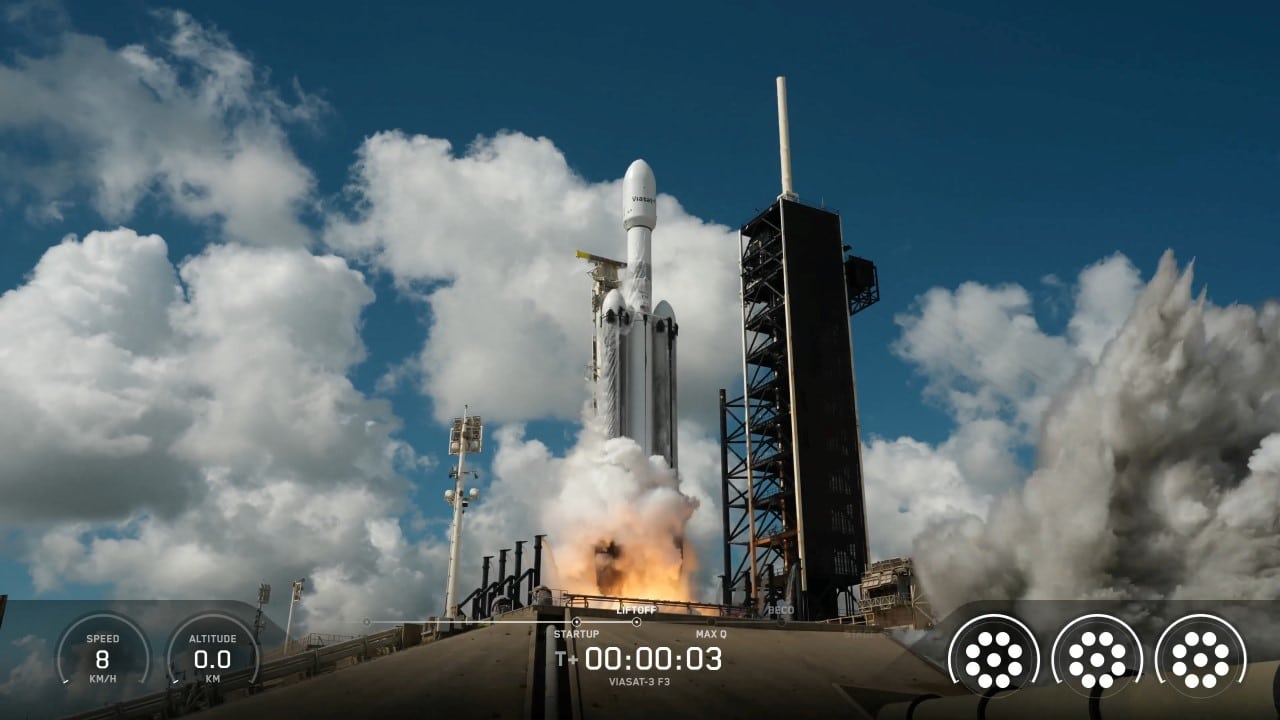
SpaceX reached a historic milestone on the morning of Tuesday, July 13, 2026, by performing the 600th flight of one of its previously tested Falcon rockets. The Starlink 10-45 mission lifted off from Space Launch Complex 40 at Cape Canaveral Space Force Station, adding more satellites to its vast internet constellation. This achievement highlights the company’s leadership in the reuse of propellants and the democratization of access to space.
Falcon 9 B1080 rocket completes its 28th trip to space
The most recent flight was carried out by the Falcon 9 rocket with tail number B1080, which completed its 28th mission. This booster has an impressive track record, including launching several high-profile missions for different SpaceX partners.
- Two manned missions for Axiom Space;
- The European Space Agency’s Euclid observatory;
- Northrop Grumman’s NG-21 mission.
Continuing expansion of the Starlink network with new satellites
The pre-dawn liftoff contributed to the expansion of SpaceX’s global internet network, adding 29 more broadband satellites to the Starlink constellation. The company maintains a massive fleet of more than 10,800 spacecraft in low Earth orbit, a number that continues to grow rapidly.
The Starlink constellation aims to provide high-speed internet access in remote and underserved areas around the world. SpaceX’s ability to launch reusable rockets at high frequency is crucial to maintaining and expanding this vast communications infrastructure.
Favorable weather conditions guided the takeoff
The launch occurred promptly at 5:10 a.m. EDT (09:10 UTC), with the rocket following a northeast trajectory after leaving the pad. The 45th Weather Wing predicted a high probability of favorable weather in the launch window, ranging between 90% and 95%.
Meteorologists closely monitored the small chance the rocket would pass through dense clouds, which could generate lightning. Despite this, the general conditions were considered ideal for the operation, confirming the good weather expected for the event.
Successful landing of the propellant on an oceanic platform
Approximately 8.5 minutes after liftoff, the Falcon 9 first stage, B1080, made a precise and safe landing. The booster landed on the autonomous maritime platform “A Shortfall of Gravitas”, strategically positioned in the Atlantic Ocean.
This was the 161st successful landing on this specific craft and the 638th rocket booster landing recorded by SpaceX to date. Rocket recovery is a pillar of the company’s strategy to reduce costs and increase the frequency of launches.
The importance of reusing rockets for the future of space
Achieving 600 flights with tested and reused propellants is an unprecedented achievement in the history of space exploration. This reuse capability has transformed the industry, making access to space significantly more economical and routine.
SpaceX’s approach not only accelerates the deployment of megaconstellations like Starlink, but also opens the door to more complex and ambitious missions, such as crewed trips to the Moon and Mars, by demonstrating the feasibility of sustainable space transportation infrastructure.





