Astronomers confirm the unprecedented presence of sugar in space and reinforce the theory of extraterrestrial life
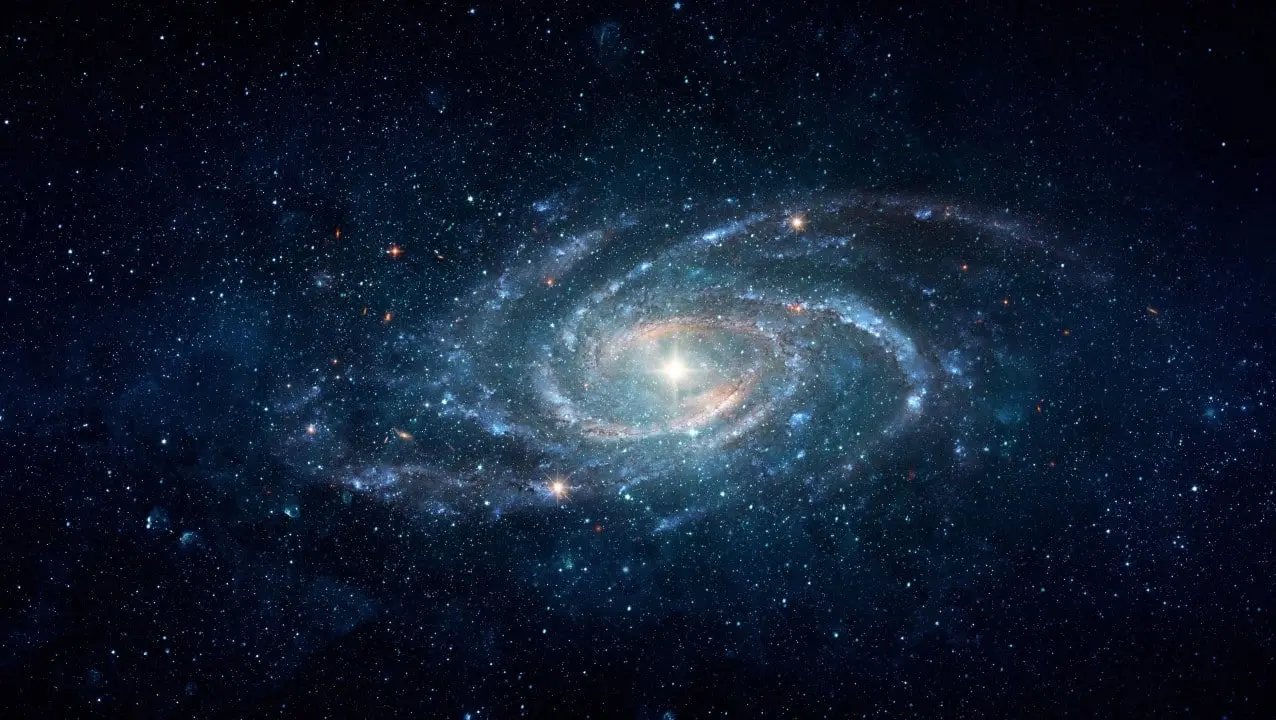
An international team of astronomers announced an unprecedented discovery: the identification of sugar outside the limits of the Solar System. The substance, called erythrulose, was located in a vast cloud of gas and dust located near the center of the Milky Way, around 26 thousand light years from Earth.
The study detailing this new development was published in the scientific journal “Nature Astronomy” last Monday, May 13.
Erythrulose consists of a sugar molecule made up of four carbon atoms, forming part of the same large family of sugars vital for existence. These molecules are fundamental for their ability to provide energy, build biological structures and even integrate genetic material. As examples, DNA contains deoxyribose, and RNA contains ribose, both essential sugars.
On our planet, erythrulose was already known for its presence in several red fruits, including raspberries and strawberries.
Previously, the scientific community had detected molecules with sugar-like characteristics in the cosmos, such as glycolaldehyde. However, none of these substances qualified chemically as genuine sugar.
More on this story: Astronomers find first real sugar in space, with four carbons, indicating origin of life
Erythrulose, in turn, meets all the chemical criteria to be classified as a true sugar, consolidating itself as the first substance in this category to be confirmed beyond terrestrial limits.
The identification was possible thanks to the analysis of data obtained by two radio telescopes located in Spain, the Yebes 40m and the IRAM 30m. This equipment captured a kind of “fingerprint” in radio waves of the molecule within the G+0.693-0.027 molecular cloud, recognized as one of the most chemically dense and studied regions in our galaxy.
Astronomer Izaskun Jiménez-Serra, from the Spanish Astrobiology Center (CAB-CSIC/INTA) and lead author of the study, clarified the crucial difference: “Although glycolaldehyde was previously identified as the first sugar detected in space, due to its analogous chemical structure, it is not considered a true sugar. It is for this reason that erytrulose represents the first real sugar identified in interstellar space.”
The challenge of identifying a specific molecule in a space cloud is comparable to discerning a single voice in a noisy crowd. This occurs because hundreds of different substances emit radio signals simultaneously.
On the same topic: Scientists find raspberry sugar at the center of the galaxy: what does this mean for life in the Universe?
To ensure the accuracy of this identification, the researchers use a rigorous method: they compare the patterns detected by the telescopes with previous laboratory measurements, where the signature of each molecule is known exactly.
See Also

Electrical discharge knocks man off roof in Jaguaruana after contact with power lines
Global auction raises US$11.9 million and Brazil’s historic currency reaches record value

Former fighter Prichard Colón dies at age 33 after decade in a vegetative state
The scientist reported high confidence in the discovery: “By comparing these signals, we identified excellent agreement between the data. Additionally, we were also able to identify more than 180 other molecular species in the studied cloud, which makes us very confident about detecting erythrulose.”
How sugars form in frigid outer space
This discovery revives a long-standing question in science: could a portion of the chemical elements that were essential for the emergence of life on our planet have had an extraterrestrial origin?
According to the researchers’ hypothesis, molecules such as erythrulose may have originated in the primordial cloud that generated the Solar System itself, even preceding the formation of the Sun and the planets. Later, they would have been taken to the primitive Earth by comets and asteroids.
Learn more: Scientists detect sugar for the first time in space and boost theory of the origin of life
César Menor Salván, astrobiologist and professor of Biochemistry at the University of Alcalá, who was not involved in the study, commented on the importance of the research: “This work does not solve the problem of the origin of life or molecules such as DNA or RNA. It is crucial to be cautious with extrapolations, but it is, without a doubt, a new discovery, highly relevant and of enormous interest.”
The process of formation of erythrolose in space is similar to assembling a plug-in toy, where smaller and simpler fragments, abundant in the environment, gradually agglomerate on the surface of grains of cosmic ice, culminating in the creation of a more complex structure.
According to the study, the “pieces” that make up erythrulose are glycolaldehyde and ethylene glycol, both simple molecules and in large quantities in the same space cloud.
This mechanism, replicated for millions of years in various clouds across the galaxy, strengthens the theory that sugars and other molecules crucial to life can emerge spontaneously in the universe, long before planets capable of housing them even exist.
An estimate prepared by the research team suggests that a significant amount of erythrulose, ranging between 0.5 and 50 million tons, may have reached the surface of the early Earth. This would have occurred during the period known as the Late Heavy Bombardment, characterized by intense collisions of comets and asteroids, approximately 4.1 to 3.8 billion years ago.
“Our research demonstrates that these complex molecules may be more frequent in the Universe than previously assumed, opening the way to the possibility that other worlds develop life forms similar to those we know,” said Izaskun Jiménez-Serra, astronomer at the Spanish Astrobiology Center (CAB-CSIC/INTA) and lead author of the study.