
Comet 3I/ATLAS releases molecules essential for the origin of life, reveals NASA telescope

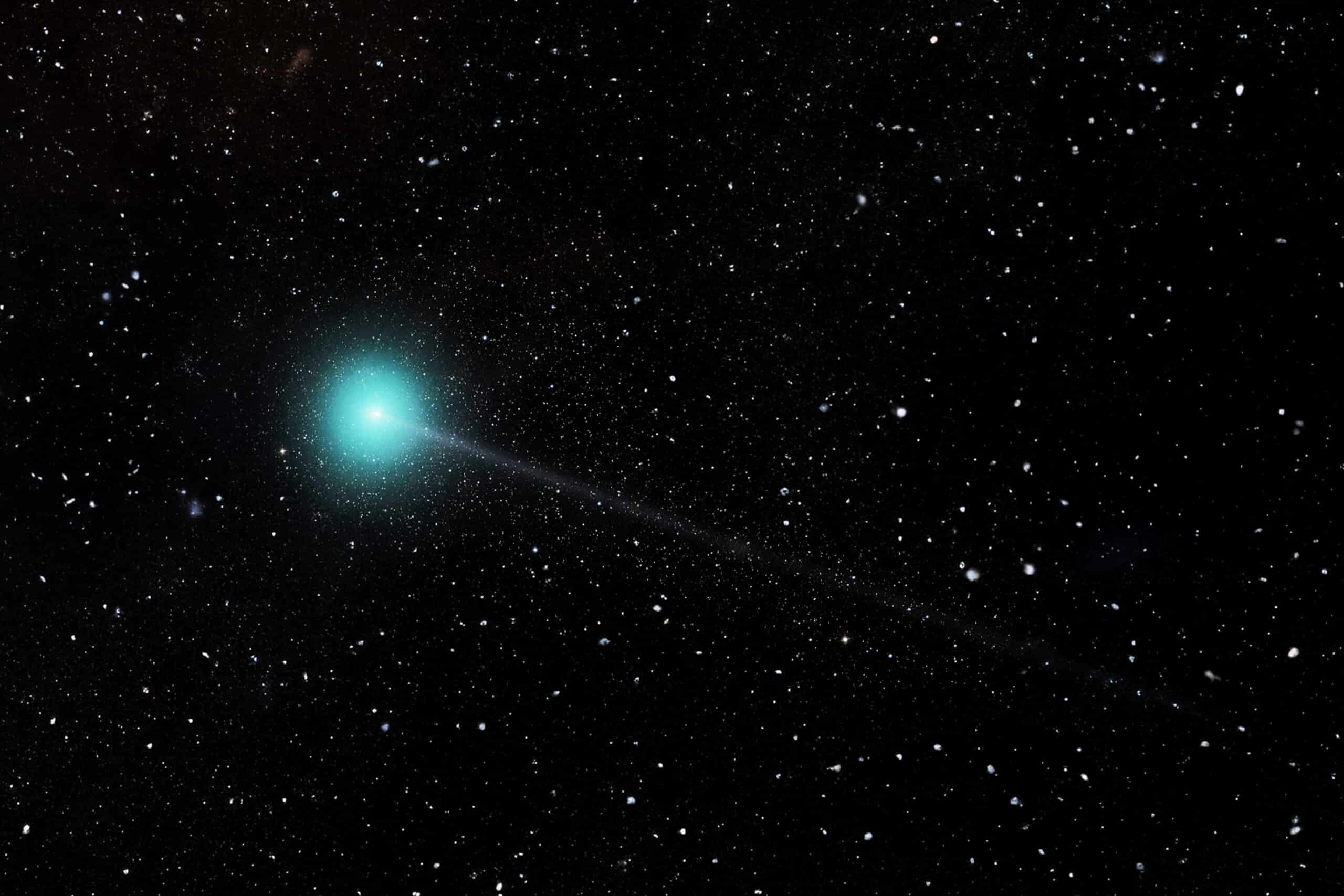
The North American Space Agency (NASA) recently announced the detection of signs of organic molecules in an interstellar comet. Observations made by the SPHEREx telescope revealed the release of these compounds from the 3I/ATLAS object, which crossed the Solar System in 2025. This discovery is significant because it suggests the widespread presence of life-precursor elements in cosmic environments outside our stellar neighborhood.
Detailed data from the SPHEREx telescope indicated the presence of methanol, cyanide and methane among the materials expelled by the comet. These substances are considered crucial as they form the “building blocks” for the chemical reactions that precede the emergence of life as we know it. The detections occurred when the comet approached the Sun and then passed close to Earth’s orbit.
Comet 3I/ATLAS was first identified on July 1, 2025 by the ATLAS automated sounding system, developed to monitor celestial objects close to our planet. Shortly after its discovery, the rocky body was classified as a rare interstellar visitor, as it originated outside our own Solar System and travels through space between different stars.
Important discoveries about the formation and composition of the interstellar comet 3I/ATLAS
During its passage through the Solar System, comet 3I/ATLAS underwent heating, which caused the release of an active coma, a characteristic cloud of gas and dust. This expansion of the coma resulted in the emission of complex organic molecules, including methanol, hydrogen cyanide, and methane. Although these molecules do not constitute life in themselves, they are seen as essential chemical ingredients that can lead to the formation of biological structures under favorable conditions.

The SPHEREx telescope, launched in March 2025 with the mission of mapping the sky in infrared and analyzing the composition of celestial objects, was fundamental for these observations. The equipment managed to record the chemical signatures of these compounds between December 8 and 15, 2025, while the comet was moving away from the Solar System.
NASA experts consider that these observations provide a unique opportunity to study the primordial chemical composition of an object from another star system, formed billions of years ago. The presence of these compounds strongly suggests that complex organic matter, the precursor of life, is abundant in different parts of the universe, going beyond the limits of our Solar System.
It is important to highlight that the results obtained do not confirm the existence of life on comet 3I/ATLAS. However, the detection reinforces the thesis that the basic elements for the chemistry that sustains living organisms are widely disseminated throughout the cosmos, increasing the prospects of finding them in other places.



