Startup Thinking Machines launches Inkling model to personalize artificial intelligence

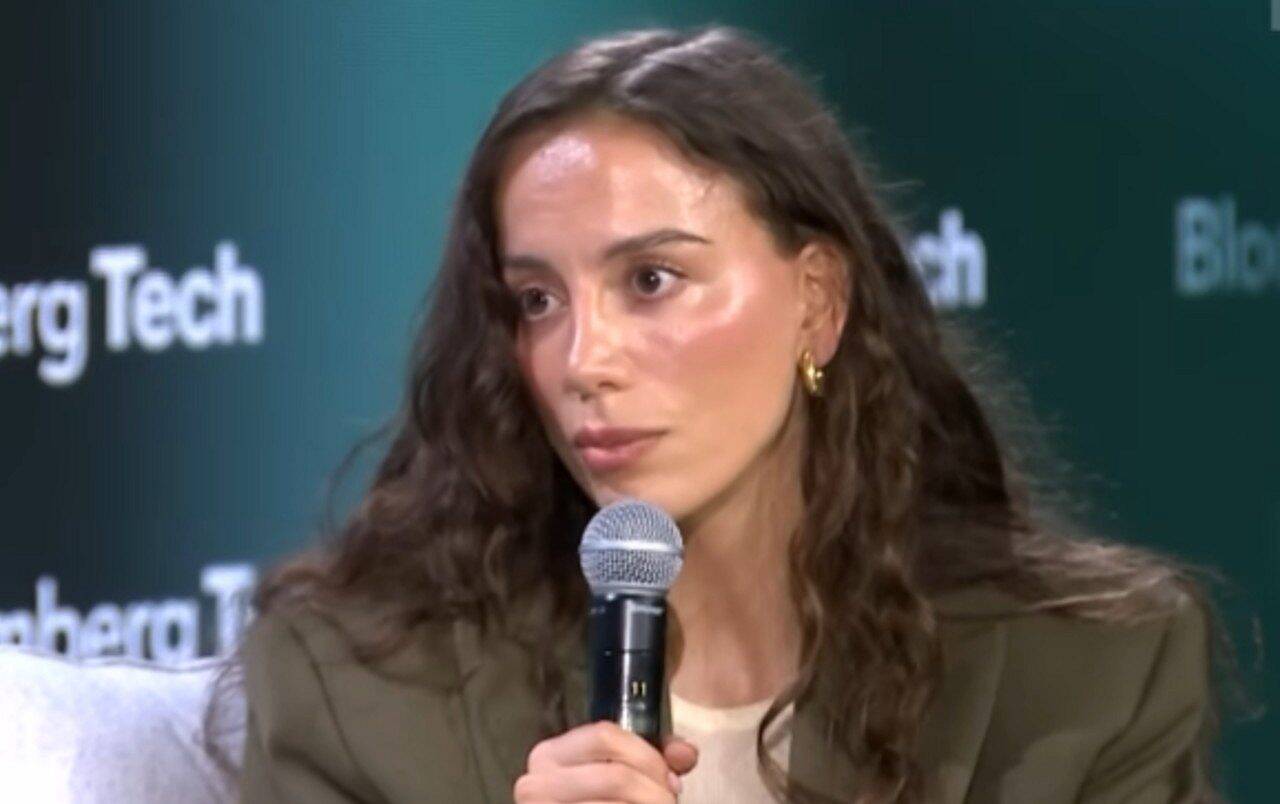
Thinking Machines Lab, an artificial intelligence startup created by former OpenAI CTO Mira Murati, launched on Wednesday, July 15, 2026, its first own AI model, called Inkling. Unlike solutions from giants like OpenAI, Anthropic and Google, Inkling is open source, allowing developers and companies to download and modify it directly.
Inkling is a “mixture-of-experts” system that has 975 billion total parameters, but uses only a fraction, about 41 billion, for each specific task. This common architecture optimizes extensive models, making them faster and more cost-effective. According to the company’s launch materials, the model was trained with 45 trillion text, image, audio and video tokens, being able to reason natively in all of these modalities. However, its outputs are, for now, restricted to text, covering code, styled artifacts and structured data.
This model represents Thinking Machines Lab’s first public advancement after a year and a half focused on building AI infrastructure largely out of the spotlight. Part of this work had already been demonstrated in May, in a preview of research on “interaction models”, artificial intelligence created to listen, speak and even interrupt, unlike traditional chatbots that wait for commands. The launch of Inkling tests the startup’s main bet: that AI adaptable by organizations outperforms the standardized models sold by the largest laboratories.
Inkling is designed to provide accurate answers, indicating uncertainty rather than guesswork, and allows users to adjust “thinking effort” to prioritize speed. In a benchmark test, the company claims that Inkling consumes a third of the tokens used by Nvidia’s Nemotron 3 Ultra, its next-generation open source model, to achieve the same coding performance.
Thinking Machines does not claim that the Inkling is the best model in its class. Their most recent blog post explicitly states that Inkling is “not the strongest model currently available, whether open or closed.” The company’s clear goal is, instead, balanced and versatile performance.
This approach raises the question of which audience, within the corporate market, is Inkling’s true target. For now, Thinking Machines positions Inkling less as an end product and more as a starting point, something that organizations can improve through Tinker, the company’s template customization platform. Consequently, responsibility for the security of customizations lies with customers, not Thinking Machines. It is worth mentioning that model customization requires professionals with high qualifications in machine learning.
OpenAI, Anthropic and Google, on the other hand, adopted very different strategies with their respective ChatGPT, Claude and Gemini. All were designed to compete primarily as general-purpose chatbots, with autonomous and agent capabilities added later.
A publication made by Thinking Machines the previous week served as the basis for this launch. In it, the company argued that artificial intelligence trained centrally by a single organization and defined in a fixed way underperforms AI that is shaped by organizations themselves, since much of the knowledge is specific to the people who hold it.
Other arguments against closed models are gaining traction. In a blog post published on Sunday, Satya Nadella, CEO of Microsoft, a company that has invested billions in OpenAI and Anthropic, warned that companies that use proprietary AI models end up paying twice. Once for subscription costs and again by providing the business knowledge embedded in their prompts and corrections, which can be incorporated into future versions of the templates.
Clem Delangue, CEO of Hugging Face, made a similar prediction in a conversation last week. He said cutting-edge models will increasingly be targeted at experimentation and high-value tasks, while most AI production work will migrate to private or open-source alternatives—exactly the division Thinking Machines is developing.
The strongest argument for the Thinking Machines approach came from a recent project with Bridgewater Associates, the world’s largest hedge fund, which is not a Thinking Machines investor. Researchers from both companies took an existing open source model and further trained it with Bridgewater’s own financial expertise. The result, as reported, achieved 84.7% in financial reasoning tests, surpassing the main proprietary AI models, while costing approximately one-fourteenth of the value to operate. It is important to note, however, that these results come from the evaluation of the two companies, and not from an independent analysis.
In any case, Thinking Machines highlights how quickly it reached this stage. It took OpenAI about five years to bring its technology to market and generate revenue, and Anthropic about three. Thinking Machines claims to have achieved the same in about nine months.
Some will question whether Inkling was trained based on results from competitors’ models, a practice known as “distillation” that has been the subject of industry scrutiny. The short answer, according to the company’s own materials, is: partially. Thinking Machines pre-trained Inkling from scratch, but used other open source models including Moonshot AI’s Kimi K2.5 to help generate some of its initial post-training data before large-scale reinforcement learning took over. The next model, the company guarantees, will employ fully self-contained post-training.
Regarding costs, Thinking Machines has been more reserved. The company partnered with Nvidia in March to deploy a gigawatt of Vera Rubin computing power and trained Inkling entirely on Nvidia’s GB300 NVL72 systems. However, it has not said how it plans to cover these costs, and revenue, according to most analyses, has not been a priority. A $50 billion fundraising round reported in November last year reportedly stalled in January, and the company has avoided commenting on its financial situation since then. A related question is whether Thinking Machines’ spending will one day reach the scale of OpenAI or Anthropic, or whether its efficiency-focused approach means different economics. In other words, the company’s bet may be less about spending like its larger rivals and more about not needing to do so, since since the weights are public, no one who downloads them is required to pay Thinking Machines to run them, unlike the paywalls sold by OpenAI and Anthropic. The company’s revenue must come from Tinker, not the model itself, through training, fine-tuning, and now a part of the hosting ecosystem built around it.
The staff, at least, seems more stable. Thinking Machines currently employs around 200 people, an increase from figures released after a wave of layoffs earlier this year, including two co-founders who joined OpenAI in January. Thinking Machines, in turn, shows no interest in highlighting individual movements, as is common in most of the industry. According to an internal company source, its culture, by design, prioritizes continuity over dependence on any personality. This makes sense as changing teams represents a minor setback when people were never put on a pedestal initially.
Beatriz Lima é colaboradora da redação do Mix Vale, portal de notícias com cobertura de Brasil e mundo. Produz conteúdo nas editorias de economia e benefícios, com foco em informação de serviço para o leitor brasileiro. Escreve para o portal desde 2024.