
UBTech launches the U1 humanoid robot aimed at emotional companionship and promises strict privacy of personal data

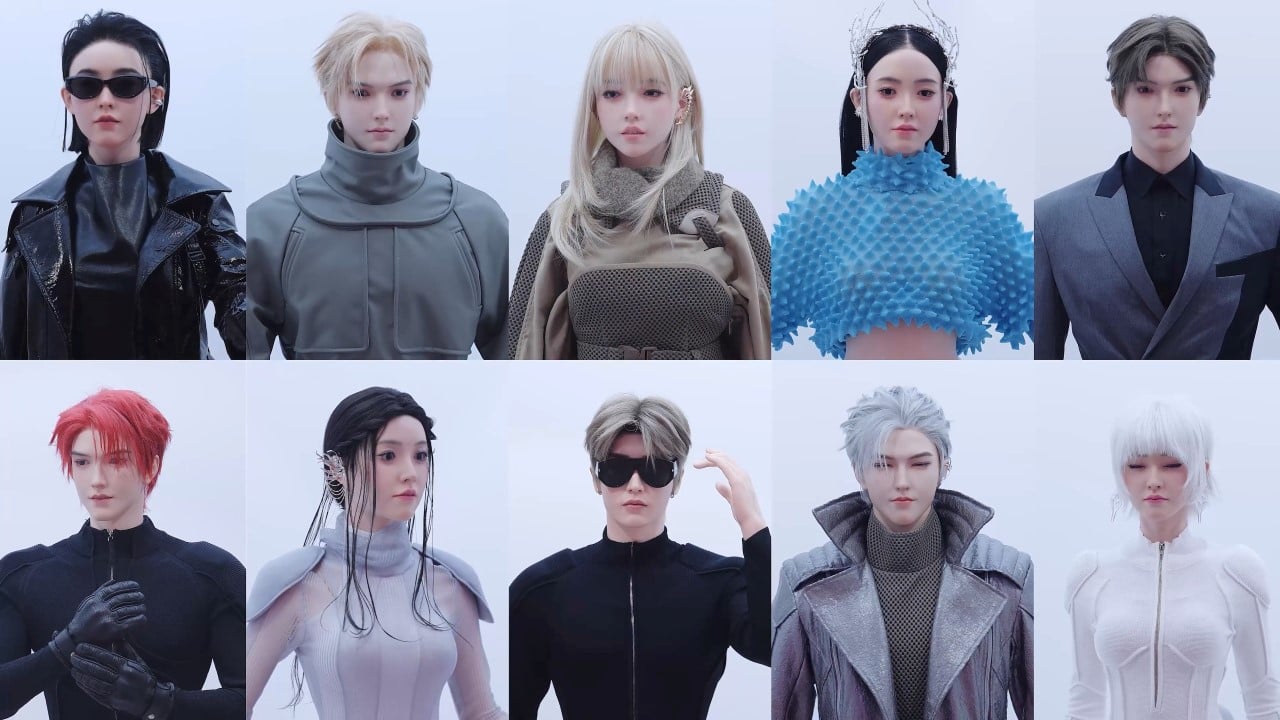
Chinese robotics company UBTech recently launched the U1, considered the first mass-produced hyper-realistic humanoid robot. The model marks a significant advance, being the first humanoid with an appearance very close to a person to be manufactured and commercialized on a large scale, with a focus on providing emotional companionship.
UBTech positions the U1 as a companion for humans, betting on the future of robotics focused on emotional support. Michael Tam, the company’s chief brand officer, describes the company’s robot-people economy as “history’s first essential scenario with unlimited emotional value, borderless companionship, and presence across the entire life cycle.”
In a statement, the company highlighted that approximately 90 million people live alone in China, highlighting potential uses for the robot. Among the applications mentioned are elderly care, reception in hotels and companies, and high-end domestic services for demanding customers.
During the launch event, which took place in Shenzhen, UBTech representatives made a point of emphasizing U1’s ability to converse naturally and maintain direct eye contact with people.
Despite the promises, the robot still faces many limitations, being considered a kind of early version of the replicants seen in the film “Blade Runner – The Android Hunter”. However, its arrival on the market represents an important step in the evolution of artificial intelligence embedded in physical bodies.
Understand the concept of the uncanny valley and its impacts on robots
One of the main challenges that U1 faces is its insertion in what is known as the “uncanny valley”. This phenomenon occurs when a machine comes so close to human appearance that its small defects become noticeable, causing an automatic reaction of discomfort in those who observe it.
This rejection mechanism is an evolutionary trait, shaped over hundreds of thousands of years. It allows the human brain to quickly identify any detail that appears “wrong” or unnatural in a nearly human figure, serving as a form of protection.
The U1 has silicone skin and is capable of interpreting the user’s tone of voice, in addition to processing emotions without transmitting data to external servers. However, the illusion of humanity falls apart during the interaction, as the movements of the joints clearly reveal the motors operating beneath the synthetic skin.
The robot’s physical capabilities remain limited, its “muscles” do not replicate the fluidity of human movements, and its alleged “emotional intelligence” is in fact a combination of pattern recognition and predictions based on language models, without the presence of authentic feelings.
Considering current technical obstacles, it is likely that these humanoid robots will not become indistinguishable from humans in this generation unless there is massive investment from other companies in the same research and development direction.
Main technical obstacles faced by humanoid robots
For humanoid robots to conquer the mass market, they must first overcome the barrier of the Uncanny Valley. This is a crucial step towards the acceptance and integration of these devices into people’s daily lives.
A study carried out in 2016 demonstrated that robots with a partially human appearance were better received by individuals already accustomed to technology. In contrast, users less familiar with technological advances reacted quite negatively to the same feature.
More recent research, from 2025, deepened this analysis by monitoring physiological signals, such as cardiac activity, skin conductance and gaze direction. The results indicated that overly human faces provoke more intense negative emotional reactions than clearly robotic faces.
Interestingly, voices that sound human tend to produce the opposite effect, conveying more comfort and generating more favorable impressions. Despite this, when observing these humanoid robots speaking, it is clear that their body movements are still quite artificial and lack naturalness.
The human face is a complex structure, controlled by 43 muscles capable of generating around 10,000 distinct microexpressions. In U1, there are no subtle contraction and relaxation movements that give authenticity to a facial expression. Reproducing this level of detail is essential to creating an android that is truly indistinguishable from a person.
UBTech highlights U1’s ability to converse naturally and maintain eye contact with people, which represents an important advance in interaction.
This is just one of the physical challenges. Replicating the synchronized movements of the mouth, tongue and larynx, necessary for natural speech, or even perfectly synchronizing a synthetic voice, seems to be a goal that will take decades to achieve.
Software development can advance faster than hardware, given that science already has a good understanding of how facial muscles produce expressions. The real challenge will be to integrate this knowledge into artificial intelligence systems capable of simulating emotions in a convincing and realistic way.
It is essential to remember that the U1 represents only the first commercial version of a humanoid robot with hyper-realistic characteristics. Although it is still far from being the final result, the fact that it is now available for purchase on the market symbolizes significant progress in the field of advanced robotics.
Consumer expectations about the robot for companionship
According to information released by UBTech, the U1 page on the JD.com marketplace registered more than one million views shortly after the opening of pre-sales, demonstrating great interest from the public.
During the launch event, Zhou Jian, founder and CEO of the company, announced that reservations had already surpassed the 13 thousand units mark. To guarantee the purchase of the robot, interested parties must make a refundable deposit of 3,000 yuan, equivalent to approximately US$442.
The company also ensures that its new robotic companion does not have the ability to spy on users. The U1 was designed to interpret emotions and make decisions without the need for an internet connection, as all processing is carried out by a chip embedded directly into the device.
According to UBTech, all personal data collected remains stored in the robot itself, without being sent to external servers. This feature, in theory, offers an additional layer of privacy to device users.
This particularity could be a determining factor for the market acceptance of domestic robots, considering that these devices will be constantly in visual and auditory contact with their owners. After all, concern about hackers accessing memories recorded by a robot and stored in the cloud is a sensitive point for many consumers.
All that remains is to wait for the reaction of the first U1 buyers when they begin to receive their robotic companions, with deliveries scheduled for September 15th.
U1 does not seek to pose as a replicant or completely replace human beings in their social interactions. For now, it is just the seed of a technology that, in the future, could evolve in this direction, offering an increasingly human body for embedded artificial intelligence.



