
What is the ‘second moon’ that is orbiting the Earth? Understand the astronomical phenomenon
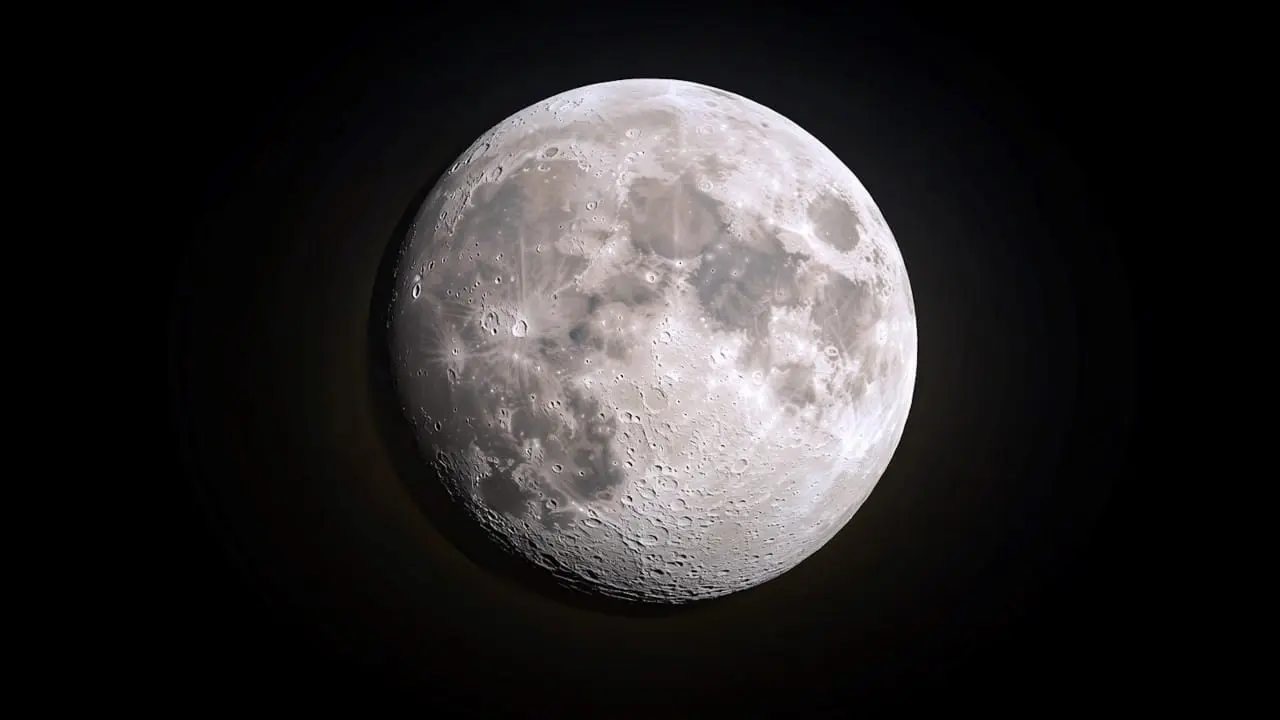
In the first half of August 2025, the Pan-Starrs observatory, located in Hawaii, detected an asteroid with an estimated diameter of between 18 and 36 meters that orbits the Sun on a trajectory almost identical to that of our planet. This celestial body, named 2025 PN7, creates a visual illusion of being in Earth’s orbit, acting as a harmless space “neighbor” that is expected to remain nearby for several decades.
The identification of the asteroid follows the protocols of the Minor Planet Center, which is part of the International Astronomical Union (IAU), responsible for registering new celestial bodies. The sequence “2025 PN7” is a code that works like an astronomical birth certificate, indicating the year of discovery (2025), the fortnight of August (P) and the chronological order of the find (N7). This designation will be the space rock’s official identity until its orbit is mapped in detail and given a permanent name.
Read also: Overcrowding of Earth’s orbit increases the danger of collisions between satellites
With a maximum diameter of 36 meters, 2025 PN7 is comparable in size to a building of up to twelve floors. However, its mass is insignificant on a cosmic scale, making it invisible to the naked eye. The asteroid does not exert a gravitational force capable of impacting ocean tides and does not present any risk of collision with the Earth’s surface.
Scientists explain the definition of near-moons
Experts classify objects with this type of orbital behavior as quasi-satellites or quasi-moons. Unlike the real Moon, which is directly affected by Earth’s gravity and orbits our planet, 2025 PN7 has the Sun as the center of its main orbit. The perception that it is a “second moon” arises from the perspective of those observing from Earth and from a mathematical relationship called 1:1 resonance, which keeps the orbits synchronized.
Research centers and astronomical observatories use networked supercomputers to process the vast volume of information about these orbital trajectories. These advanced calculations reveal that 2025 PN7 has been accompanying Earth on its cosmic journey since the 1960s.
Understand the case: NASA discovery of fake asteroid changes Earth protection calculations
The dynamics of the orbit can be understood by the analogy of two cars traveling in the same lane of a highway, maintaining the same speed. To anyone observing from one of the vehicles, the other appears to be stationary alongside or even orbiting, when in fact both are just following the same path. Data from the original discovery indicate that this proximity is temporary, and the asteroid should naturally move away from Earth’s orbit after the year 2083.
More news in Latest News (EN)
See more →More news on Mix Vale
- 1Britain prepares targeted sanctions against Israeli West Bank settlements over international law violations
- 2Bronson Reed returns to WWE ring with stunning 90-pound transformation, declares himself unstoppable
- 3South Bend blaze devastates future affordable housing project, prompts nearby resident evacuation
- 4Descoberta de naufrágio romano de 2.100 anos na Sicília revela segredos do comércio antigo no Mediterrâneo
- 5Australia advances landmark bill for digital duty of care, enabling algorithm deactivation for users aged 16+
- 6China inaugurates regular Arctic shipping route amidst melting ice, sparking economic and geopolitical debate
- 7Canada activates sweeping counter-tariffs targeting US goods amidst escalating trade tensions
- 8Australian education faces severe disruption, latest PISA report reveals significant learning gap
- 9Texas board approves revised social studies curriculum amid fierce debate over Islam’s portrayal and 9/11 links
- 10Shinjuku ward restricts short-term rentals following resident grievances over tourist behavior