
Astronomical phenomenon of 2027 will bring the greatest daytime darkness of the century

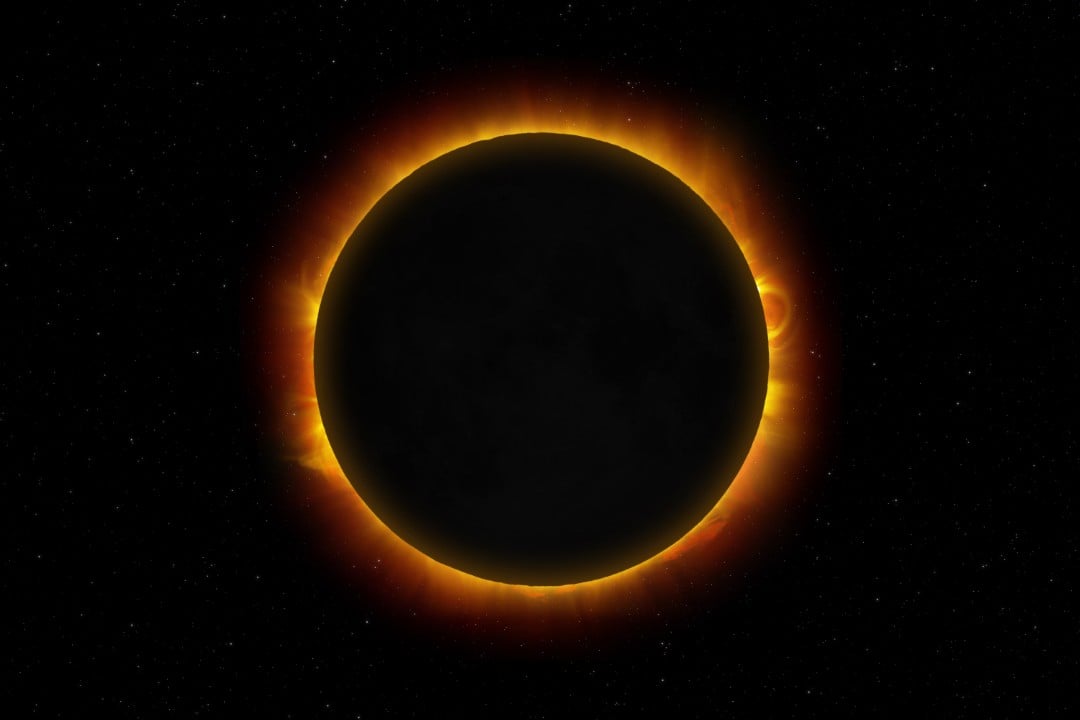
August 2, 2027 will be marked in the history of contemporary astronomy for transforming a sunny afternoon into a deep night. On this specific date, observers will have the opportunity to observe the biggest blockage of sunlight this century, when the lunar shadow will sweep across different continents and cause a sharp drop in local temperatures.
Astronomical factors that explain the magnitude of the celestial event
During the height of the light blockade, absolute darkness will reach an impressive 6 minutes and 23 seconds, easily surpassing the approximately 4 minutes recorded in the popular April 2024 event in North America. This exceptional time window sets a new record for observations made on dry land in modern times, restricted to a very specific geographic range.

The mathematics behind this longevity rests on the orbital mechanics of our natural satellite. At the exact moment of occultation, the celestial body will be crossing its perigee, the region of its orbit that is closest to our planet, which visually increases its diameter in the firmament and generates a much wider shadow cone on the Earth’s surface.
- Maximum hiding time: The total phase will reach 6 minutes and 23 seconds, breaking current records.
- Astronomical calendar: Complete blocking of sunlight will occur on August 2, 2027.
- Umbra route: The privileged visibility range will cross the Atlantic Ocean, parts of Europe, the north of the African continent and the Middle East.
- Window of opportunity: A cosmic configuration of this same duration will only happen again in the year 2114.
- Orbital mechanics: Perfect alignment during lunar perigee is largely responsible for extending the time of the phenomenon.
Sensory changes and reactions of nature during concealment
Minutes before the solar disk disappears completely, the landscape undergoes drastic changes, with the light taking on a silvery tone and the shadows projecting extremely sharp contours on the ground. The immediate temperature drop confuses the local fauna, causing birds to return to their nests and nocturnal insects to start singing, deceived by a false dusk.
Tourists and scientists positioned exactly on the central route will have the privilege of experiencing a sensorial immersion that borders on the indescribable. As the next window with such extreme characteristics is only calculated for the 22nd century, it is literally the only chance the current generation has of witnessing something of this magnitude.
Rare optical effects that precede absolute darkness
In the final transition to daytime night, sunlight leaks through the craters and mountains of the lunar rim, creating sparkling spots known to astronomers as Baily’s Beads. Seconds later, this necklace of lights merges into a single, intense lateral flash, forming the famous visual effect that resembles a precious jewel shining in space.
What to see in the sky when the Sun’s light disappears
As soon as totality sets in, the outer atmosphere of our star, normally overshadowed by the central glow, reveals itself in all its splendor without the need for equipment. This plasma corona draws ghostly white filaments that dance around the black circle formed by the satellite’s silhouette.
The sudden pitch also lights up the firmament in a surreal way, allowing entire constellations and the brightest planets in the solar system to catch your eye in broad daylight.
When the six minutes are up, the cosmic choreography plays backwards, bringing back the pinpoint flashes and intense glow at the edges. Natural light quickly regains its dominance over the landscape, dispelling the nocturnal illusion in a matter of moments.
Strict protocols to protect vision during the event
Direct and unprotected contemplation is only medically permitted during the exact minutes when there is no beam of direct light reaching the Earth. To follow the transition phases, when the disc is still partially exposed, the viewer must use displays certified with the international optical safety standard.
Experts warn that improvising with old x-rays, dark designer lenses or automotive film can cause irreversible damage to the retina in just a few seconds. Photographic equipment and telescopes also require the installation of professional sun blockers on their front lenses to prevent heat from melting the internal sensors.
Impact on global tourism and the competition for observation sites
The detailed mapping carried out by experts in celestial mechanics has already triggered a real rush in the international tourism sector. Destinations that are located exactly in the center of the shadow band, such as the historic city of Luxor, in Egypt — famous for its almost zero cloud cover — and the southern region of Spain, are already reporting maximum capacity in their hotel chains, even though the event is years away.
This great orbital encounter in 2027 is consolidated as the main scientific event of the decade for eclipse hunters and nature enthusiasts. Anyone who misses the chance to see the solar corona with the naked eye and feel the cold of the night in the middle of the afternoon will have to accept that a spectacle of this exact magnitude will be restricted to history books until the distant year 2114.



