
Space rock that hit home in the United States reveals clues about the origin of life

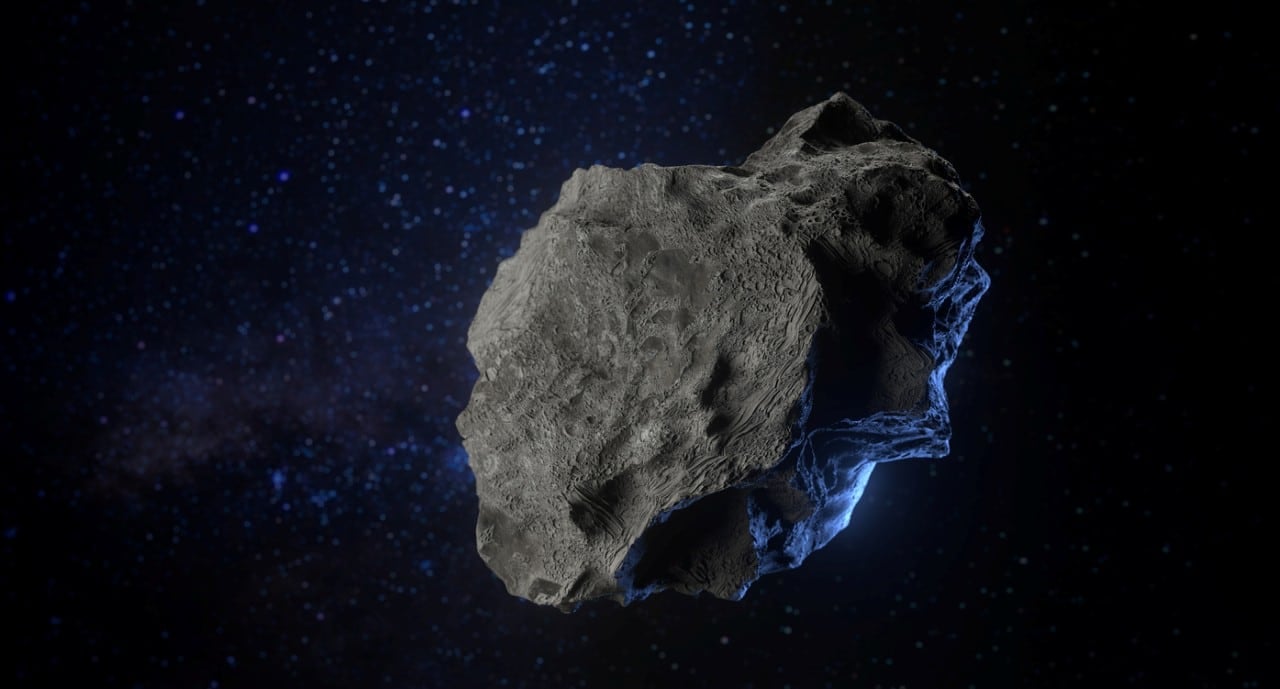
A cosmic fragment that fell from the sky and pierced the roof of a residence in the United States two years ago has just provided unprecedented data for the scientific community. The material, which has traveled through outer space for billions of years, carries fundamental chemical compounds that could rewrite what is known about the emergence of living organisms on our planet. Researchers confirmed that the rock has almost unique characteristics, mixing minerals and salts in a way rarely observed in terrestrial laboratories.
The incident occurred in the city of Hillsborough, located in the state of New Jersey, when a fireball tore through the atmosphere in the American east coast region. The original object weighed around 50 kilograms, a size comparable to checked luggage, and generated a sonic boom heard even in New York. Upon hitting the ground, the rock fragmented in the house’s bedroom, scattering pieces that immediately drew attention due to the strong odor emitted in the room.
PRESS RELEASE
Alien World Chemistry Found Inside Meteorite That Struck New Jersey HomeOn July 16, 2024, a daytime meteor shook New York City with a sonic boom as it passed just south of the Statue of Liberty. Now, an international team of researchers reports in the journal… pic.twitter.com/2mPbm7sGFJ
— The SETI Institute (@SETIInstitute) July 15, 2026
This distinctive sulfur smell was the first clue that the material harbored ancient secrets about the formation of the solar system. Astronomers linked to the SETI Institute and NASA’s Ames Research Center assessed that inhaling that aroma was, in a way, breathing the same gases that made up Earth’s primitive atmosphere. From that moment on, a race began to ensure that the chemical properties of the object were not lost through contact with the domestic environment.
The resident’s decisive attitude to preserve the integrity of the sample
The big difference in this case was not just the fall in an inhabited area, but the immediate and correct reaction of the property owner. Instead of picking up the debris with his bare hands, the resident put on protective gloves and carefully stored the pieces inside clean glass jars. This simple physical barrier prevented the natural oils of human skin, sweat and terrestrial microorganisms from contaminating the porous surface of the mineral.
Astrobiology experts explain that carbonaceous chondrite meteorites work like sponges, absorbing any moisture or organic compound around them in a matter of seconds. If direct contact had occurred, billions of years of chemical history would have been erased, making accurate detection of extraterrestrial amino acids impossible. The care was so extreme that it even compensated for the presence of small threads of carpet and fiberglass splinters that stuck to the rock during the impact on the ceiling.
Soon after isolating the fragments, the citizen contacted the American Meteorite Society, allowing the scientific rescue to take place in record time. This logistical agility transformed the Hillsborough artifact into one of the purest specimens ever recovered by modern science. The impeccable preservation paved the way for in-depth analyzes that revealed a surprising internal composition.
Laboratory analyzes reveal a new category of space rock
The material was sent to the laboratories at NASA’s Johnson Space Center, where a team led by researcher Mike Zolensky began the chemical dissection process. The tests confirmed a high concentration of complex organic compounds, generated from the interaction between the original minerals and external agents over cosmic eras. The most intriguing thing for scientists was seeing the extreme level of alteration caused by liquid water inside the rock structure.
Traditionally, science divides these primitive meteorites into two main classes based on water exposure. The so-called CM2 come from celestial bodies that have undergone little change by fluids, while the CM1 type belong to asteroids that have been intensely bathed by water. The specimen that fell in New Jersey defied this rule, presenting simultaneous characteristics of both groups and forcing experts to use a rare nomenclature.
The rock was officially classified as a CM1/2 carbonaceous chondrite, becoming only the second specimen with this exact chemical signature ever cataloged in the entire history of meteoritics. This intermediate position indicates that the progenitor asteroid had pockets of liquid water that, at some point, completely evaporated. The evaporation process left behind deposits of crystallized salt, transforming the celestial body into a brackish environment.
The role of extraterrestrial brine in the emergence of living organisms
The discovery of salty fragments embedded in the meteorite’s matrix offers valuable support for the theory of panspermia, which suggests that the building blocks of life came from space. Researchers argue that the presence of brine on the original asteroid acted as a perfect catalyst for complex chemical reactions. This moist, mineral-rich environment would have facilitated the union of simple molecules to form more sophisticated structures.
The preliminary analyzes detailed in the study indicate that the amino acids found in the sample were formed precisely thanks to these reactions driven by salt. Understanding how these molecules were organized on a cold and distant asteroid helps to piece together the puzzle of how the early Earth, when bombarded by millions of these rocks, accumulated the material necessary to generate the first cells. The Hillsborough meteorite therefore acts as an intact time capsule of this primordial process.
Orbit reconstruction and data crossing with space agency missions
In addition to the chemistry, the physics of the crash also provided crucial information, thanks to an improvised citizen surveillance network. Home security cameras, smart doorbells and videos recorded by residents in several East Coast states captured the meteor’s glow from different angles. Cross-referencing these images with data from Newark Airport’s Doppler weather radar, which detected the cloud of debris spreading from Staten Island to New Jersey, scientists calculated the exact speed and angle of entry.
This reverse engineering of the trajectory made it possible to trace the object’s path back to space, pointing its origin to the inner region of the main asteroid belt, located between Mars and Jupiter. Knowing the exact address where the rock came from allows astronomers to compare its composition with telescopic observations of that specific area of the solar system.
The place of origin coincides with the exploration route of the Lucy mission, a probe launched by the American space agency in 2021 to study Trojan asteroids. There is a strong probability that the spacecraft’s instruments have already scanned the giant asteroid from which this 50-kilogram fragment broke off millions of years ago. This direct connection between material collected on the ground and orbital data is considered a milestone in modern astronomy.
Guidelines for future astronomical events and public exhibition
The successful recovery in New Jersey has led researchers to reinforce the importance of civil collaboration in planetary science. When a flash crosses the sky and generates a sonic boom, the window of opportunity to find intact fragments is extremely short. Therefore, experts recommend that the population adopt specific protocols if they witness or find traces of a recent fall.
- Immediately check vehicle and home security camera records to help calculate trajectory.
- Never touch a suspected space rock with your bare hands, always using clean gloves or metal tongs.
- Store the material in sterilized glass containers or aluminum foil, avoiding plastics that release contaminating gases.
- Notify local astronomical research institutions or universities so that official collection can be done quickly.
All the scientific rigor applied to this case resulted in a detailed article, recently published in the prestigious journal Science Advances, validating the findings before the global community. For the general public who wish to observe this fundamental piece of the history of the solar system up close, parts of the meteorite have been integrated into the permanent collection of the American Museum of Natural History, in the New York metropolitan region. The exhibit serves as a physical reminder that answers to biology’s greatest mysteries can literally fall from the sky.





