
Scientists find raspberry sugar at the center of the galaxy: what does this mean for life in the Universe?

Interstellar space has just gained a new sweet touch: a type of sugar known as erythulose has been identified near the center of the Milky Way, as revealed in a recent study.
This detection, carried out in a gas cloud called G+0.693-0.027, marks the first time such sugar has been found outside the solar system. It reinforces investigations that seek essential ingredients for life, such as water, in other regions of our galaxy.
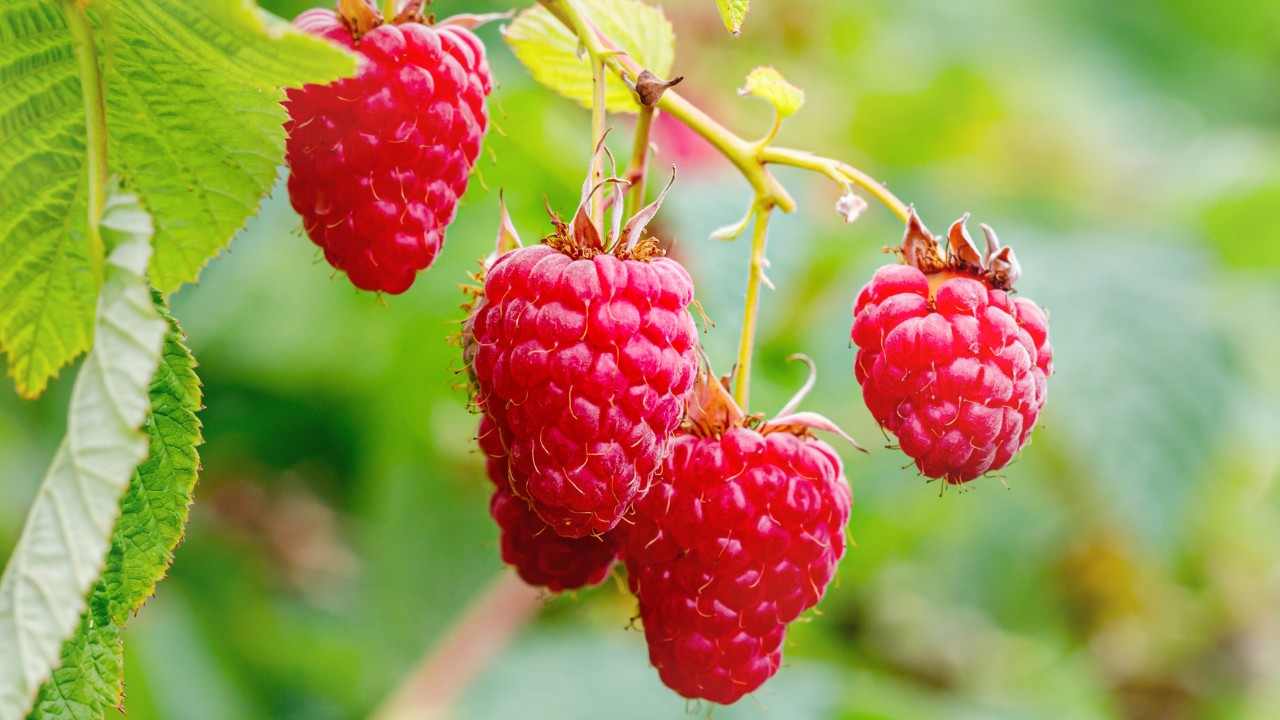
Erythulose, a molecule made up of four carbon atoms, is also found in fruits such as raspberries. Its presence in the interstellar medium was confirmed by radio telescopes at Yebes (40 meters) and IRAM (30 meters), located in Spain. The results were released by the research team on Monday, July 13, in the journal Nature Astronomy, with the erythulose signal validated through laboratory measurements.
While the space science community often focuses on water and carbon in the search for life-sustaining elements, sugars also play a crucial role. In a statement, the researchers highlighted that “sugars are vital molecules in living systems, as they help provide energy, build important biological structures and form parts of genetic material.”
Izaskun Jiménez-Serra, study co-author and researcher at Spain’s Superior Council for Scientific Investigations, explained that the discovery was possible “thanks to the combination of exceptionally sensitive observations, broad frequency coverage and high-precision laboratory spectroscopic data.” He added that the astronomical target studied has “one of the richest chemical inventories in the galaxy, which increases the probability of detection.”
The scientist highlighted that the identification of erythulose has “particular relevance to the field of the origin of life”, as this sugar can alter the configuration of threose. Throse is another sugar considered a fundamental precursor to the first nucleic acids that eventually evolved into RNA and DNA, deepening our understanding of how life may have arisen.
Sugars such as ribose (a basic component of RNA) and glucose (produced by photosynthesis on Earth) had already been found in meteorites and asteroid samples. Recently, the OSIRIS-REx mission, when returning samples from the asteroid Bennu, confirmed the presence of ribose and glucose, indicating the availability of these vital ingredients for biology in other parts of the solar system.
Previously, researchers faced difficulties in reproducing erythulose in environments that simulated early Earth. Laboratory experiments produced “insufficient concentrations” of this sugar on the pre-biotic Earth’s surface (before the emergence of life), according to scientists.
However, the new discovery of erythulose in a cloud of interstellar gas and dust suggests that this sugar could have been present in the interstellar medium, facilitating its incorporation into rocky planets like Earth during their early stages of formation and evolution.
In this way, ribose, glucose and erythulose may have formed a “sugar stock” for the Earth even before its complete formation, the researchers stated. The team added in a statement that “the findings suggest that erythulose may form from simpler molecules in dust grains in space and subsequently integrate into more complex chemical systems.”
This detection of sugars in the cosmos reinforces the theory that many, if not all, of the essential components for life are abundant and widely distributed throughout space.
Jiménez-Serra pointed out that one of the most promising next steps is to “look for even more complex sugars and molecules that are direct precursors to RNA and other biologically important compounds.” He concluded by stating a desire to “understand how far prebiotic chemistry can progress even before the formation of planets and what set of chemicals young planetary systems inherit from interstellar space.”



