
Trafficking and singing competitions threaten songbirds in Asia

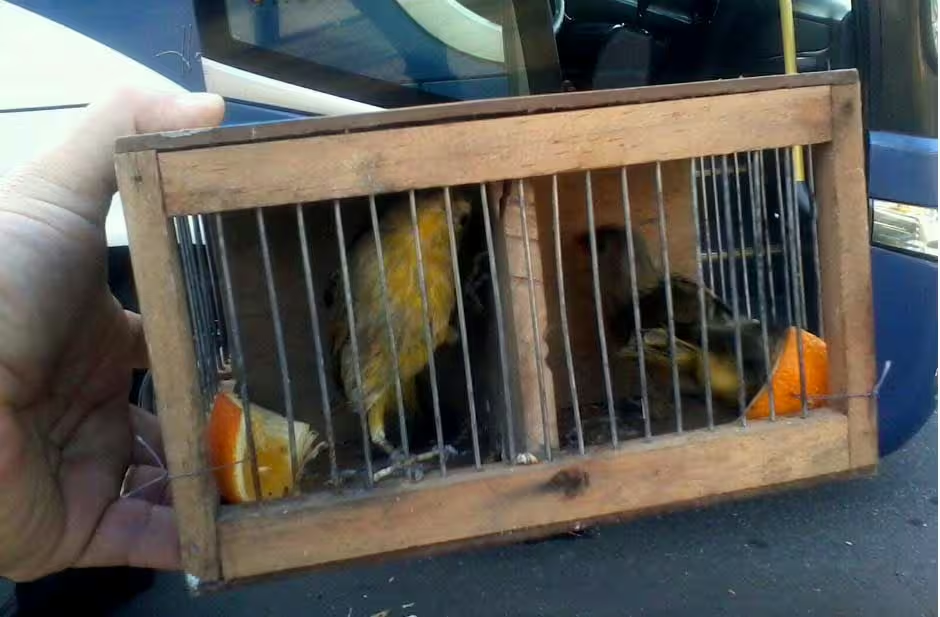
Millions of songbirds are captured and smuggled every year in Southeast Asia, destined to be kept as pets or to participate in lucrative singing competitions. Experts warn that this practice is driving a severe biodiversity crisis, with species on the brink of extinction. The situation was observed in competitions in Indonesia, such as one that occurred on the last Sunday of April, in the city of Sukabumi.
The fascination with songbirds and competitions on the rise in Indonesia
The culture of keeping birds as pets is ancient in Indonesia, especially among the Javanese, the country’s largest ethnic group. For them, owning a bird is one of the five elements that define a successful man, along with a wife, house, vehicle and a ceremonial dagger. Songbirds are prized for their melodious songs and colorful plumage, serving as a stress-relieving hobby and, for some, a source of income.
Since the 1970s, the popularity of bird singing competitions has grown exponentially across Indonesia. Local and regional events, which can bring together up to a thousand birds monthly or weekly, offer significant prizes such as motorcycles, goats, watches and sums of money equivalent to years’ salary. These awards and the prestige associated with the winners drive a growing demand for birds, fueling the cycle of capture in the wild.
Smuggling and the Devastating Impact on Wild Populations
The belief that wild birds have superior singing quality and a wider repertoire than those bred in captivity intensifies illegal hunting. Millions of birds are captured in forests and transported in precarious conditions, often in tiny boxes, drainage pipes and even plastic bottles, to pet markets in big cities like Jakarta and Surabaya. Mortality rates during transport vary drastically, from 30% to 80%.
Estimates indicate that between 66 million and 84 million caged birds are kept on the island of Java alone, where 56% of the Indonesian population resides and a third of families own birds. This includes more than 3 million white-tailed shamas and 2 million eastern magpie robins. This scenario led Alexander Lees, a conservation biologist at Manchester Metropolitan University, to assert that “there may be more birds behind bars than in the wild.”
Endangered species and the silence that spreads in the forests
The passion for these birds, combined with competitions, has already led some species to extinction and many others are on the brink, a situation dubbed the “Asian songbird crisis”. Experts warn that the ecological impact could be irreversible, leading to “empty forest syndrome”. In this phenomenon, the forests appear visually intact, but are devoid of animals, seriously impacting the ecosystem.
Birds perform crucial ecological functions such as plant pollination, seed dispersal and insect control. The massive loss of these populations can generate cascading imbalances, affecting forest regeneration and environmental health. A clear example of the consequences is the case of the island of Guam, which lost almost all of its songbirds after the accidental introduction of the brown tree snake, resulting in an ecosystem dominated by spiders.
- Some of the species most affected by illegal trade in Asia, according to the International Union for Conservation of Nature, include:
– Straw-headed Bulbul (known for its duets)
– Bali Starling (distinguished by its white plumage and electric blue eye ring)
– Black-winged Myna (threatened, with less than 250 wild individuals)
– Javan green magpie (threatened, with less than 100 wild individuals)
Rescue centers: an effort to reverse the crisis
In the face of the emergency, organizations such as Planet Indonesia have established sanctuaries such as the Wak Gatak Songbird Rescue and Rehabilitation Center. Located near Pontianak, West Kalimantan, this center aims to provide adequate facilities for authorities to confiscate illegally captured birds, ensuring their welfare and rehabilitation.
Birds often arrive at Wak Gatak in an alarming state: malnourished, missing feathers, fatigued or withdrawn. Beak injuries, leg fractures from fighting in confined spaces, and a high initial mortality rate (70% to 80% in the first two weeks) are common. After a visual inspection and disease treatment, the birds undergo a quarantine period of at least 14 days for health monitoring.
In the rehabilitation aviaries, which are more spacious and have vegetation, the aim is to stimulate the birds and readapt them to flying and living in the wild. However, not all birds can be released. Those that have become accustomed to humans, like some hill mynahs, may have difficulty communicating with wild birds or even teaching them unnatural calls, remaining in the center for an indefinite period of time.
The difficult fight against illegal trade and changing mentality
Although Indonesian laws prohibit the capture and trade of more than 500 species of birds, including many songbirds, enforcement is weak due to scarcity of resources, corruption and other factors. This results in the local extinction of several species, such as the Javan spotted starling. The complexity increases because groups of bird enthusiasts have strong influence and even government officials, including former president Joko Widodo in 2018, participate in the competitions.
To combat the crisis effectively, it is crucial to act on the root of the problem: demand. Efforts are aimed at changing population attitudes and behaviors, such as outdoor campaigns and behavior change workshops in cities close to forests where illegal hunting is intense. Individual awareness also makes a difference, as in the case of veterinarian Happy Ferdiansyah, who, upon graduating, freed his own birds, realizing the impact of his passion. The work of rescue centers, although essential, is a small drop in the ocean given the scale of the crisis.



