
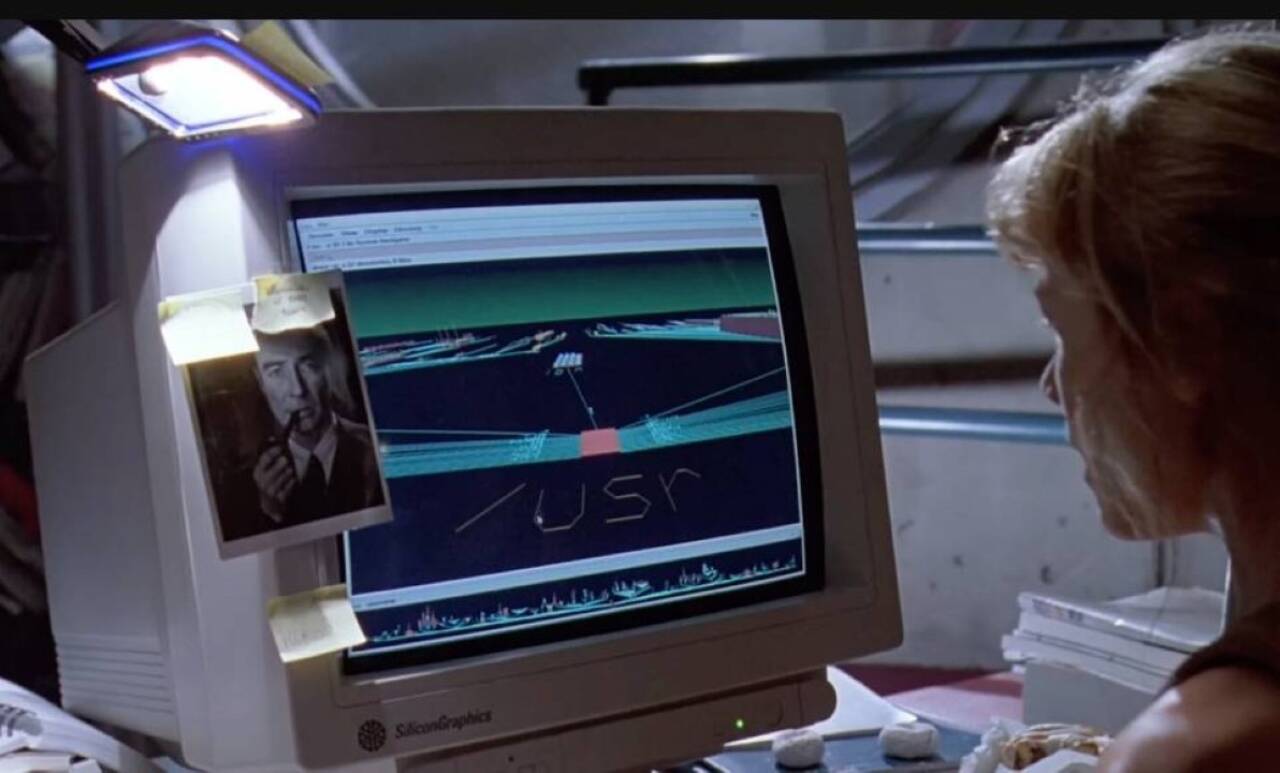
The filmJurassic Park, widely adored as a classic, has once again become the topic of intense conversation starting this week, July 15, 2026. The new wave of interest is due, in part, to a character’s infamous line declaring, “This is a Unix system, I know it!”, while using a computer with an unusual 3D file manager interface.
Despite the jokes and memes, the team responsible for film production demonstrated remarkable rigor in choosing computers and other technological elements for the scenarios. This precision is understandable, considering writer Michael Crichton’s extensive experience with the world of computing and his meticulous attention to detail in the literary work that inspired the film.
This dedication was recently highlighted by an investigation by Google software engineer Fabien Sanglard. He carefully analyzed the film, identifying each visible hardware component, listing its characteristics, and sharing data from other sources on specifications, costs, and how these equipment were incorporated into the production.
Although the technology inJurassic ParkAlthough this topic has been debated for years, it has been a long time since such a complete and easily accessible compilation appeared. The subject, in fact, has gained renewed prominence in recent weeks on forums such as Reddit and Hacker News, also influenced by the recent loss of beloved actor Sam Neill, which naturally brought the film back into public discussion.
Among the equipment identified by Sanglard are five Thinking Machines CM-5 systems, a Motorola Envoy PDA and several cutting-edge SGI workstations for the time, including models such as the IRIS Crimson and R4000 Indigo. Cory Faucher, special effects coordinator forJurassic Park, made the following comment, recorded in the bookThe Making of Jurassic Park:
“Everything on the set was real. We couldn’t fake anything because audiences these days have a very sophisticated knowledge of computers. In total, $875,000 was invested in computer hardware on loan from Silicon Graphics, $350,000 from Apple, and about $500,000 in additional hardware and software to equip both the set and the off-stage control room.”
Interestingly, two of the computers used by the character Dennis Nedry were Macintosh Quadra 700 models. This fact is somewhat ironic, given that Apple’s current policy generally prevents its products from being associated with villainous roles in film productions.
The production’s attention was not limited to hardware, but extended to software. Many viewers certainly recognize the QuickTime video player in the film. Sanglard points out that, in several passages, the characters operated an actual command-line interface. Additionally, it highlighted FSN, an experimental 3D file system browser that prompted the iconic declaration about the “Unix system” – which, yes, was indeed a Unix system.
For those interested in trying out the FSN file explorer for themselves, you can do so. Earlier this year, historian and computer enthusiast Andrew Warkentin launched the “Virtual Operating Systems Museum,” a vast 174GB collection containing some of the software seen in production.
For those looking for an even greater immersion, Fabien Sanglard’s blog post offers additional details about the wide range of devices, their specifications and several other interesting historical quotes that enrich the understanding of the topic.





