
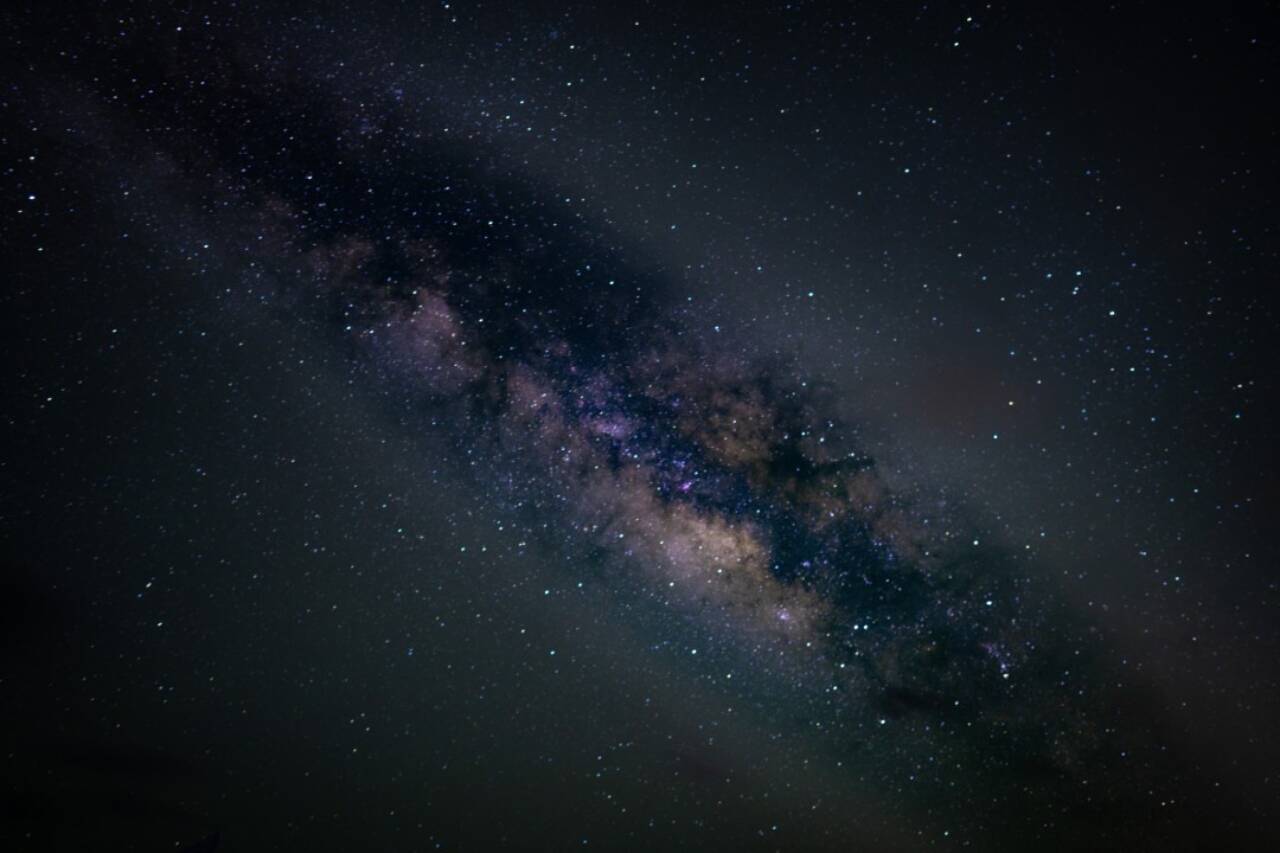
Recently, scientists announced that two of the Milky Way’s gigantic spiral arms are significantly further apart than previously thought, according to findings published on June 19 in the journal Astronomy and Astrophysics. This new information, gleaned from echoes of distant cosmic explosions, could lead researchers to reassess the mass and even the shape of our own galaxy.
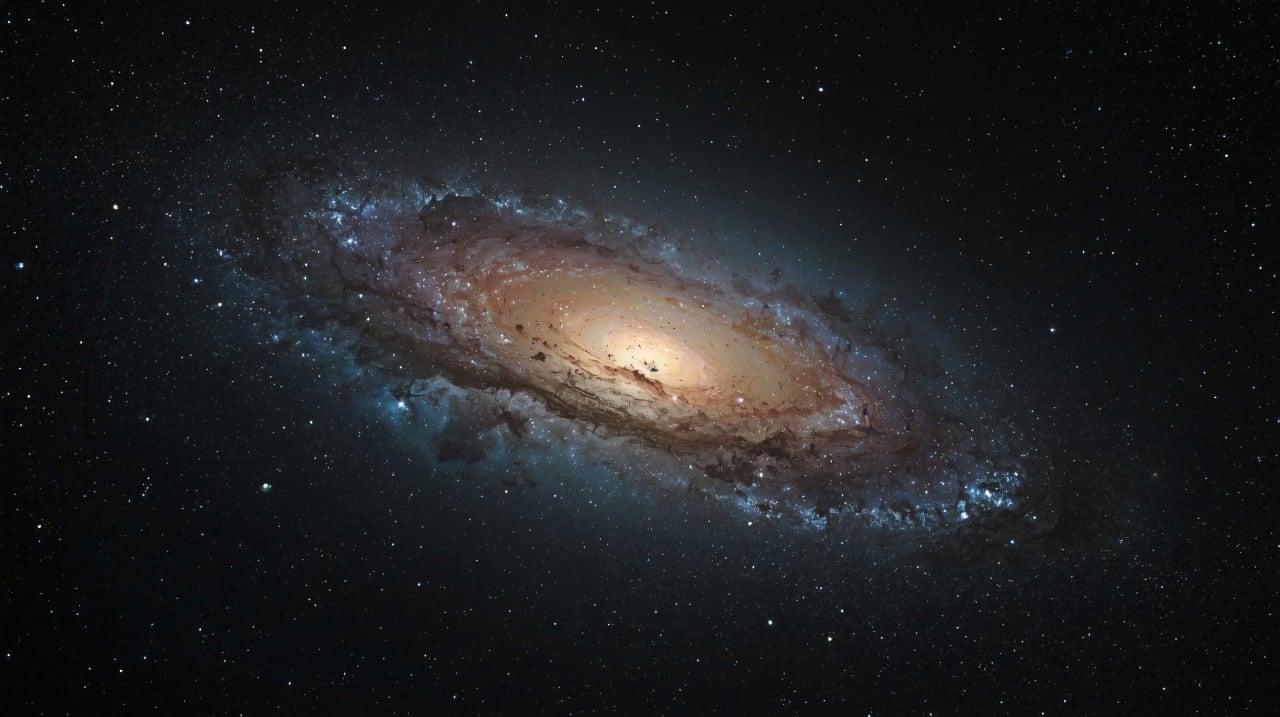
The Milky Way is categorized as a barred spiral galaxy, characterized by a dense central region that houses the supermassive black hole Sagittarius A*. Four main arms—Sagittarius, Scutum-Centaurus, Perseus, and Outer—reach outward like a vast weathervane. Most of the stars and galactic gas are concentrated in these cosmic arms, although other stars, including the Sun, are located in spaces between them or in smaller structures.
Until now, the size of these spiral arms was estimated based on the rotation rate of the Milky Way. This method is used because it is impossible to observe the entire galaxy from our position on Earth. This indirect approach helped estimate the total size of the galaxy, which is believed to be about 100,000 light-years in diameter, and a mass equivalent to approximately 1.5 trillion suns, according to NASA.
However, this way of measuring massive structures is not completely accurate and has generated uncertainty about our galaxy since its spiral shape was discovered around 175 years ago.
Beatrice Vaia, a researcher at Italy’s National Institute of Astrophysics and lead author of the study, who led the research as part of her doctorate, explained in a statement that the outer arms of the Milky Way are generally modeled indirectly. She noted that this technique “leaves room for error” and that measurements become progressively more uncertain the further they are from the galactic center.
In the new study, researchers developed an innovative methodology for measuring galactic arms, using the most powerful and luminous explosions in the universe, known as gamma-ray bursts (GRBs). The X-ray light from these cosmic explosions, when passing through dense clouds of gas present in the arms of the galaxy, forms luminous rings, or echoes, whose size is proportional to their distance from Earth.
The team used data from NASA’s Chandra X-ray Observatory and the European Space Agency’s XMM-Newton observatory (both in Earth orbit) to analyze the echoes from three distinct GRBs. These explosions ripped through gas clouds in the Perseus, Outer, and Scutum-Centaurus arms, revealing that the Outer and Scutum-Centaurus arms are approximately 10% farther from Earth than previously thought. Although this difference may seem small, it amounts to several thousand light years.
The most significant implication of this discovery is that our galaxy may be larger and, therefore, more massive than we imagined. This could have major repercussions for how we understand our own cosmic neighborhood.
Ilaria Fornasiero, an astronomer at the University of Bologna, Italy, and co-author of the study, emphasized in a separate statement that even if the “differences are small,” any reassessment of these distances is fundamental to understanding our galaxy. She added that this could lead astronomers to revise estimates of galactic mass, as it directly influences the length of the arms.
Animations released with the new article illustrate a possible representation of the Milky Way based on the updated data. In them, the Outer and Scutum-Centaurus arms extend deeper into intergalactic space, making the galaxy resemble an asymmetrical snail shell rather than a perfectly symmetrical spiral, defying traditional conceptions.
It is important to note that these visualizations do not yet represent the exact shape of the galaxy, as the Sagittarius arm and other smaller galactic arms have not been measured with the same methodology. However, the fact that the Perseus arm is not as distant as the other two arms illuminated by GRBs suggests a surprising asymmetry across our galaxy, a phenomenon that cannot yet be easily explained and that requires further investigation.
Researchers continue to search for more GRBs that can be used to map the rest of the Milky Way in order to improve understanding of our cosmic neighborhood. However, finding these cosmic explosions is a great challenge, as highlighted by Andrea Tiengo, an astronomer at the Scuola Universitaria Superiore Pavia, in Italy. He stated, “We are counting on the universe to provide us with these events, and so far, in over 25 years, we have only found a few that we can use. That said, we will continue to look for more.”





