
Volkswagen ID. Cross arrives as the brand’s most affordable electric SUV in Europe


The new Volkswagen ID. Cross has been revealed as the automaker’s most economical all-electric SUV to date, with a starting price of 28,000 euros in Germany and a range that can reach 436 kilometers with its optional battery. The information was released on Tuesday, July 15th.
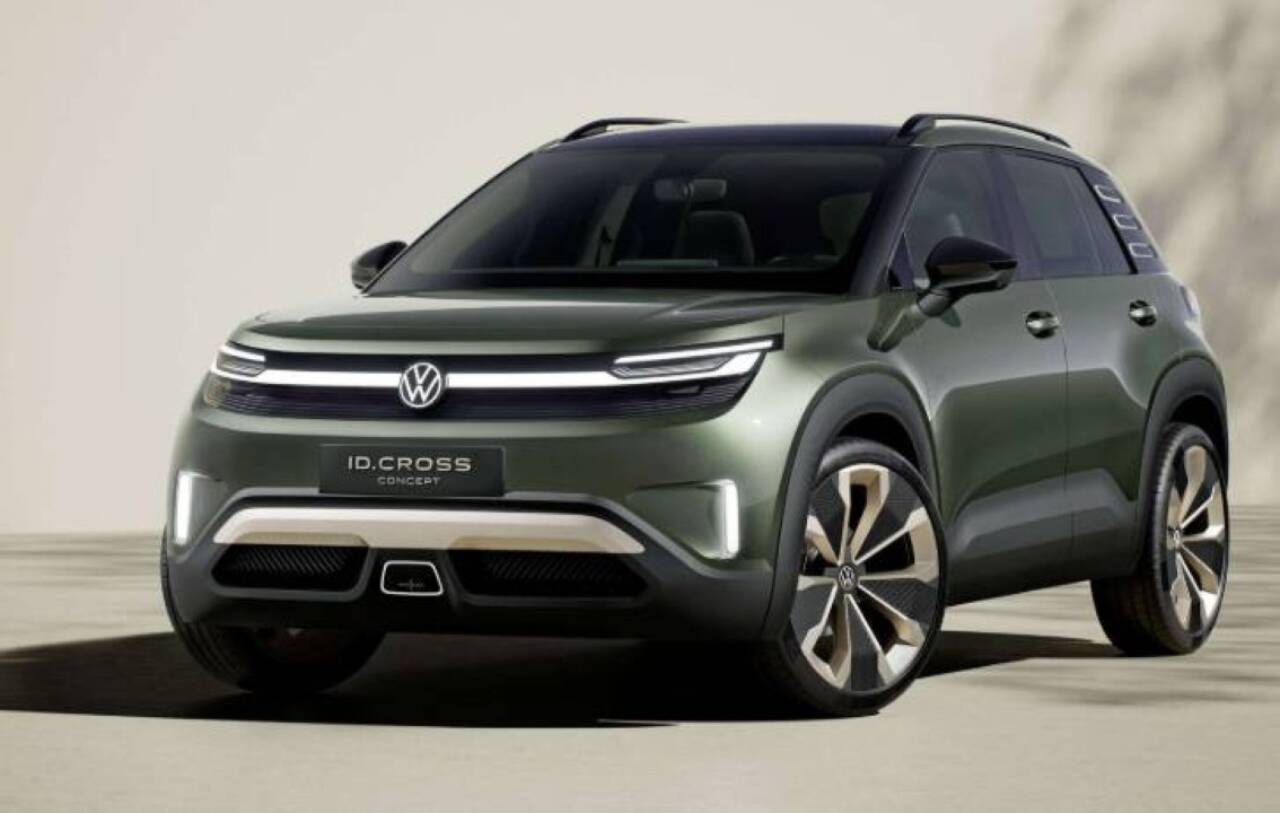
Less than a year after its presentation as a concept, ID. Cross has evolved and is now a production model. Positioned below the ID.4, this subcompact electric crossover is built on the same MEB+ platform used in the new ID. Polo and has front-wheel drive. The vehicle was conceived from the beginning as an electric car, sharing no links with the T-Cross, which has similar dimensions and uses combustion engines.
With dimensions of 4153 millimeters long, 1974 millimeters wide and 1581 millimeters high, the ID. Cross fits perfectly into the subcompact vehicle segment in Europe. Despite its smaller size, the more sophisticated versions can be equipped with wheels up to 20 inches, while the entry-level model comes standard with 17-inch wheels.
The platform dedicated to electric cars allowed Volkswagen engineers to extend the wheelbase to 2601 millimeters, which is 38 millimeters more than the T-Cross. Another benefit of this specific architecture is the inclusion of a front trunk, offering an additional 25 liters of capacity.
The use of internal space in the ID. Cross
Compared to the T-Cross, equipped with a combustion engine, the new ID. Cross also stands out for its more generous rear trunk, with 475 liters of capacity, 25 liters more than the gasoline model. The main advantage of the MEB+ platform lies in the internal space, with Volkswagen ensuring that the cabin provides greater amplitude in length, width and height.
Considering the recent presentation of the concept, the design of the ID. Cross doesn’t present any big surprises. Volkswagen has introduced a new visual approach called “Pure Positive”, characterized by cleaner lines and light bars at the edges. Unlike ID. Polo, where the rear door handles are discreetly integrated into the C-pillars, the ID. Cross keeps them in the traditional position, a choice that appeals to those looking for a more symmetrical aesthetic.
Return of physical controls inside the vehicle
Fortunately, the appreciated features inside the ID. Polo were kept in the ID. Cross. Volkswagen rescues the physical buttons and leaves aside the touch-sensitive sliders. The dashboard includes four window switches on the driver’s door, a volume knob positioned between the seats and conventional controls on the steering wheel. The appropriately sized 12.9-inch multimedia center is complemented by a 10.25-inch digital instrument panel, which displays retro-inspired graphics from the original Golf.
A row of buttons below the central screen offers quick access to essential functions such as temperature control, fan speed, air conditioning activation, air recirculation, defrosters and emergency lights. Similar to the Electric Pole, the ID. Cross incorporates advanced features such as 12-way electrically adjustable front seats, massage and memory functions. The most complete versions also offer a 425-watt Harman Kardon sound system, with 10 speakers and a subwoofer.
Range, power and values of the Volkswagen ID. Cross
As expected, the ID. Cross shares the same battery options with its hatchback “brother”. Buyers can choose between 37 kWh and 52 kWh batteries, which provide WLTP ranges of 316 and 436 kilometers, respectively. The smaller capacity lithium iron phosphate (LFP) battery supports charging at up to 90 kW, while the larger nickel-manganese-cobalt (NMC) battery can be charged at up to 105 kW. Both configurations take approximately 23 to 24 minutes to recharge from 10% to 80%.
Drive is on the front wheels, driven by an electric motor available in three power settings: 114 hp, 133 hp and 208 hp. Volkswagen has not yet confirmed whether the ID. Cross will also receive the 223 hp engine present in the ID. Polo GTI. Regarding weight, the electric SUV registers 1,539 kg with the smaller battery and 1,548 kg with the larger battery, excluding the driver.
The Volkswagen ID. Cross is scheduled to hit the European market next fall, with a starting price of approximately 28,000 euros in Germany. This value positions it significantly more affordable than the base ID.4, which costs 46,765 euros in the same market, and the recently updated ID.3 Neo hatchback, which sells for 33,995 euros, putting the ID. Cross as the entry-level option for the brand’s electric SUVs.
The launch of ID. Cross occurs at an extremely favorable time for the electric vehicle segment in Europe. Recent data from the European Automobile Manufacturers Association (ACEA) indicates that the market share of electric vehicles reached an all-time high of 21.4% by May, covering the 27 countries of the European Union, the United Kingdom and members of the European Free Trade Association (EFTA), such as Iceland, Liechtenstein, Norway and Switzerland. In the European Union alone, one in every five cars sold in the first five months of the year was fully electric.
With the continued dominance of crossovers in the market, the ID. Cross has all the attributes to achieve success. Volkswagen expands its range of electric vehicles with models such as the ID. Polo, with prices starting at 24,995 euros, and the long-awaited ID. Every1, scheduled for 2027 with an initial value of 20,000 euros, reinforcing the automaker’s strategy in the electric mobility segment.



