
Discontinued models in the United States: luxury and electric cars will be discontinued by 2026


Annually, the United States automotive market witnesses the exit of a variety of vehicles including cars, trucks, SUVs, and vans. This movement is driven by several factors, such as the drop in demand, the introduction of new models or even changes in production strategies and current regulations. As of the 2026 model year, several vehicles have already been confirmed to be discontinued, marking the end of their production and reflecting a change in the direction of the industry, whether due to a focus on electrification or market challenges.
Production of the BMW 8 Series ends after April this year
BMW’s 8 Series line concluded production in April of this year, covering model years 2019 to 2026. Although the M8, a high-performance version, had already been discontinued in 2025, now all 8 Series options — Coupé, Gran Coupé and Convertible — are no longer available for new vehicle purchase. Low sales were one of the reasons, but the automaker did not confirm a replacement, reflecting the current transformations in its catalog and the possible focus on other categories.
BMW iX, the electric SUV that marked the first dedicated platform, leaves the American market
The BMW iX, a luxury electric SUV from 2022 to 2026, also says goodbye to the North American market. Initially, the vehicle generated discussions due to its striking frontal design, but quickly gained recognition for its sophistication, great autonomy and remarkable performance. His departure symbolizes the closure of BMW’s first platform focused on luxury midsize electric vehicles, while also making room for future models such as the iX3 and iX5, indicating an evolution in the electrification strategy.
Farewell to the BMW Z4: niche roadster will end production in March
With model years between 2019 and 2026, the BMW Z4, despite not being a bestseller, represents the common destination for niche roadsters, a segment in constant decline. The Final Edition version marked the end of the line for the Z4 in March this year, following the trend of other competitors that were also no longer produced. One of the most felt losses will be the manual “Handschalter” edition, praised by enthusiasts.
Cadillac CT4 is discontinued due to challenges in the luxury sedan segment
The Cadillac CT4, with model years 2020 to 2026, will also be discontinued. The subcompact luxury sedan segment has presented difficulties for American automakers, which motivated Cadillac’s decision. Although the V Series versions of the CT4 were well received by critics and aficionados, the entry-level editions faced stiff competition in terms of interior trim and driving dynamics. The expectation is that production will be completed in June, but a positive point is the confirmation of a new gasoline model to replace the CT5, which is also on its way out.
Hyundai Ioniq 6 leaves the US model line despite competitiveness
Contrary to expectations, Hyundai chose to remove the 2026 Ioniq 6 from its offering in the US, a vehicle that stood out for its fast charging and efficiency on long trips, covering model years from 2023 to 2026. The high-performance version, the Ioniq 6 N, remains available in limited volume, but the standard model is no longer sold. Reasons given include import tariffs and a lower-than-expected sales performance, although 2025 models can still be found online, highlighting how external factors can impact promising models.
End of era for the Lexus LC 500, one of the last luxury coupes with a naturally aspirated V8 engine
Lexus has confirmed that its impressive grand tourer, the LC 500, which ran from model years 2018 to 2026, will be discontinued without introducing a direct successor. Recognized for its concept car appearance and distinctive interior, the cessation of production of the LC 500 also represents a goodbye to one of the last naturally aspirated V8 engines still available in a luxury coupe. Its global production is expected to be completed in August this year, marking an important transition for the industry.
Nissan Ariya has production suspended in the US due to tariffs and focus on local Leaf
The Nissan Ariya electric SUV, which was available from 2023 to 2026 and is manufactured in Japan, will officially stop being sold in the United States. Impacted by import tariffs, Nissan chose to withdraw the model from dealerships to concentrate its efforts on the new generation of Leaf, produced locally. There is expectation of a possible return of the Ariya to the American market in the future, but, for now, there are good opportunities in pre-owned and certified units, showing the dynamics of local production versus imports.
Tesla ends production of Models S and X to prioritize Model 3 and Y
In a somewhat surprising move, Tesla announced that production of Models S (2012–2026) and X (2016–2026) will be discontinued this year. Given that most of the company’s production volume is already focused on the acclaimed Model 3 and Model Y, this decision makes sense for Tesla to free up its manufacturing capacity for new ventures. The Model S, in particular, will be remembered as the pioneering electric vehicle to achieve large-scale commercial success, and its departure reflects the brand’s optimization of resources.
Toyota GR Supra ends its seven-year production with special edition
The Toyota GR Supra, which marked model years 2020 to 2026, had its seven-year production run officially concluded in March this year, with the launch of the GR Supra Final Edition. Despite having generated debates due to the use of BMW architecture and mechanical components, the Supra established itself as an icon in its generation. It also stands out for housing the most powerful version of the BMW B58 straight six-cylinder engine, delivering an impressive 429 horsepower, consolidating its legacy in the world of sports cars.
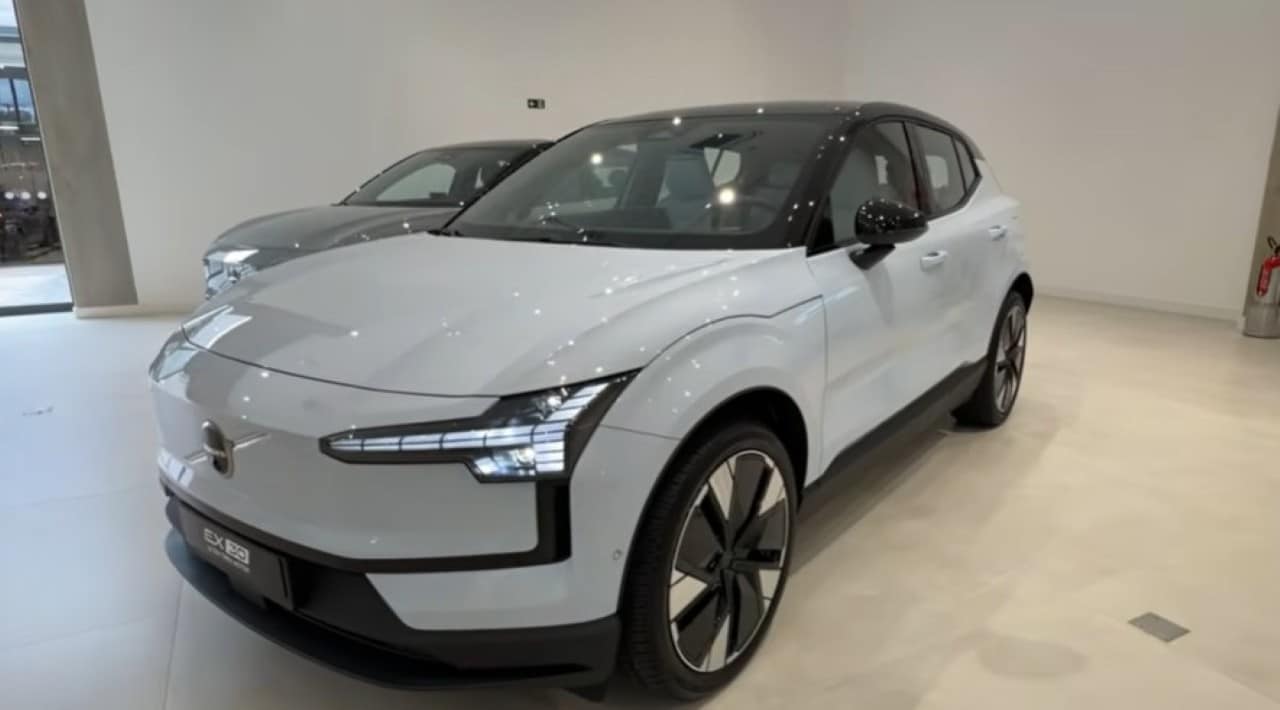
Volvo EX30 has a reduced life cycle in the US due to tariffs and regulatory changes
The Volvo EX30, designed to be the brand’s entry-level electric crossover into the American market (model years 2025–2026), had its trajectory shortened. Factors such as high import tariffs and rapid changes in regulations for foreign electric vehicles were decisive. Currently, the EX30 is no longer offered for purchase as a new vehicle in the USA, although its sale continues in other markets, and a new version specific to the United States is said to be in development, highlighting the challenges of globalization in the automotive sector.
Volvo V90 Cross Country says goodbye to the market after low demand and focus on electric SUVs
The year 2026 marks the last production cycle for the distinctive and elegant Volvo V90 Cross Country, which had models launched from 2017 to 2026. Although it was a luxurious station wagon, with greater ground clearance and off-road capability, it failed to win over a wide audience. The combination of low demand and Volvo’s drive towards a future dominated by all-electric SUVs sealed the model’s fate, with no plans for a direct successor and reflecting consumer preference for sport utility vehicles.



