
Brad Parks: the man who turned wheelchair tennis into a global sport

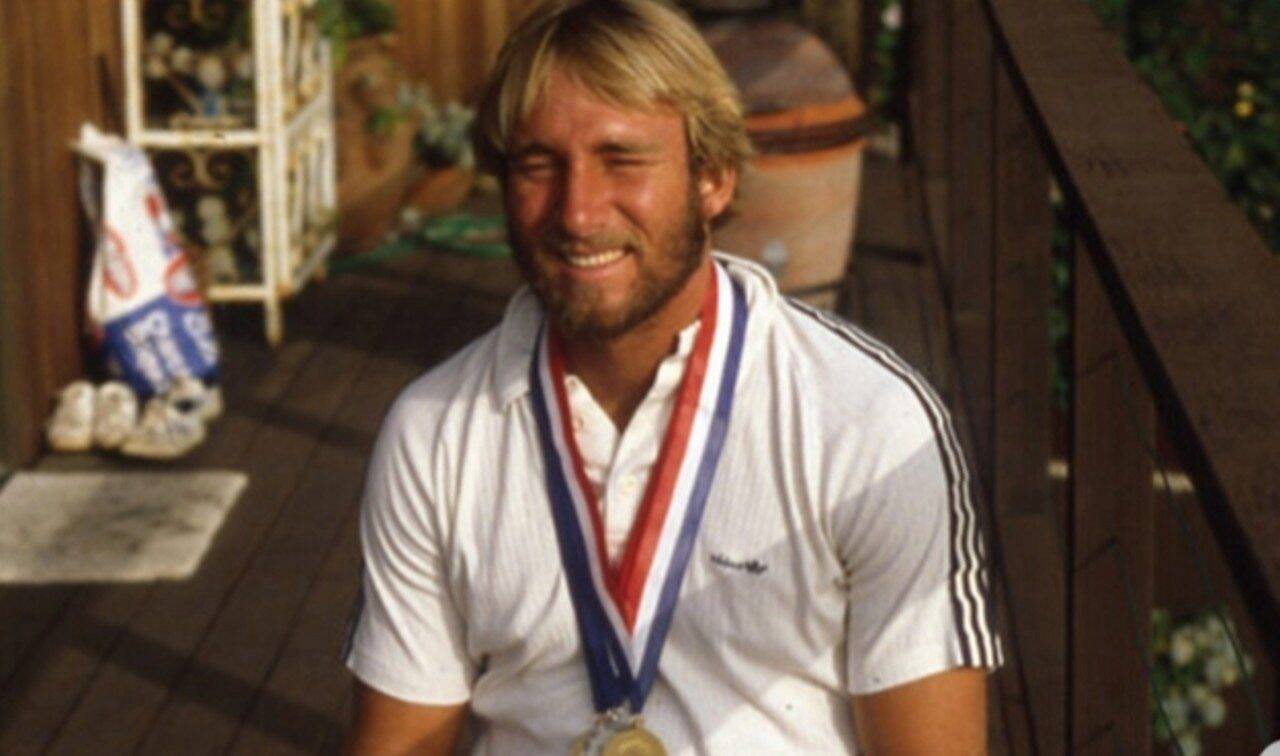
The story of Brad Parks, the inventor of wheelchair tennis, stands out as he celebrates 50 years since the moment that transformed his life and the sport. The idea, which emerged unexpectedly on a family picnic day, overcame physical and social barriers, shaping a new modality.
A common sign at the tennis courts displayed a ban on bicycles and skateboards, a warning that seemed ironic to the young Parks.
He questioned how this rule applied to him, whose front wheels resembled a skateboard and the back wheels resembled a bicycle, while his greatest desire was to play tennis.
Even more challenging was the initial access to the court, which would require dismounting your wheelchair to get through the gate.
Even in the face of these obstacles, Parks had conceived of a sport and was determined to do whatever it took to play it.
During a family picnic in Indiana half a century ago, young Brad, then 18, had his greatest inspiration. He watched his relatives play tennis, paralyzed in a wheelchair after a freestyle skiing accident months earlier in Utah.
His father asked him to participate, an invitation that would change everything.
“I started hitting tennis balls,” Parks told BBC Sport, referring to the early days. “I was literally in a hospital wheelchair, which was common in 1976, so I couldn’t move very well, but I could hit balls. Right then and there I decided ‘I’m going to try.'”
He wasn’t just referring to that fleeting moment, but to a profound commitment. He would later develop an entirely new form of wheelchair tennis, introducing it to the world and seeing it played in Grand Slams and Paralympics. His personal day-in-the-park initiative became the foundation for a global movement.
However, before all that, he needed to find people to play with, perhaps even a famous Hollywood actor, something that would come to fruition later.
At that time, basketball was the sport of choice for wheelchair users, an option that had been suggested to Parks during his recovery in the hospital. He, however, had other ideas.
Before his spinal cord injury, suffered when he missed a backflip maneuver and fell heavily into the compacted snow during a freestyle skiing competition, the Californian wanted to improve his tennis, and now he had even more reason to do so.
“If I was going to spend the rest of my life in a wheelchair, I needed to be the best I could be and I wanted to keep living my life, I didn’t want people to feel sorry for me, so I wanted to play,” he said. “I thought, well, maybe I could play tennis and then I could play with my able-bodied friends, that was my first thought.”
After that inspiring picnic, Parks began playing tennis almost daily with friends, family and opponents his parents found for him. None of them used wheelchairs.
Everything changed at his next hospital appointment, when he met physical therapist Jeff Minnebraker, who was also exploring the possibilities of wheelchair tennis.
“We instantly bonded because we realized we were the only two who played wheelchair tennis in the entire world,” Parks described.
They started testing different rules. Should the court be smaller, the balls different, the height of the net changed? As they initially played against able-bodied athletes, some preliminary versions predicted that the player without a wheelchair would only have one serve, or would need to serve underhand, or cover a larger area of the court.
However, when they decided to organize the first wheelchair tennis event in 1977 in Irvine, California, they opted for a simpler approach. The only difference between conventional tennis and wheelchair tennis would be the allowance of two bounces of the ball, a rule that remains to this day.
Parks won this inaugural competition and dominated the early years of the sport, which was often played on shoddy public courts where dust and dirt made it difficult for the wheels to grip.
There were no referees and the tournaments were organized by people who worked in rehabilitation: “They weren’t from tennis, so no one really knew the rules.”
There were also prejudices to be overcome.
Although progress had been made since the photograph on display at Wimbledon Museum that showed George Cayley, a disabled man, suspended by a harness playing tennis a century earlier, the sight of players in wheelchairs was still unusual.
“No one ever kicked me out, but I was questioned a lot,” Parks said.
“I remember many times going to a court, and whoever was in charge of that place would ask: ‘What’s going on here?… Do the wheels damage the courts?'”
Authorities could also be dismissive. Parks recalls feeling “disheartened and disappointed” after a commissioner of the National Wheelchair Basketball Association told him he was wasting his time because tennis was not a viable sport for wheelchair users — and that he had even written a thesis on the subject.
However, Parks persisted, tirelessly promoting the sport through demonstrations in hospitals, tennis clubs and even parking lots. His resilience was fundamental to the evolution of the sport.
Several years later, the same commissioner would ask to sit next to him at a lunch, apologizing for his mistake and seeking Parks’ advice on how to integrate his sport into the major federations in the same way that wheelchair tennis had achieved.
Although the rules were simple, the equipment was not so straightforward.
Minnebraker was a talented engineer and had built a lightweight aluminum wheelchair for himself. It was significantly lighter and more mobile than hospital chairs, which weighed around 27 kg and had side protectors and back straps that hindered players’ movement.
Parks remembers asking to try it.
He felt like he was “floating” in the borrowed chair. But what struck him most was that when he looked at Minnebraker, now sitting in Parks’ hospital chair, he saw a disabled man.
“I’ve never seen that before, because he was in my chair… he wasn’t in that [other chair],” he explained.
“That chair was amazing in comparison… I said ‘would you make me a chair’ and he said ‘no, but I’ll teach you how to make a chair’.”
And so he did, and the pair eventually formed a company to manufacture them, although Parks recalls that it took time to convince others to ditch the “comfort blanket” of their old chairs.
Progress in the development of the sport was slow but steady. In 1980, Parks helped found the National Foundation of Wheelchair Tennis and a 10-tournament circuit was created. He also wrote a book, “Tennis In A Wheelchair”, to assist players and coaches. Two years later, the first tournament outside the USA was held in France.
Parks remembers the exact moment he realized they had created something special, describing how he “got goosebumps and probably had tears” as he looked out from the clubhouse at 12 courts filled with players in sports wheelchairs at a tournament in Michigan in 1985.
“Everyone was dressed like tennis players,” he recalled. “They all had two rackets. Some of them had coaches.”
“I said to myself, ‘This is wheelchair tennis. Wheelchair tennis is real, it’s here to stay, and it’s going to be big one day.’ And it just occurred to me as I was sitting there, looking at it. It was a really great feeling. It was really the beginning of the sport.”
Raising the profile of Parks’ sport was made easier by the participation of some famous faces.
On one occasion, he was playing at a private club in New York, where Hollywood actors Gene Wilder and Sidney Poitier were filming a feature film on the court next door.
They began talking and agreed to play doubles, although Wilder later revealed to Parks that he was reluctant, telling him: “I was thinking ‘oh no, there goes my tennis day, I’ve got to do this charity work'”.
But it was a competitive match, and they traded numbers. Parks eventually became good friends and played regularly with Wilder, best known for his starring role in “Willy Wonka & the Chocolate Factory.”
Top professional players of the era were also involved in exhibitions, with Parks teaming up with American Davis Cup captain Dennis Ralston in one such event. In the following years, the sport was also promoted by names such as Yannick Noah, Arthur Ashe, Jimmy Connors and Martina Navratilova.
In 1988, the International Wheelchair Tennis Federation (IWTF) was formed, with Parks becoming its first president, and the sport was included in the Paralympics in 1992.
Parks, who had previously won Paralympic gold in wheelchair racing, won the inaugural doubles title with Randy Snow.
In 1998, the IWTF was fully integrated into the International Tennis Federation, an unprecedented milestone for a sport for people with disabilities and a crucial step in the development of the sport, allowing it to further prosper as part of a fully inclusive governing body. Parks says he “would have set the sport back” if he had insisted on maintaining control, something he believes has happened in other adapted sports.
The first Grand Slam to host a wheelchair event was the Australian Open in 2002, known as the Wheelchair Classic 8s, and by 2007 all four major tennis tournaments included them. Events for quadriplegic athletes (“quad events”) began to be introduced and, in 2019, were present in all Grand Slams.
These milestones were the result of Parks’ tireless campaigning; his contribution was formally recognized in 2010 when he became the first wheelchair athlete to be inducted into the Tennis Hall of Fame.
Meanwhile, the Brad Parks Award – the highest honor in wheelchair tennis – is presented annually to an individual or organization for exceptional contributions to the game.
Parks, who had initially given himself a year to verify the viability of wheelchair tennis, is proud but modest about his own role 50 years later.
“I was the head of the organization, I was the first player to actually play the game, but it’s hard for me to say, Brad, you invented wheelchair tennis, but, you know, I was a part of it,” he said, pointing to others like Minnebraker.
Today’s players, however, do not hesitate to recognize its importance.
“I think I’m amazed. Absolutely amazed,” said Britain’s Alfie Hewett, a 34-time Grand Slam champion. “It [wheelchair tennis] is not about honors and external things. It’s actually the life it gave me and the purpose it gave me.”
And Gordon Reid, who has won 30 Grand Slam titles, added: “It’s an incredible story, and that little idea he had 50 years ago has turned into a huge global sport today. So yes, I’m very grateful that he had that idea back then.”
So much has changed since the early days, especially chairs, which are much lighter and often feature a molded seat that is more energy efficient for turning.
And the sport continues to grow: the wheelchair event at Wimbledon, which starts on Tuesday (per source), offers a prize pool of more than £1 million, with the winners of the men’s and women’s singles winning £82,000.
Its profile is also on the rise, and the finals are now played on Court One, which seats 12,345 spectators, compared to the 276-seat Court 17, which hosted the first wheelchair singles final 10 years ago.
Parks says he’s “very happy to see where we’ve come.”
“In a way I feel envious, but in a good way because I would have loved to have been able to play in [tournaments like Wimbledon],” he commented.
But that was never his dream when he started.
“I absolutely loved hitting tennis balls, and I wanted to share the feeling of hitting a tennis ball from a wheelchair,” he said.
“What makes me really, really happy is that I really wanted other people to be tennis players.
I used to be disappointed when I thought everyone was a wheelchair basketball player. Tennis wasn’t their main thing. And today I feel that tennis really stands on its own and they are tennis players. They’re just in a wheelchair.”





