Former athletes and coaches warn about parental pressure in youth tennis

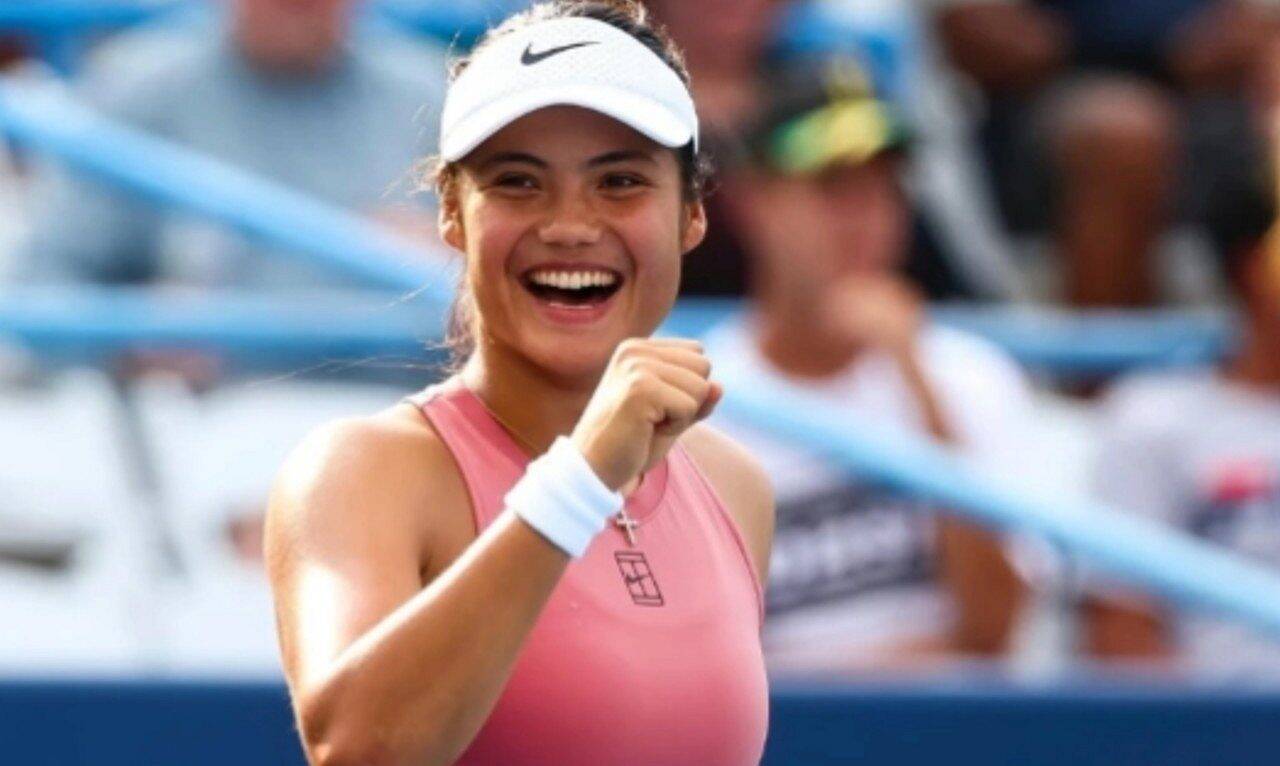
The path to becoming an elite tennis athlete can start very early, transforming the sport from a simple game into a journey of intense dedication already in childhood. At the age of nine, Ellie-Rose Griffiths, for example, left school to dedicate herself full time to training, marking tennis’s transition from a pastime to the center of her life.
The former youth player, who became number one and competed alongside great names in British tennis such as Katie Boulter, Emma Raducanu and Harriet Dart, left the court at the age of 19, exhausted and without her initial pleasure in the sport.
Reflecting on his experience at age 27, Griffiths remembers not only the intensity of tennis but also the great pressure involved, pointing specifically to the behavior of a group that, in his view, could act in a more constructive way.
The figure of the “pushing father” is nothing new in tennis, a sport that promises fortunes in prizes at the top of the elite. Cases like the parents of Jelena Dokic, Mary Pierce and Bernard Tomic are well-documented examples of incidents at the professional level that reveal how expectations can get out of control.
This behavior, however, has its roots at the base, in youth tennis.
“It’s common to see parents yelling at kids all the time in tennis,” reports Griffiths, who, despite having supportive parents, saw a lot of this in the sports environment. His criticism is not directed at his family, but at what he witnessed.
“There is a lack of understanding about how they should act, about how they could really help their children develop as athletes,” adds the former player.
The situation can escalate and get completely out of control.
“We have had situations where, unfortunately, we have had to call the police because the parents’ behavior was too out of control,” says Chris Johnson, head coach at Sutton Coldfield Tennis Club, where he has worked for 36 years.
“They don’t listen, they think they can do whatever they want, they don’t respect the referees; the situation can get really ugly”, describes Johnson, regarding the conflicts that arise in youth competitions.
Both Griffiths and Johnson emphasize that such attitudes are not isolated and that the competitive tennis environment itself contributes to parents acting in this way, generating a cycle of pressure.
Why does sneaker culture encourage this behavior and what changes are needed?
Playing tennis can be quite exhausting for parents, both in terms of time and resources.
They need to organize transportation to training, pay for coaching and navigate a complex player development system. In some cases, it is even necessary to arrange private lessons, especially if the child left regular education to dedicate himself exclusively to sport.
“We get into a kind of whirlwind,” says John, father of Harrison, a promising 11-year-old player, who lives in Derbyshire. “It’s a commitment of 12 months a year, with indoor and outdoor courts”, explains the exhaustive routine.
Children can start playing tennis in an adapted version of the sport from the age of four. The Lawn Tennis Association (LTA) talent development program supports players from the age of seven, aiming to prepare them to, who knows, become Grand Slam champions.
Competitions are organized by age group, starting with categories for children aged eight and under.
In these tournaments, the results and rankings obtained are one of the main ways for young athletes to get noticed on the tennis scene.
So, at what point does sport start to be taken too seriously?
“The minute they start competing in their first competition,” says Johnson.
When asked whether this view is correct, the coach is emphatic:
“Absolutely not.”
“Many adults can’t handle the pressure of an individual sport, and so they expect young children to be able to do it,” notes Johnson, highlighting the disparity in expectations.
Steve Whelan, a St Albans coach with almost three decades of experience, agrees that the current system places too much importance on winning at an early age.
“It just creates a race to the bottom because parents are looking for ratings and rankings,” he declares, criticizing the excessive competitive mentality.
Whelan often tells parents, “They’re not tennis players. They’re kids who play tennis, and there’s a big difference between the two,” trying to reorient their perspective.
The LTA said it carried out a “comprehensive review” of its classification and ranking system in 2018, with the specific aim of “addressing the issue of placing excessive pressure on children at very young ages”.
Currently, players can only be ranked nationally against their peers from the under-11 category onwards. The youngest children, ages eight and up, are organized into competitions based on their recent performance, known as a “rating.”
In relation to parental behaviour, the LTA recognizes that, as in any sport, “there are occasions when a small minority of parents do not adhere to expected standards of behaviour”. The regulator plans to soon launch a new initiative, called Fair Play, to promote positive parental attitudes and support coaches.
The financial and emotional impact on parents investing in youth tennis
For parents, the pressure is not just restricted to the emotional aspect; it also manifests itself significantly in the financial sphere.
“The costs only increase: classes, travel, plane tickets, tournament fees…”, explains one of the parents, describing the growing budgetary burden.
Griffiths quantifies the investment required, which can be exorbitant.
“If you want to train four hours a day with a coach, that costs a thousand pounds a week, four thousand pounds a month… It’s more than many people’s salaries”, she details, highlighting the scale of the financial burden.
The LTA says it “supports talented junior players by offering access to world-class coaches and facilities across its network of Regional Performance Development Centres”.
The governing body also provides scholarships to young players on their development journey who face financial barriers to training, traveling or competing, through its foundation.
However, Griffiths notes that financial support from parents to take their children to the next level can influence behavior.
“Financial support comes from wins and losses,” she explains.
“If my child wins, maybe we can get more funding; if they lose, maybe not – so we don’t want them to lose,” Griffiths contextualizes the logic behind the financial pressure.
Johnson notices this change in expectations.
“They almost expect a return on investment, and it shouldn’t be like that”, ponders the coach, criticizing the commercialization of sports development.
“A ten-year-old child is not expected to have a job, but sport ends up becoming that,” says Griffiths, illustrating the seriousness with which the activity is treated.
This perspective is shared by Australian Todd Ley, who was once considered the best junior player in the world and, at 12, became the youngest athlete to be signed by global sports agency IMG, before abandoning the sport at 17.
He trained at the Nick Bollettieri gym in Florida, where names such as the Williams sisters, Andre Agassi and Maria Sharapova were associated with the program, showing the level of excellence and competitiveness of the environment.
Youth players like Andy Murray and Juan Martin Del Potro were some of the opponents he compared himself to, indicating the high demands of the scene.
Ley reports that tennis quickly became an absorbing activity, turning from “fun into a job”, and he ended up “hating” tennis, a feeling that still persists.
His father, Max, served as his coach and manager, and from Ley’s perspective, tennis came first for his father, with his son second.
“Realistically, it was tennis from breakfast until bedtime,” recalls Ley, who detailed his experiences in the book “Smashed: Tennis Prodigies, Parents and Parasites.”
“Very quickly, the child is not seen as a person. They are a commodity and a stock”, criticizes Ley, regarding the dehumanization of the young athlete.
Ley believes that early success in tennis can generate incentives that lead families, coaches and the system itself to further intensify the pace and investment, earlier and earlier.
“If you have very good results right from the beginning, you will have an easier journey and you will get better management companies and sponsors”, he explains, about the advantages that drive this search.
“From a very early age, the competition becomes about who can do more.”
“People completely forget that they are dealing with children,” concludes Ley, warning of the loss of a child’s perspective in the midst of the race for success.
Former tennis players remember the role of parents in their sporting journey
Not all former players are bothered by their parents’ intensity, or at least not in retrospect. Emma Raducanu, for example, described her parents as “very demanding” when she was younger.
In an interview with the Times in 2024, she mentioned: “I saw some great people that I played with at youth level, who had much more permissive parents, who said, ‘it’s okay if you lost’, and those players don’t play tennis anymore, so I don’t blame my parents for that”, showing a pragmatic view on the role of discipline.
Kyle Edmund, former British number one, reports that although his parents were not “pushers”, they encouraged him to improve aspects such as attitude and work ethic, crucial factors for success.
He says he once told his father he wanted to give up, and his father simply replied, “Okay, then let’s stop.” At that moment, Edmund realized that he actually loved the game and was willing to work hard to achieve success, demonstrating that the decision came from him.
“There are definitely times when you see that the father wants more, and that’s when I think it becomes toxic,” he told BBC Sport. “It has to come from the son or daughter really wanting to do it”, emphasizing the importance of intrinsic motivation.
“And I think the best way is when parents provide an incredible support system to be there for them and encourage them to improve and have ambition,” adds Edmund, about the ideal model of parental support.
The gradual transition from fun to seriousness in the training of young tennis players
For many parents, the change in tennis dynamics happens imperceptibly and progressively.
Rob, who watches his son in a group training session, silently and from a distance, comments: “Your son starts out going to a fun Saturday morning session and before he knows it, it’s all become very serious at a very young age,” describing the rapid transformation.
“You started playing something because of the joy of playing it, and that should be the most important thing. But within the system, it’s easy to forget that,” laments Rob, about the loss of pleasure amidst the competitiveness.
Ramesh, another father, reflects ruefully on his older sons’ tennis journeys, admitting that he placed too much importance on the results. Now, he instructs his youngest son to “forget about winning or losing,” prioritizing the experience over the score.
Griffiths does not criticize his own parents. She highlights that her mother, a single mother raising three children, was fundamental to all her achievements and her development in the sport.
“My mother would admit she wasn’t perfect,” says Griffiths, honestly.
“But there was no support available for her to know how to be the best tennis mom,” she contextualizes the lack of guidance for parents.
“They are ultimately the second most important person on this journey,” Griffiths emphasizes the crucial role of parents in the trajectory of young athletes.
Liya Jacob, who has two tennis-playing sons, says that most parents try to do the right thing.
“I’m a doctor, I’m a life coach and I consider myself quite emotionally intelligent, but even I found myself, on some occasions, falling into unhelpful behaviors”, confesses Jacob, showing the difficulty even for professionals.
“It’s not that we have bad parents out there. Parents don’t have a guide to help them deal with the challenges of sport,” she argues, indicating the need for structured support.
Along with Griffiths and Johnson, she created an online course called Winning Parents, designed to help parents understand how they can support their children before, during and after matches.
Dr. Jacob notes that parents often fall into two patterns of behavior.
“One of them is too much help,” she explains. “What I see a lot of parents do is coach too much from the sidelines or interfere during matches,” describing a common form of overprotection.
Another pattern is that people can become overly critical of their children.
“Children often describe the dread of the car ride home after a bad performance, after bad results. Parents don’t intend to create these environments, but it can easily happen under pressure,” warns Jacob, about the unintended consequences.
The LTA states that it offers “a range of resources to parents to educate and inform them about each stage of the sporting journey”.
Online, they maintain the Parental Support Program, developed by renowned academic experts. The program addresses the role of parents in competitions, communication before, during and after matches, and managing the emotional demands of competition.
Despite all the challenges faced, Griffiths still maintains his love for the game.
She says tennis gave her skills that shaped her life beyond the sport, but believes parents need help understanding the power they wield.
“I want parents to see that tennis is an incredible way to develop your child’s character if you do it in a supportive way,” she points out, highlighting the positive potential.
“It can damage your child’s character if you do it the wrong way,” Griffiths concludes, emphasizing the responsibility of parents in the holistic development of young tennis players.
Beatriz Lima é colaboradora da redação do Mix Vale, portal de notícias com cobertura de Brasil e mundo. Produz conteúdo nas editorias de economia e benefícios, com foco em informação de serviço para o leitor brasileiro. Escreve para o portal desde 2024.