
Astronomical phenomenon covers almost the entire Moon in the early hours of August

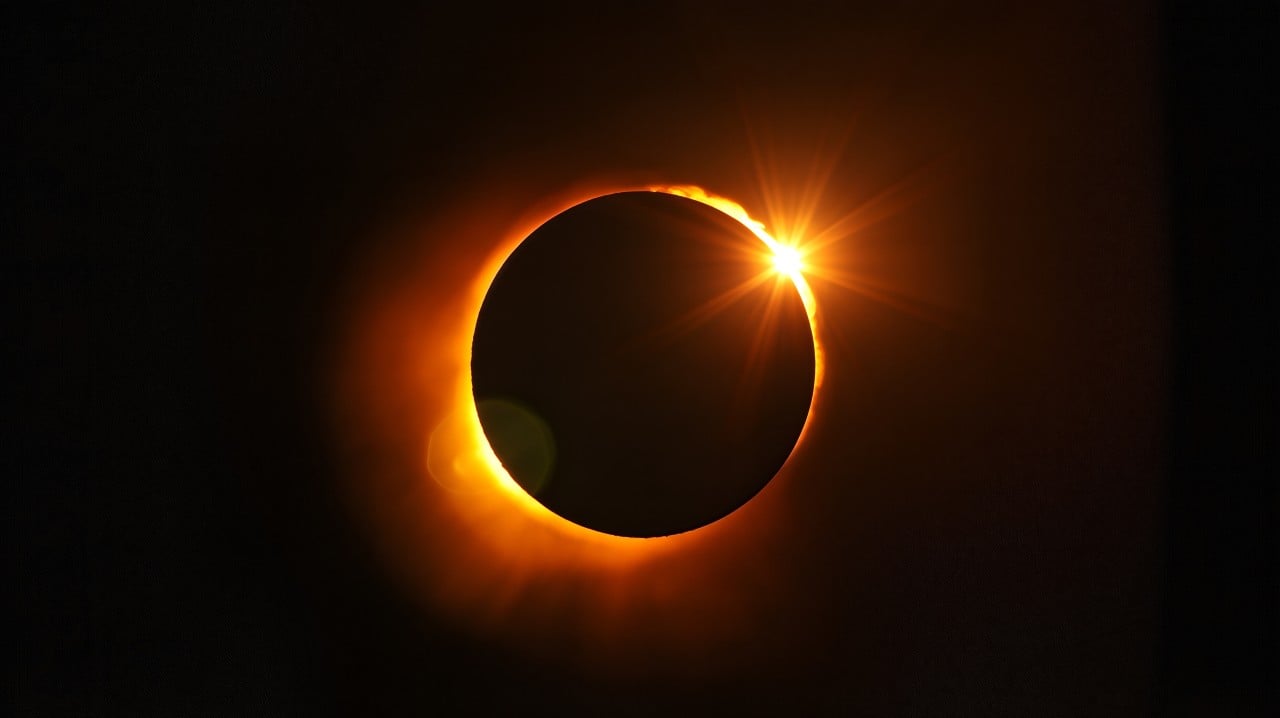
The Brazilian night sky is preparing to host one of the most fascinating spectacles of celestial mechanics during the month of August. Between the end of the night of the twenty-seventh and the early hours of the morning of the twenty-eighth, the shadow of our planet will be projected directly onto the surface of the natural satellite. This perfect alignment between the Sun, Earth and Moon will result in an obscuration of gigantic proportions, reaching an impressive ninety-three percent coverage mark. Residents from all regions of the country will have the chance to witness the cosmic dance with the naked eye, without the need for expensive equipment or special lenses.
To understand the magnitude of this event, it is necessary to understand how the solar system works in its mathematical precision. During lunar orbit, there are times when the satellite crosses exactly the darkest shadow region generated by our planet, known technically in astrophysics as the umbra. When this happens, the sunlight that normally reflects off the bright white surface is almost completely blocked. The ease of viewing makes this type of occurrence much more democratic than other astronomical events, simply requiring the viewer to look up at the correct moment.
Rare visual effect removes the satellite’s traditional reddish color
Unlike total eclipses that usually dye the celestial body with a deep shade of red, popularly nicknamed the “Blood Moon”, this edition will bring a very particular visual aesthetic. As occultation stops at ninety-three percent, a small slice at the top of the lunar disk will continue to receive direct sunlight. This configuration creates a dramatic and beautiful contrast in the dark firmament, dividing the sphere between deep darkness and an intense beam of light.
Researcher Thiago Gonçalves, current director of the renowned Valongo Observatory, explains that this mix of almost total darkness with an illuminated edge provides a unique observation experience. The clear end will act as a silver beacon contrasting with the rest of the surface immersed in Earth’s gloom. Astrophotography experts consider this scenario ideal for capturing high-impact images, as the brutal difference in luminosity reveals details of the craters and lunar relief that normally go unnoticed in full light.
Exact schedule and strategies to ensure the best viewing in Brazil
The watch will be the main ally of those who want to follow each stage of the transformation in the sky. The first changes in luminosity will begin to be noticeable at the end of the night, around twenty-three hours and thirty minutes. From that moment on, the earth’s shadow will slowly advance, covering the bright surface gradually and continuously. The peak of the darkening is mathematically calculated to occur around one o’clock in the morning, considering Brasília’s official time zone.
To ensure the success of the nighttime endeavor, choosing the observation location requires some strategic care. The main recommendation from astronomers is to avoid the light pollution characteristic of large cities. Rural areas, remote beaches or parks with little artificial lighting offer the necessary contrast for human eyes to capture all the nuances of the phenomenon. The use of star mapping applications on your smartphone also helps to locate the exact trajectory of the star, making planning easier for those who want to set up tripods and cameras.
Another determining factor for the success of the astronomical vigil is the meteorological condition of the observer’s region. As the event depends exclusively on a clear field of vision, cold fronts or excessive cloud cover can frustrate the plans of those waiting for dawn. Fortunately, during the maximum phase, the satellite will be positioned at a very high height in the celestial vault, which drastically reduces the chances of buildings, mountains or large trees blocking the line of sight.
Orbital dynamics reserve daytime solar blocking for the northern hemisphere
The August astronomical calendar also holds a second surprise of planetary proportions, although this one is geographically restricted. Weeks before the night show, specifically on the twelfth, a reverse alignment will occur where the Moon will position itself exactly between the Earth and the Sun. This blockage of daylight, however, will go completely unnoticed for those who live in Brazil and other countries in South America.
The inclination of the Earth’s axis and the geometry of the orbits determined that the shadow projected by the natural satellite only reaches specific bands located in the northern hemisphere of the planet. While South Americans will experience a typical sunny day, populations in other latitudes will need to rely on certified eye protection filters to keep up with the drastic decrease in daylight. Observing the central star of our system without the appropriate equipment causes irreversible damage to the retina in a matter of seconds.
The visibility route for this daytime spectacle was traced with precision by space research institutes, encompassing a select list of territories that will have the privilege of seeing day turn into night for a few moments. Prime locations include:
- Territory of Greenland, where the contrast of the dark sky with the icy landscapes will create a cinematic setting.
- Regions of Iceland, attracting eclipse chasers and professional photographers from different parts of the world.
- Cities in Spain, ensuring that a significant portion of the European population participates in the historic moment.
- Vast areas of Russia, allowing the phenomenon to be documented across different time zones.
- Nation of Portugal, which will serve as one of the ending points of the shadow’s trajectory in the Iberian Peninsula.
Scientific impact and the importance of connecting the public to astronomy
The occurrence of two such significant cosmic alignments within an interval of just fifteen days highlights the uninterrupted dynamics of the universe we inhabit. For the scientific community, these dates go far beyond mere visual entertainment. They represent valuable opportunities to calibrate measuring instruments, study the refraction of light in the Earth’s atmosphere and analyze the behavior of fauna during abrupt changes in luminosity in the environment.
In the educational sphere, the early hours of August 28th act as a gigantic classroom without walls. Science and physics teachers often use the passage of the Earth’s shadow to materialize abstract concepts of gravity, rotation and translation taught in textbooks. When the lay public takes a moment in their routine to look up and question the functioning of the cosmos, science fulfills its fundamental role in awakening human curiosity.
The final recommendation for Brazilians is to prepare coats, set alarms and invite family members to share the vigil. The universe offers a free and extremely beautiful spectacle, requiring only the willingness to lose a few hours of sleep. Recording the dance of the stars is a powerful way to remember our tiny but privileged position in the vastness of outer space.



