
Gas detected in comet 3I/ATLAS reveals secrets of star formed before the Solar System

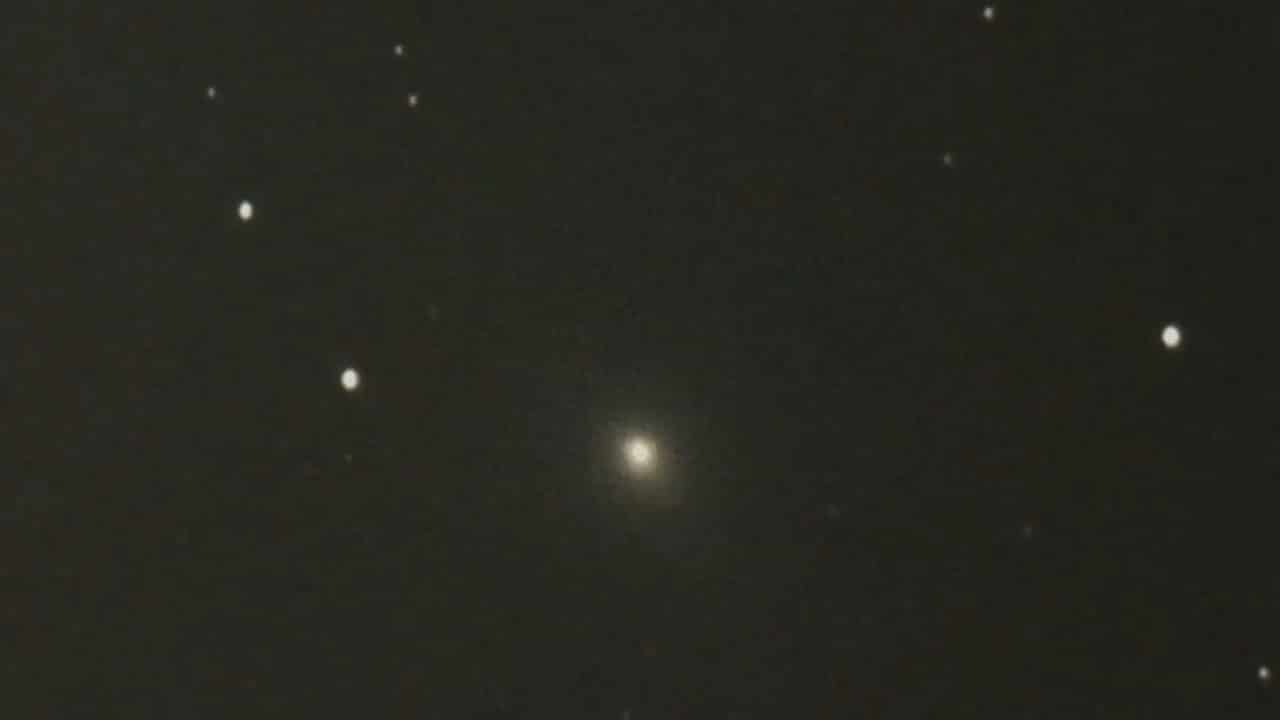
Unreleased details about one of the oldest space travelers to cross our cosmic neighborhood have just come to light. Experts have identified that the interstellar body 3I/ATLAS is ejecting increasing volumes of methane gas as it moves away from our system, providing a unique opportunity to analyze the interior of a star whose components may have emerged billions of years before the ignition of the Sun itself.
Using the high sensitivity of the James Webb Space Telescope (JWST), operated by NASA, astronomers noticed that methane emission spiked shortly after the object circled our star. This phenomenon suggests that solar heat melted the visitor’s weathered outer crust, exposing deep layers of ice that remained untouched during its vast journey through the interstellar void.
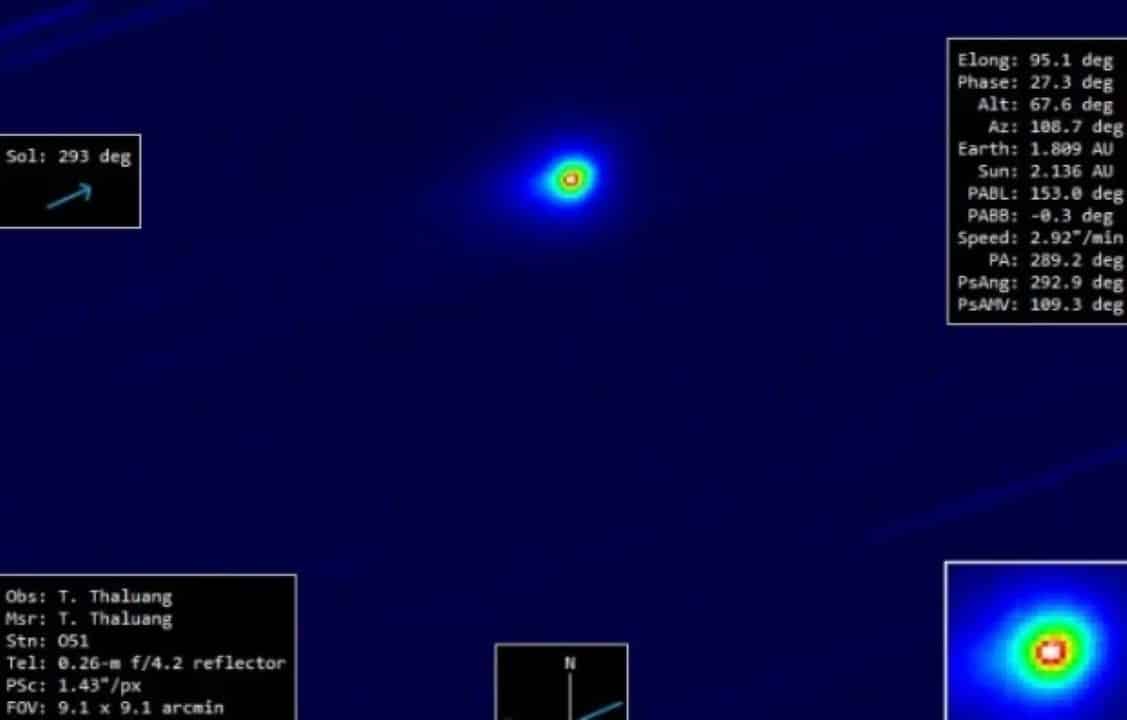
The results of this investigation, recently published in the pages of the scientific journal The Astrophysical Journal Letters, gain even more weight when they align with parallel research that calculates the age of the celestial body between 10 and 12 billion years. Considering that the universe is around 13.8 billion years old, this dating turns the star into a true primordial relic, predating the creation of the Earth and our entire planetary system.
The confirmation of these data generated an unprecedented uproar in academic circles, especially since 3I/ATLAS represents only the third intruder from outside the Solar System ever cataloged by humanity. It follows in the footsteps of the enigmatic ‘Oumuamua, detected in 2017, and comet 2I/Borisov, identified in 2019.
Unlike previous visitors, this new celestial body has a luminosity intense enough to enable detailed examinations, giving scientists the chance to map the chemistry of a fragment born in the orbit of a distant star. However, as the object travels at extreme speeds back into deep space, experts warn that time to capture this information is quickly running out.
Action of solar heat exposes frozen core of ancient traveler
Initially found in July 2025 through the lens of the Asteroid Terrestrial Impact Final Warning System (ATLAS), a complex funded by the American space agency in Chile, 3I/ATLAS arrived within about 1.5 astronomical units of our star in October of the same year. Now, the celestial body has already surpassed Jupiter’s border, following a definitive escape route into the unknown.
A team linked to the California Institute of Technology (Caltech) used JWST’s state-of-the-art infrared sensors to track the visitor’s chemical signatures during its approach and subsequent departure. Analysis of the data revealed a surprising spike in the release of carbon-based compounds shortly after the closest encounter with solar heat.
For the academics involved in the project, this change in the rate of gas emission is the result of natural physical dynamics, ruling out any type of abrupt chemical mutation in the structure of the star.
Throughout its billion-year odyssey through the Milky Way, the object’s surface layer has suffered a continuous bombardment of cosmic radiation, creating a hardened shell poor in volatile elements, which are those that evaporate easily. When thermal radiation from our system removed this aging shielding, the icy, preserved core came into contact with the vacuum, resulting in accelerated vaporization of the trapped methane.
“The dizzying speed with which this body crossed our territory gave us an extremely short observation margin,” explained Matthew Belyakov, a postgraduate researcher at Caltech and leader of the survey, in an official note distributed to the press.
The great advantage of this astronomical event is that terrestrial and space equipment no longer see only the comet’s deteriorated shell. For the first time, science is analyzing the original raw material that made up the forming disk of an alien star system.
Chemical marks indicate older age than our planetary system
Detecting this gaseous flow takes on even greater importance when experts cross-reference the data with other spectrographic readings taken on the visitor’s structure.
Recent assessments based on records from the space super telescope show that the isotope ratio points to a birth that occurred between 10 and 12 billion years ago. If the calculations hold up, the interstellar body would be more than twice the age of our own host star, which has accumulated around 4.6 billion years of activity.
To reach this time window, physicists evaluated different atomic markers, highlighting an abnormally high rate of deuterium in relation to common hydrogen. Added to the analysis of carbon variants, the scenario indicates that the ice rock took shape in a region of extreme cold, with temperatures below 30 Kelvin, which is equivalent to a freezing minus 243 degrees Celsius.
Definitive validation of these numbers would place 3I/ATLAS at the top of the list of the oldest natural artifacts ever inspected by humanity. It would function as a time capsule, holding the building blocks of a cosmic ecosystem that flourished eons before Earth began to form.
Unlike the asteroids that orbit our neighborhood, these galactic nomads carry the chemical DNA of stellar nurseries completely foreign to our own. Confronting the composition of this alien rock with local comets is the key scientists needed to decipher the mechanisms for creating worlds spread across the entire length of the Milky Way.
According to Belyakov, the team has scheduled a final round of imaging with the space observatory before the target plunges into deep darkness and becomes undetectable to current technology.
Speculation about alien technology is dismissed by experts
As expected, the traveler’s peculiar chemical signature soon fueled theories and heated debates outside strictly academic circles.
Physicist Avi Loeb, a researcher at Harvard University known for defending the active search for interstellar anomalies, openly questioned whether the abundance of detected gas would not be a valid pretext to investigate biological signatures or even origins outside known natural patterns.
The academic’s statements served as fuel for internet forums, where enthusiasts quickly began to consider that the object could be an artificial probe or a fragment of engineering from another civilization.
Despite the popular appeal of these hypotheses, the global astronomical community maintains a rigid, data-driven consensus that the body is just a natural clump of rock and ice.
Astrophysicists reiterate that the peak in gas emission is a direct and expected consequence of thermal heating, where light energy penetrates the crust and causes volatile compounds to sublime into the vacuum. The entire volume of information collected so far supports this thermodynamic mechanics, without leaving any room for biological or alien manufacturing interpretations.
Still, to exhaust all possibilities, specialized teams conducted scans focused on finding any signs of technological activity.
A joint effort led by the SETI Institute and the Breakthrough Listen project used the Allen Telescope Array’s antenna network to monitor nearly 74 million radio frequencies in the comet’s direction. Although 211 captures required rigorous screening, technicians confirmed that all were the result of interference generated by terrestrial satellites or human equipment, eliminating the chances of extraterrestrial transmission.
The failure to search for radio signals only solidifies the thesis that the celestial body is a purely geological phenomenon. Its true value lies in chemical clues about the genesis of planets, not in fantasies about immediate contacts.
The scientific legacy of a celestial body on an escape route
Even with the star already crossing the domains beyond the gas giant of our system and losing brightness every day, research centers guarantee that the volume of data generated will feed theses and studies for decades.
The object’s favorable visual magnitude gave telescopes a clarity that had never been achieved during the passes of its predecessors, creating an unprecedented and practical laboratory for understanding stardust from other galaxies.
Currently, laboratories are focused on analyzing the dust particles ejected by the comet’s tail. The expectation is that the detailing of this material will accurately reveal the pressure and temperature conditions of the environment where it was born, billions of years in the past.
As he plunges back into the darkness of interstellar space, the cosmic visitor carries with him mysteries that humanity may never be able to access physically. However, the collection of images and spectra captured by cutting-edge observatories guarantees scientists the best tool ever built to unveil the chemistry of distant worlds, consolidating a historic milestone in space exploration on July 8, 2026.



