
New generation of Nissan Kicks debuts in Japan with hybrid powertrain and focus on economy

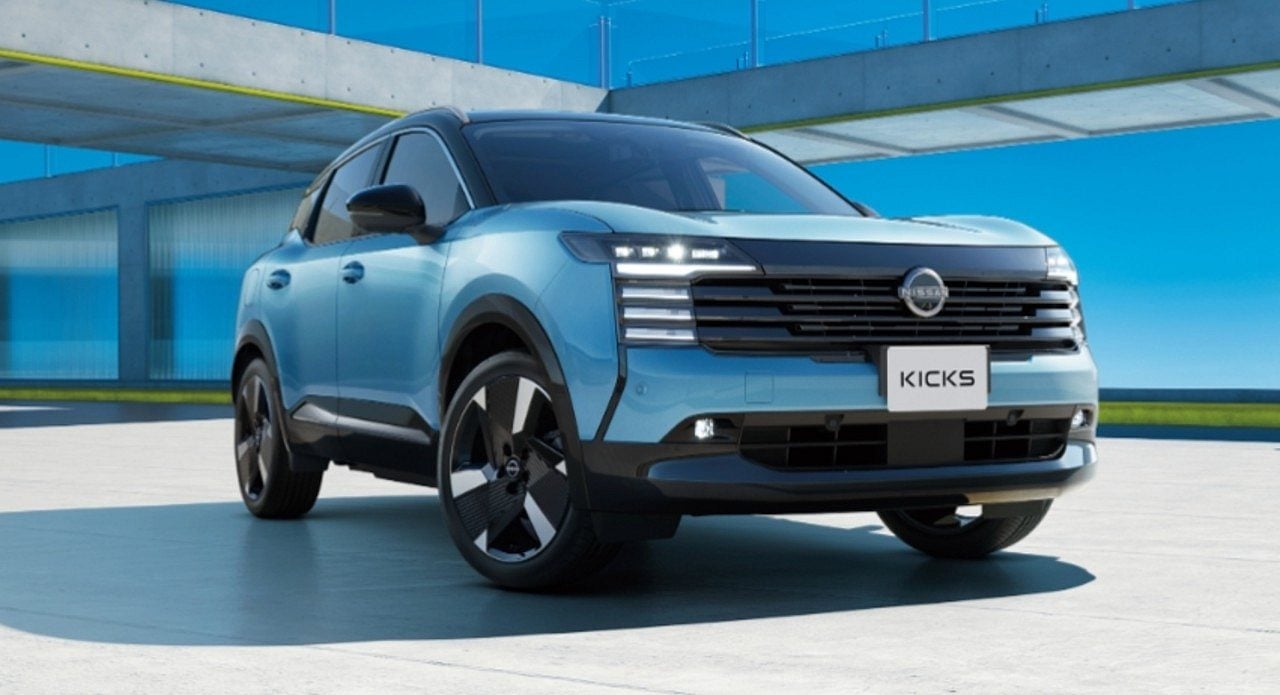
Asian manufacturer Nissan officially revealed on July 18th the long-awaited update of its compact sports utility vehicle, marking the model’s first major transformation after a six-year cycle. Reaching Japanese dealerships with a starting price of around 2.99 million yen (including taxes), the vehicle maintains the configuration to accommodate five people with ample internal space. To face the tough rivalry in the sector of smaller SUVs in the Asian country, the brand invested in a purely electrified mechanical package, projecting a 10% gain in fuel efficiency through its renowned e-POWER system, where the combustion engine acts only as a generator for the batteries.
Main aesthetic changes and market positioning of the utility
Breaking a long period without profound changes, the vehicle arrives in Japanese stores bringing a completely redesigned visual and technological package. The commercial movement represents a watershed for the automaker, which needs to respond quickly to the global transition towards cars that emit fewer pollutants and provide greater autonomy. Industry experts point out that the new visual identity, combined with driving assistance features, has the clear objective of attracting drivers who travel in large cities and do not give up on low running costs.
The sticker value set at approximately 2.99 million yen puts the car in a direct combat zone with its main local rivals. This financial strategy was designed to attract buyers who calculate not only the disbursement at the dealership, but also the savings generated at the gas pumps over the years of use. Furthermore, by preserving the spacious cabin for five occupants, the manufacturer reinforces its appeal to the family audience, which demands generous trunk space and comfort for longer trips.
Bet on electrification to face strong competitors in the Asian country
Restricting the catalog to electrified options highlights the brand’s urgency in adapting to the strict standards of Japanese drivers, which prioritize environmentally friendly vehicles. This tactic of abandoning purely combustion versions is a direct response to the dynamics of one of the most saturated markets in the world, where small-sized utility vehicles dominate the registration rankings and force companies to constantly innovate.
The 10% jump in fuel economy has a very clear target: to shorten the gap to category leaders, such as the Honda Vezel (sold in Brazil under the name HR-V). Honda’s rival has built a solid reputation based on extremely efficient consumption rates, dictating the rules in the segment. Therefore, optimizing the energy management of the new SUV is not just a marketing issue for Nissan, but rather a mandatory condition for survival to maintain its technological relevance and attract customers who monitor every drop of fuel spent in heavy traffic.
What drivers expect from the new generation of vehicle
Recent surveys focused on the behavior of the target audience have mapped out which characteristics matter most when signing a check for the recently launched utility. Having access to these statistics allows the sales department to target their advertising campaigns to the attributes that really matter, avoiding focusing on secondary details. Understanding the fears and desires of those who visit the showroom is the first step to converting curiosity into concrete sales.
According to the purchase intention survey, the criteria that most attract the attention of potential customers are divided into the following points:
- The visual redesign of the bodywork leads the motivations, gaining 36.5% of preference and proving that the aesthetic impact continues to be the biggest seller of cars.
- Questions regarding the technical specifications and engine behavior represent 30.8% of mentions, signaling that the automaker needs to be more didactic when explaining its technology.
- The financial amount required for the purchase was mentioned by 17.3% of people, showing that the family budget remains tight and dictates the rules of the game.
- Driving dynamics and suspension comfort were remembered by 13.5% of those surveyed, highlighting the interest in a smooth and silent ride.
Putting this update on the streets represents a decisive move for the manufacturer’s commercial future in its home territory. Equipped with modern lines, a powertrain focused on spending as little as possible and an aggressive pricing policy, the sports utility vehicle’s mission is to recover the ground lost in recent years and ensure that the company closes its financial statement with positive numbers in the competitive eastern automotive scene.



