Valve confirms launch of Steam Machine and Steam Frame consoles for mid-2026
Game and hardware manufacturer Valve has officially announced the launch window for its upcoming devices focused on digital entertainment. The long-awaited Steam Machine desktop console and Steam Frame virtual reality glasses will hit shelves during the summer of the northern hemisphere in 2026. This confirmation came through a statement on the Steamworks portal, detailing the expansion of the Verified badge system to encompass the new features, something that the gaming community had been eagerly awaiting since the first revelations at the end of the previous year.
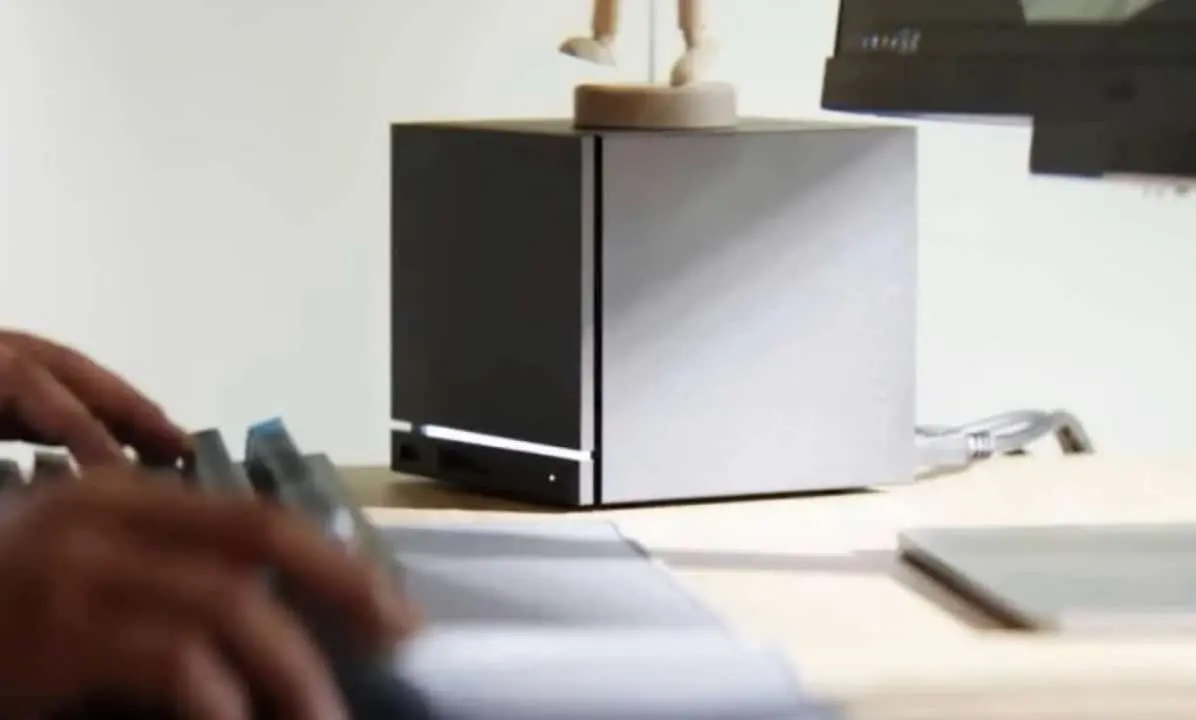
Designed to dominate the center of the living room, the company’s new compact computer runs the SteamOS operating system and delivers an impressive leap in performance, being six times more robust than the popular Steam Deck portable. In practice, this firepower guarantees the execution of high-budget games in 4K resolution at 60 frames per second, without choking. The modern cube shape simplifies installation next to televisions, while the rear panel offers a wide range of connections and support for massive internal storage expansion.
Technological innovations present in Steam Frame virtual reality glasses
Focused on ergonomics and extreme comfort, the brand’s visual immersion equipment focuses heavily on data transmission without the need for cables connected to the computer, although it also works completely independently. The brain of the device is a chip from the Snapdragon 8 Series line, working together with 16 GB of RAM to ensure fluidity. The visual experience is provided by LCD panels that deliver a density of 2160 x 2160 pixels to each eye, operating with dynamic refresh rates that fluctuate between 72 and 144 Hz.
To ensure clarity across the entire field of vision, the manufacturer adopted a set of custom-made pancake lenses. User spatial tracking relies on four high-precision optical sensors, aided by infrared emitters that maintain accuracy even in dimly lit rooms. The controls adopt a hybrid format compatible with both immersive and traditional titles, requiring only one AA battery to deliver up to 40 hours of autonomy, while the focused rendering technology drastically optimizes the graphic quality transmitted.
- Advanced processing guaranteed by the Snapdragon 8 Series chip combined with 16 GB of RAM
- Internal monitors with 2160 x 2160 resolution per eye and up to 144 Hz refresh rate
- Dual radio system to separate video traffic from conventional Wi-Fi network
- Joysticks equipped with magnetic levers and finger movement sensors
- Ability to run software natively through an adapted version of SteamOS
The intelligent weight distribution of the display allows users to tackle gaming marathons without feeling neck fatigue. As the project does not require cables scattered across the floor and complex software configurations, simply wear the equipment on your head to immediately immerse yourself in virtual worlds.
More on this story: Leaks detail Steam Frame in unboxing videos and guides ahead of launch
Expansion of the game certification system for new devices
The platform’s cataloging strategy underwent a reformulation to embrace the two new releases. The verification badge will continue to serve as a reliable guide to indicate which works from the digital store work perfectly on the newly announced devices. In the case of the desktop console, the approval criteria follow the same logic already applied to the brand’s laptops, while the evaluation of the immersive display will test both performance via the cloud and local processing, with partner studios already receiving test units to make the necessary adjustments.
This rigor in the certification process is essential to avoid technical frustrations after purchase. Each title sold will display medals indicating the level of quality that the consumer can expect when pressing the start button. The method, which proved its worth by boosting sales of the company’s handheld, now unifies the entire hardware ecosystem under the same quality standard.
Impacts of operating system updates on user experience
The Linux-based software developed by the company finally breaks the barriers of the portable market to invade other environments in the home. The desktop console transforms the television into an entertainment center with cutting-edge computer performance, surpassing the company’s failed attempt with the first Steam Machines in 2015. At the same time, the edition compiled for ARM architecture that runs on the headset guarantees modern features such as cloud saving, quick game suspension and a dedicated store for downloading third-party applications and browsing the internet.
On the same topic: Steam platform resets the price of four independent computer games
See Also

Gamer Week: Vivo and Supercell offer free rare item for Clash Royale players

Cristiano Ronaldo reaches 977 goals for Al-Nassr and aims for the thousandth goal in his career

Newborn dies after being injured by a scalpel during a cesarean section in the interior of São Paulo, says family
This entire software infrastructure acts as an invisible bridge connecting the compact computer, smart glasses and the new generation of the brand’s official control. Each piece of hardware has been designed from the ground up to extract the maximum potential from the digital store’s vast catalog of games. The practical result is an imperceptible transition for the player, who can start a campaign on the bedroom monitor, continue on the living room television and finish within a three-dimensional environment.
Information on prices, components and expected arrival in stores
Official retail values are still kept strictly confidential by the manufacturer. The exact day on which the products will be available for purchase during the mid-year window has also not been set, although reservation pages are already active in the app for those who wish to join the waiting list. Unlike past crises caused by the global shortage of semiconductors, the company’s management ensures that the supply chain is stabilized to fulfill the promise of delivery in 2026.
One of the great assets of the immersive display is the inclusion of a 6 GHz wireless network adapter in the product box. The presence of dual antennas eliminates any chance of interference with conventional routers in homes. Furthermore, integrated eye tracking allows the system to render in high definition only the exact point where the user is looking, saving internet bandwidth and processing power without sacrificing the beauty of the graphics.
- Availability of four distinct hardware configurations for the desktop console
- Different internal storage capacities for mixed reality glasses
- Full support for running both the traditional catalog and immersive experiences
- Ergonomics-focused design to avoid discomfort during prolonged use
- Controlled distribution of development units to content creators
Virtual world enthusiasts now receive a robust alternative to directly compete with Meta Quest 3, eliminating sole dependence on expensive computers. Anyone who already has a powerful machine set up at home will be able to simply transmit their entire game collection over the air. At the same time, the display’s internal processing capacity encourages the creation of unique works optimized for the portable format.
Learn more: Valve’s new console will cost the same as a gaming PC due to the increase in parts
Public reaction and the future of Valve’s hardware market
Forums and social networks have been buzzing with heated debates since the first rumors leaked onto the internet. Open source advocates celebrate the new console’s potential to once and for all consolidate the Linux system as a viable platform for high-level games. In the immersive segment, the display emerges as the main threat to the current market monopoly, supported by extremely positive impressions from journalists who tested prototypes behind closed doors.
The technology giant continues to pressure partner studios to adapt their projects to new architectures as quickly as possible. The list of titles with the maximum guarantee seal should multiply exponentially as the launch approaches. Interested consumers can now favorite the items in their accounts, while awaiting official announcements about price lists and the exact distribution schedule, which should be released next month.
This aggressive move consolidates the company’s transition from a simple digital store owner to a major electronics manufacturer. The resounding success of the handheld served as a perfect laboratory to prove that the public wants alternatives to traditional consoles. Now, with the expansion of the portfolio, the brand is able to simultaneously embrace keyboard and mouse fans, the sofa audience and virtual reality enthusiasts within a single digital environment.