
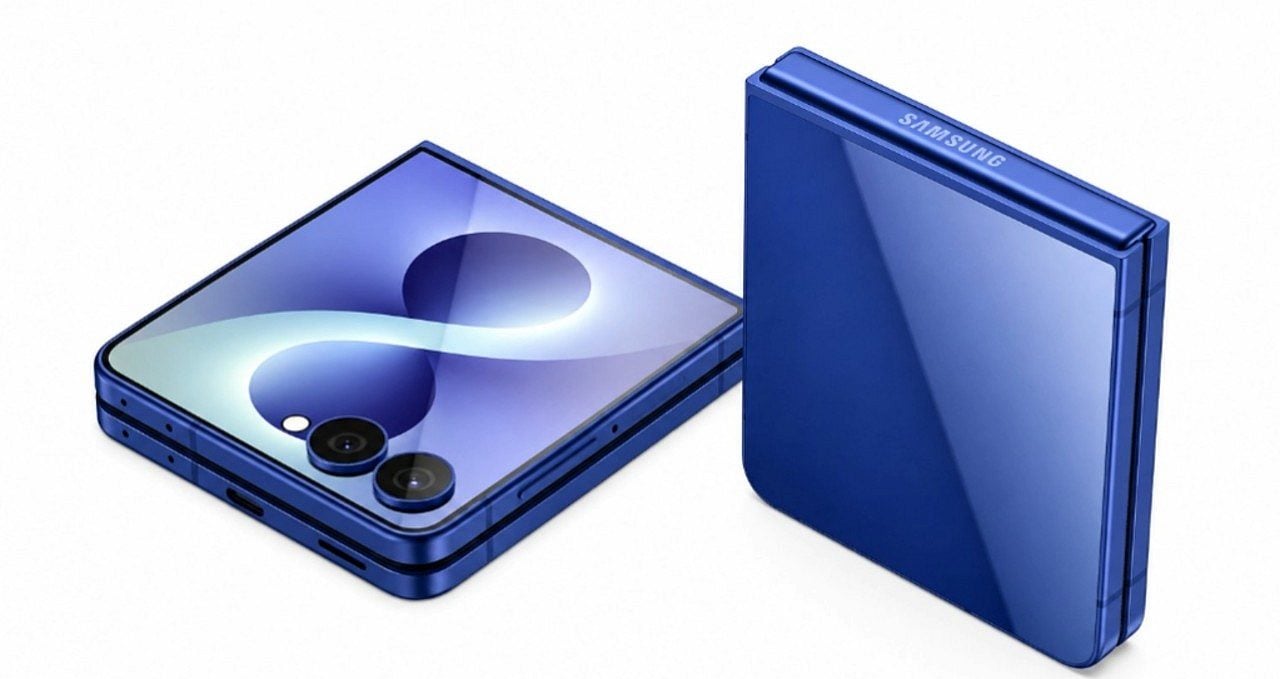
The global mobile device market is already beginning to focus its attention on the industry’s next launches, and rumors about the new generation of foldable devices are gaining strength. Recent behind-the-scenes information indicates that the South Korean manufacturer responsible for the Galaxy line plans a significant change in the hardware distribution of its future compact model. The main change involves the choice of processor that will equip the device, adopting rigorous geographic segmentation to optimize operational costs and maintain competitiveness in the sector.
Unlike strategies adopted in previous years, where the foldable line used to maintain global chip uniformity, the new planning suggests a mixed approach. Sources linked to the supply chain revealed that the company will use its own manufactured components in specific markets, while other regions will receive parts supplied by external partners. This tactic reflects a movement to adapt to economic fluctuations in the semiconductor market, which has been suffering from the increase in the price of raw materials essential for the assembly of high-performance electronics.
The decision to fragment hardware delivery is not exactly new to the brand’s portfolio, as the main family of traditional smartphones has already operated under this logic for several generations. However, the application of this format in the flexible screen category demonstrates the maturity of the sector and a need to balance profit margins without passing on drastic increases to the end consumer. The current scenario requires complex financial maneuvers, especially with the high demand for memory chips and artificial intelligence components.
Commercial decision defines which continents receive each version of the device
According to data released by The Bell portal, the distribution of the Exynos 2600 component will be quite restricted. Current planning indicates that only the European continent, including the United Kingdom, and the domestic market of South Korea will have access to batches equipped with this specific processor. This geographic limitation suggests that the company is testing the acceptance and performance of its own silicon in markets where it already has a highly established and brand-loyal consumer base.
On the other hand, a vast portion of the globe will be covered with a different architecture. Consumers in the Americas, which directly encompasses the Brazilian market, as well as buyers in Australia, most of the Asian continent and the Middle East, should find the version powered by the Snapdragon 8 Elite Gen 5 for Galaxy on the shelves. The partnership with Qualcomm guarantees the delivery of a chip optimized exclusively for the manufacturer’s devices, promising high energy efficiency and improved thermal control.
Learn more: Survey reveals 57% preference for the Motorola Razr Ultra 2026 in the dispute against the Galaxy Z Flip 8
Experts who follow the company’s internal movements say that this surgical division has a clear financial purpose. The cost of producing premium smartphones has soared in recent months, driven mainly by the increase in the cost of RAM memory and flash storage modules. By using its own processors in strategic regions, the manufacturer is able to absorb part of this financial impact, preserving the profitability of the project without compromising the commercial viability of the product on a global scale.
Understand the historical difference between Qualcomm components and in-house manufacturing
Processor duality has always been a topic of intense debate among technology enthusiasts. Historically, Snapdragon chips tend to have a slight advantage in stress tests, offering superior battery management and lower operating temperatures during heavy tasks such as high-end gaming and ultra-high-resolution video recording. For the Brazilian public, confirmation of the variant with the Qualcomm component is usually received very positively.
On the other hand, the engineers responsible for developing the Exynos line have worked tirelessly to reduce this performance gap. The latest generations of proprietary silicon have shown notable advances in image processing and embedded artificial intelligence capabilities. The choice to send the Exynos 2600 to Europe and South Korea indicates the board’s renewed confidence in the stability and firepower of its new hardware, which will need to prove its value in front of an extremely demanding audience.
Although benchmark numbers tend to dominate discussions on specialized forums, the day-to-day usage experience tends to be very similar for the average consumer. The software optimizations implemented by the manufacturer ensure that, regardless of the region of purchase, the device delivers fluid navigation, speed in opening applications and full support for the most modern connectivity features available on the telecommunications market.
Technical sheet expected for the next generation of the compact cell phone
In addition to information about the processing architecture, the leak brought to light a detailed list of possible specifications that will form the hardware set of the new foldable device. The focus seems to be on improving the visual experience and modernizing the photography suite, areas that always receive special attention from users looking for premium devices. The external display, for example, should gain even larger proportions to facilitate interaction without the need to open the phone.
Full coverage: Latest News (EN)
The internal structure will also undergo refinements, ensuring greater durability and resistance against external elements, a crucial factor for the longevity of flexible screens. Below, we detail the main components that should integrate the final smartphone project, according to information circulating behind the scenes in the Asian industry:
- Internal Dynamic AMOLED 2X LTPO type panel with 6.9 inches, FHD+ resolution, 21:9 format, hole for the camera and variable refresh rate of up to 120 Hz.
- Super AMOLED external display enlarged to 4.1 inches, also supporting fluidity of up to 120 Hz.
- Platform options based on the Samsung Exynos 2600 or the Snapdragon 8 Elite Gen 5, varying depending on the country of sale.
- RAM memory fixed at 12 GB to ensure efficient multitasking.
- Internal storage alternatives divided between 256 GB and 512 GB.
- 10 MP front lens with f/2.2 aperture for video calls and self-portraits.
- Dual rear photographic module: 50 MP main sensor with optical stabilization (OIS and f/1.8) accompanied by a 12 MP ultrawide lens (123º field of view and f/2.2).
- Complete connectivity package including 5G networks, Wi-Fi 7 standard, Bluetooth 5.4 and NFC approach.
- Protection certified by IP48 certification against the entry of specific solid and liquid waste.
- Battery module with 4,300 mAh capacity, supporting 25W wired charging.
The set of specifications reveals a robust device, prepared to deal with the technological demands of the coming years. The inclusion of 12 GB of RAM as standard is a strong indication that the generative artificial intelligence resources running locally on the device will demand a lot from the machine. Furthermore, the 50-megapixel main camera represents an important qualitative leap for the compact foldable category, which in the past tended to sacrifice photographic quality for the sake of design.
What consumers can expect until the manufacturer’s official announcement
In the software field, the device’s ecosystem will be controlled by the Android 17 operating system, running under the customized One UI 9.0 interface. This combination promises to bring new ways of interacting with the device’s two screens, expanding the productivity shortcuts and visual customization options that have become the company’s trademark. Deep integration with cloud services and image editing tools based on neural networks should be the highlight of the product presentation.
Follow: all about galaxy z flip 8
As is usual in the technology market, all the information leaked so far belongs to the field of speculation. The manufacturer maintains a strict confidentiality policy and does not publicly comment on projects in the development phase or distribution strategies before official launch events. The industry schedule suggests that confirmation of all these details will only occur in the second half of the year, a period traditionally reserved for the renewal of the family of smartphones with flexible screens.