130-million-year-old fossil discovered in Tokushima could reveal new species of lizard


A group of researchers from the Tokushima Prefectural Museum, in the city of Tokushima, and the University of Fukui Prefecture, in Japan, discovered a lizard fossil. The find was made in a geological layer from the Lower Cretaceous Period, approximately 130 million years old, located in the city of Katsuura, in Tokushima. This is considered one of the oldest lizard fossils ever found in Japan and there is a high probability that it is a new species.
The research team explained that, although there were already records of fossils of land lizards on the coast of the Sea of Japan, this is the first time that a specimen has been discovered on the Pacific Ocean side. Shota Obuse, curator at the Tokushima Prefectural Museum, said that this discovery validates the presence of lizards in the coastal regions of the Asian continent, considering that the Japanese archipelago was once part of the tip of that continent. He highlighted the interest in deepening studies on the evolutionary process and distribution of these animals.
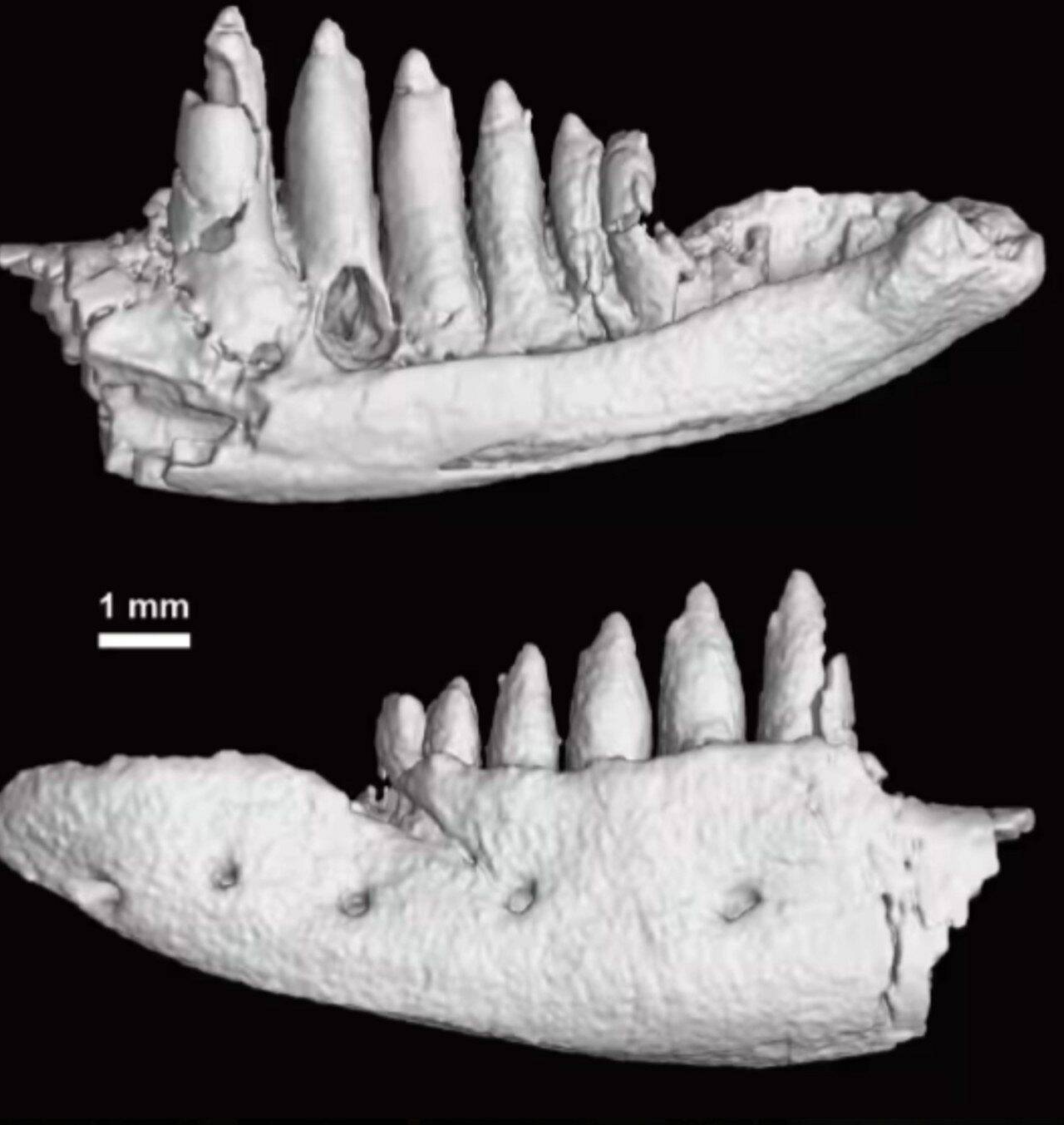
The fossil, a fragment of a lower jaw measuring around 1.1 centimeters, was unearthed during an excavation carried out between October and December 2022. The piece has six preserved teeth, some with characteristic protrusions for crushing food. The particularities in the number and shape of the teeth differ from the characteristics observed in other known fossils. The original specimen will be on display at the Tokushima Prefectural Museum until September 30, while a replica will be displayed at the Fukui Prefectural Dinosaur Museum in Katsuyama until October 27.