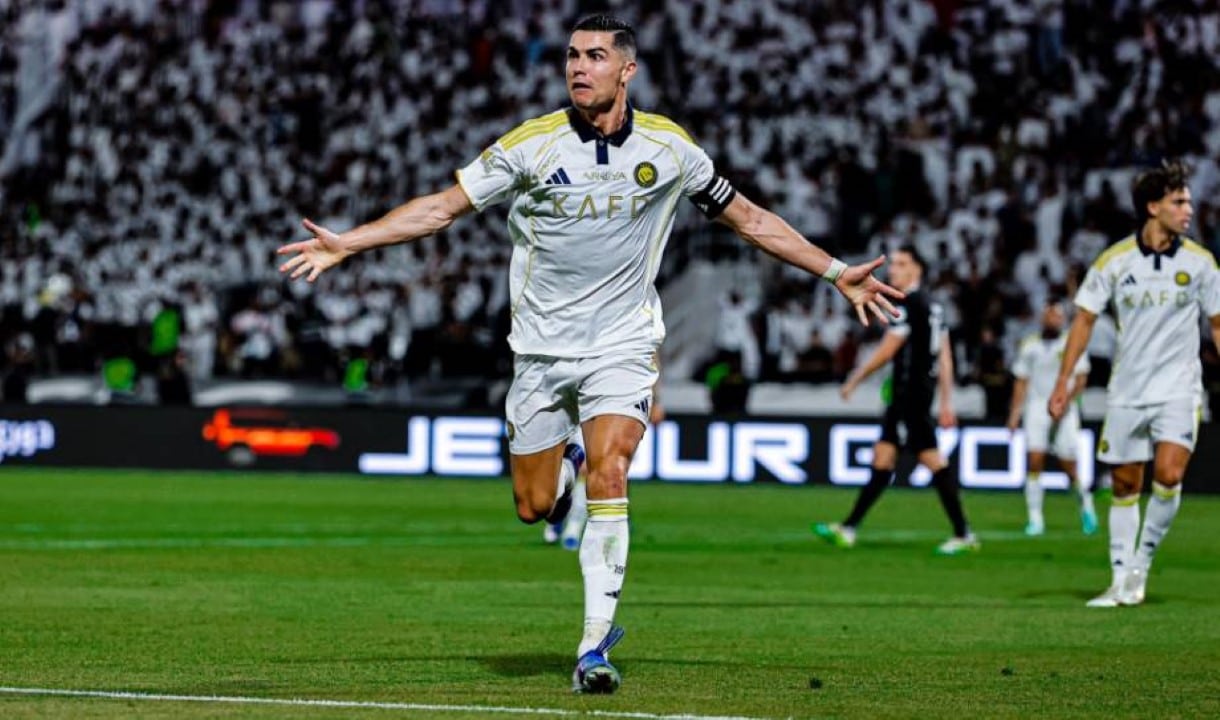
Al-Nassr, the team where Portuguese star Cristiano Ronaldo plays, is immersed in a deep financial crisis. The Saudi association accumulates a debt that exceeds 800 million riyals, equivalent to approximately 213 million dollars, as revealed by local press vehicles. This scenario of fiscal instability directly impacts the club’s planning capacity and competitive ambitions.
The majority of these financial obligations originate from decisions made during the last season, resulting in significant liabilities. The situation became so critical that Al-Nassr management received a formal ban on making new signings of players or coaching staff. The measure will remain in force until the club is able to guarantee the necessary liquidity through new sponsorship agreements and generation of its own revenue.
Restrictions on the transfer market and contract renewals
The consequences of the crisis are already visible in the transfer market, a crucial period for the formation of competitive squads. Al-Nassr has not yet managed to complete any summer moves, essential to reinforce the team for next season. This inertia contrasts with the profile of a club that has attracted global stars.
A notable example is the previous agreement with Mallorca midfielder Samu Costa, which remains unofficial due to financial constraints. Furthermore, negotiations to extend player Abdulrahman Ghareeb’s contract are also stalled. The inability to move in the market weakens the team’s competitiveness and frustrates the expectations of fans and the coach himself.
Saudi Arabia Public Investment Fund evaluates solutions
Faced with the seriousness of the problem, the Saudi Public Investment Fund (PIF), the main driver of investment in Saudi football, took action to find solutions. The fund, which has been crucial in revitalizing the local league, has developed three alternatives to face the crisis affecting Al-Nassr. The PIF’s intervention reflects the club’s strategic importance in the project to improve football in the country.
- Restriction of the financial autonomy of the current management of Al-Nassr.
- Hiring external experts to optimize revenue and reduce expenses.
- Evaluation of proposals for the sale of shareholding in the club.
PIF currently has two serious purchase offers under consideration for Al-Nassr. However, the fund’s preference is for a partial sale of shares, rather than a total acquisition, which would allow it to maintain strategic influence over the club and the sporting project.
Impact on the image of the Saudi Pro League and the future of Cristiano Ronaldo
The financial crisis at Al-Nassr puts a question mark over Cristiano Ronaldo’s future and the sustainability of the ambitious Saudi Pro League project. The arrival of big names such as the Portuguese star, Neymar and Karim Benzema boosted the league’s visibility, but financial problems in one of its main exponents could shake the confidence of other global talents.
Uncertainty regarding signings and the club’s financial health could generate speculation about the retention of high-caliber players. For Ronaldo, who joined the club with the expectation of taking Al-Nassr and Saudi football to a new level, the current situation represents an unexpected challenge. The image of stability and growth that the league seeks to build could be compromised if the crisis is not resolved effectively.
Challenges for Saudi football’s growth strategy
Saudi Arabia’s massive investment in football is part of a broader strategy, Vision 2030, which aims to diversify the country’s economy and increase its global influence, using sport as a tool. The Al-Nassr crisis serves as a test for the resilience and financial governance of clubs operating under this new dynamic of high investment.
Although the PIF is actively seeking solutions, the situation demonstrates the complexity of managing clubs with large salary gaps and acquisition costs, whilst seeking long-term sustainability. The need for financial restructuring and the search for liquidity are fundamental steps to ensure that the project of transforming the Saudi Pro League into one of the most prominent leagues in the world continues on its course, preventing episodes like this from being repeated in other clubs benefiting from similar investments. Success in resolving this crisis will be an important indicator for the credibility and future of football in the country.