
Researchers reveal deciphered name of Mayan astronomer: Sak Tahn Waax in Guatemala

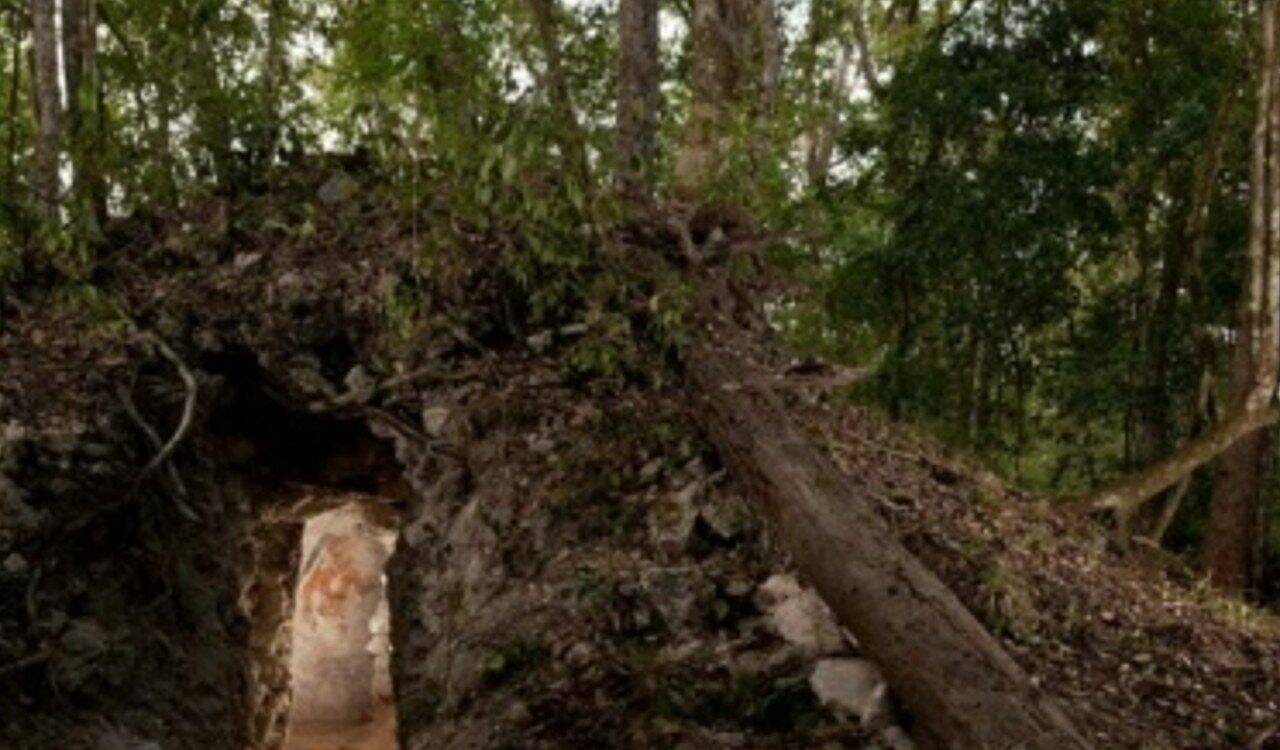
Researchers exploring the Mayan ruins of Xultun, in Guatemala, have managed to uncover the name of an ancient astronomer and mathematician from the Mayan civilization. The revealed identity is Sak Tahn Waax, which translates as “White-Breasted Fox”. The discovery was detailed in a paper published in the academic journal Antiquity on July 14, 2026.
For a long time, the scientific community knew little about Mayan astronomers, and their contributions remained on the margins of history. David Stewart, an explorer and expert in archeology and epigraphy at the University of Texas at Austin, and one of the study’s co-authors, emphasized the importance of this revelation for historical understanding.
In a statement about the research, Stewart said he “finally figured out the name.”
The astronomer’s name was located in a small rectangular space known as “Building 10K-2”, within the Shultun archaeological complex. More than fifty small inscriptions, or microtexts, related to mathematics, were found on the walls of the site.
One of these inscriptions, composed of eleven hieroglyphs, bore the now deciphered name. Furthermore, the room contained mathematical formulas that describe the movements of the planets Venus and Mars, suggesting that the scholar had direct involvement with these calculations.
To date, this is the first and only known occurrence in which a Mayan astronomer and mathematician received individual recognition for his work. This discovery offers an unprecedented perspective on the work of one of the academics who contributed to astronomy and mathematics in ancient Mesoamerica.
The last two characters of the eleven hieroglyphics proved crucial in deciphering the identity of the astronomer and mathematician. The first character translates as “Che-he-na”, which means “Thus Spoke”. The second, “SAK-TAHN-wa-xi”, was interpreted by the research team as “White-breasted Fox”.
Comparing the discovery, Stewart stated that “it’s like looking at an old whiteboard in someone’s laboratory.” He added that with the author’s name present, “Maya science seems much more human than ever before.”
Sak Tahn Waax now joins influential names in the history of science, such as Pythagoras, Galileo and Newton, as a figure who marked his time. Heather Hurst, also a National Geographic explorer and archaeologist at Skidmore College in the United States, who leads the “San Bartolo-Schultun Project” for research at the archaeological site, commented on the relevance of the find.
According to Hurst, “it is through the actions of just one person that this entire tradition comes back to life.”



