
Volkswagen Atlas vs Kia Telluride: Which is the best 3-row family SUV?


The growing demand for SUVs with three rows of seats in the automotive market leads many consumers to look for options that combine space and versatility. While large models like the Infiniti QX80 and Chevrolet Tahoe are classic choices, a new generation of midsize crossovers is emerging with the same capability, focused on meeting the needs of expanding families.
With this in mind, a detailed test was carried out, with a week of driving for each model, of the Volkswagen Atlas and the Kia Telluride. The objective was to identify which of these mid-size SUVs, both equipped with three rows of seats, offers the best value for money. Although both stand out for their spacious interiors, robust finishing options and standard all-wheel drive, practical experience revealed significant distinctions between the vehicles.
Specific versions were evaluated: the 2027 Kia Telluride The difference of approximately US$9,000, however, reflects different design approaches and philosophy, which makes the analysis and final recommendation even more relevant to the interested public.
Differences and prices between Volkswagen Atlas and Kia Telluride
When comparing models, the 2026 Volkswagen Atlas Peak Edition, with an as-tested price of $50,230, features a 2.0L Turbo 4-cylinder engine, 18.6 gallons of tank capacity, 269 horsepower and 18-inch wheels, with a factory suggested retail price of $48,060. The 2027 Kia Telluride Both models offer all-wheel drive as standard in the versions evaluated.
Review of Volkswagen Atlas and Kia Telluride designs
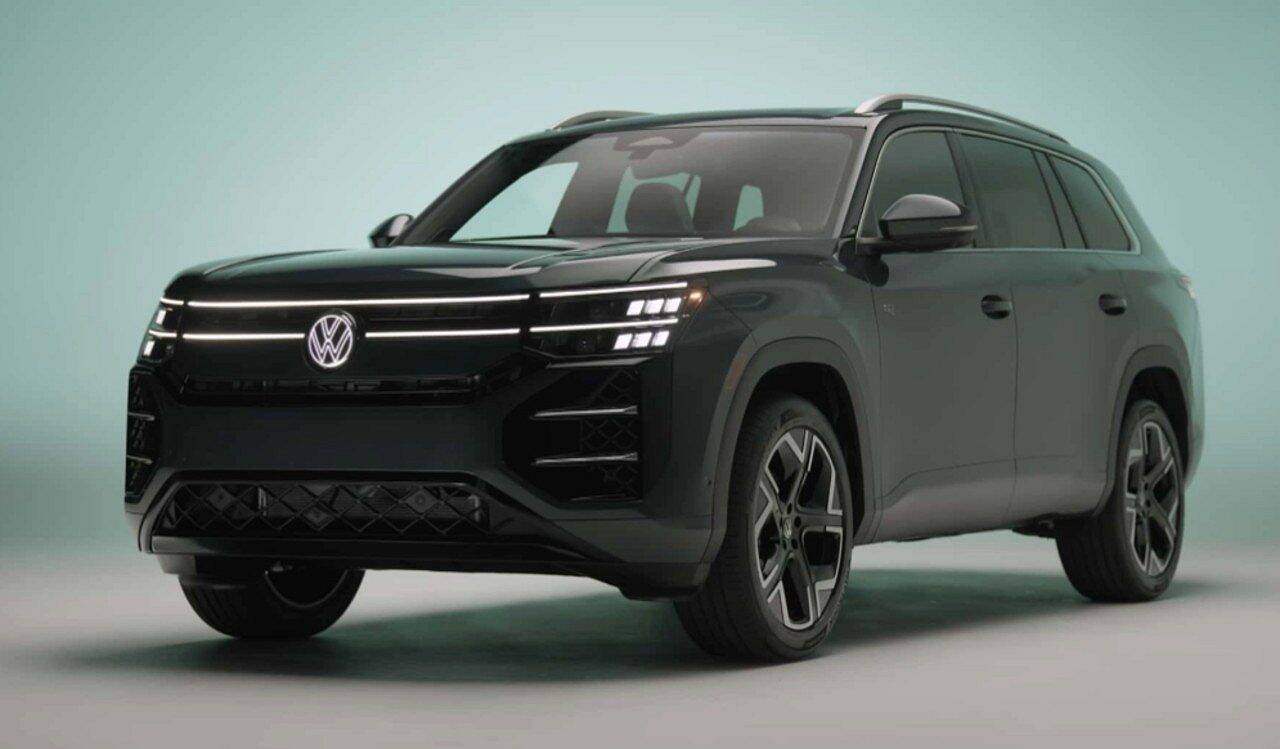
In terms of design, the two SUVs adopt an imposing and robust aesthetic, which distinguishes them from traditional family cars, resulting in a technical tie in overall perception. The Volkswagen Atlas Peak Edition sports a more contemporary style, characterized by dark 18-inch wheels with all-terrain tires, gloss black exterior details and illuminated light bars at the front and rear, which highlight the German brand’s emblems.
The Pearlescent Avocado Green color complements the Atlas’s vigorous look, while its interior follows a modern line. Black synthetic leather seats, gray details, vibrant orange stitching and stainless steel pedals contribute to a sophisticated and functional cabin.
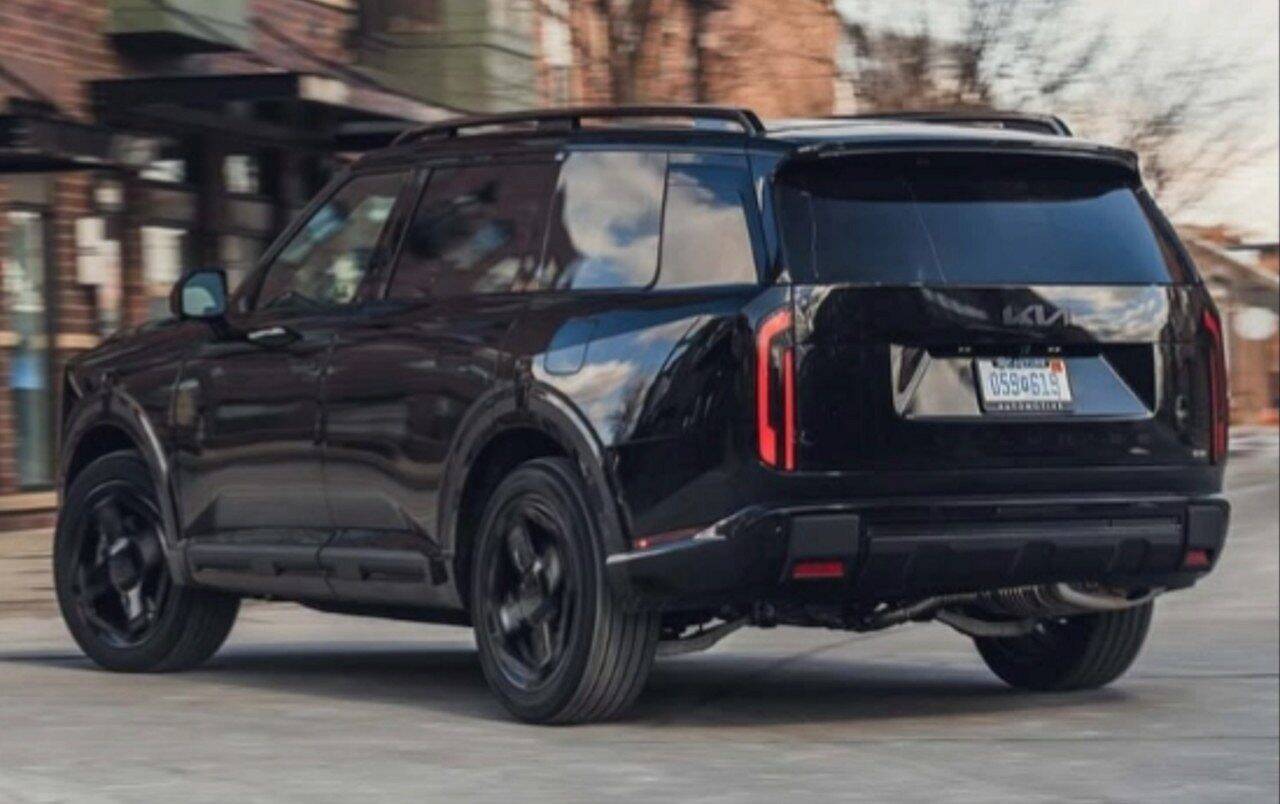
In contrast, the Kia Telluride X-Pro SX-Prestige projects an almost stealthy visual presence, reminiscent of military designs, but with a more angular shape. Its widened body proportions, vertical LED headlights and Terrain Brown matte paint further accentuate this robust and distinctive aesthetic.
Internally, the Telluride focuses on executive luxury. Its spacious cockpit is dominated by two 12.3-inch panoramic screens, engineered wood accents and SynTex synthetic suede seats, with individual heated and ventilated seats in the first two rows, offering a premium experience for occupants.
Both vehicles manage to capture the public’s attention in opposite ways, highlighting the German precision and functionality of the Atlas, and the urban and minimalist aesthetic of the Telluride, with its touch of luxury.
In this category, the result is a draw, given the ability of both to stand out visually with distinct and equally attractive proposals.
Comparison of fuel consumption between SUVs
In theoretical terms, the United States Environmental Protection Agency (EPA) gives a slight advantage to the 2026 Volkswagen Atlas Peak Edition, with a combined rating of 21 MPG (miles per gallon), surpassing the 19 combined MPG of the 2027 Kia Telluride 22.5 mpg for the Atlas and 22.6 mpg for the Telluride, an imperceptible difference.
The Atlas demonstrates greater consistency on short routes with frequent stops, achieving an average of 17.3 mpg in urban travel, compared to 14.1 mpg for the Telluride. On the other hand, the Telluride slightly outperforms its competitor on long-distance trips, recording 26 mpg compared to the Atlas’ 25.9 mpg.
Surprisingly, the Atlas’ agility on the road stands out. Despite its faster accelerator response and dynamic performance that resembles sports cars, the model managed to maintain fuel consumption similar to that of the Telluride, which is a positive point.
Thus, in terms of fuel consumption, both vehicles are equal, showing similar efficiency in mixed and road use conditions.
Driving performance: Volkswagen Atlas versus Kia Telluride
When it comes to performance under the hood, SUVs adopt different strategies for delivering power from their four-cylinder engines. The Kia Telluride X-Pro is equipped with a 2.5-liter turbocharged engine, generating 274 horsepower and 422 Nm of torque. Meanwhile, the Volkswagen Atlas Peak Edition uses a 2.0-liter turbocharged four-cylinder engine, which produces 269 horsepower and 370 Nm of torque. While the Telluride has a quiet technical advantage on paper, the actual driving experience revealed a different picture.
The Atlas stands out in this category thanks to its surprisingly agile steering, reminiscent of a sports car, and vigorous power delivery. It accelerates with ease, providing faster throttle response, which makes overtaking, merging onto expressways and driving on local roads hassle-free and enjoyable. Furthermore, the VW’s cabin features notable refinement, with the engine running significantly quieter under load, in contrast to the noise perceived in its rival.
Although the Telluride offers a smooth and relaxed ride, it feels less agile when cornering due to its greater weight. Its handling, although comfortable, does not reach the same level of dynamism as the Atlas.
Therefore, in the driving performance assessment, the Volkswagen Atlas emerges as the winner, standing out for its agility and more engaging driving experience.
Comfort and technology: who stands out among the models
Both SUVs offer excellent space for families, including the convenience of individual second-row seats, rear window blinds and large panoramic glass roofs. However, the Kia Telluride X-Pro SX-Prestige 2027 wins preference for raising the level of comfort and technology to a higher level.
At the front, the Telluride’s driver’s seat is equipped with Ergo Motion technology, which triggers a light massage after long periods of driving. There’s also a clear head-up display and a dedicated button on the steering wheel for lane centering assistance, optimizing the highway experience. Reversing and maneuvering in tight spaces are made easier by the digital rearview mirror and the 360-degree peripheral vision monitor, which projects a live image directly onto the instrument panel when you activate the turn signal, including the blind spot monitor.
In contrast, the 2026 Volkswagen Atlas Peak Edition offers a comfortable layout, with a 12-inch touchscreen and heated and ventilated front seats. The model also includes an adaptive front lighting system, with headlights that physically rotate in the direction of the steering wheel. However, the Atlas leaves something to be desired in cutting-edge technological features, with a standard reversing camera instead of the full 360-degree camera system and the absence of advanced luxury items such as a head-up display or digital rearview mirror, which give the Telluride a premium sedan feel.
Therefore, in terms of comfort and onboard technology, the Kia Telluride stands out as the winner, offering a wider range of features that enhance the driving experience and well-being of passengers.
SUV value comparison: Atlas and Telluride
Analyzing the list prices, the 2026 Volkswagen Atlas Peak Edition, with its value of US$50,230, initially seems more advantageous. However, while the Atlas offers a complete package of essentials for everyday use, the Telluride delivers superior value, even at a higher cost.
The Telluride’s perceived added value is not only due to its aesthetics, but also to the inclusion of luxury equipment. Among them, the driver’s seats with massage function, digital rear-view mirror, 360-degree vision cameras and other technological features mentioned above stand out.
Additionally, Kia offers an industry-leading warranty on the Telluride: 10 years or 100,000 miles on the powertrain. This coverage significantly exceeds that of Volkswagen, which is 4 years or 80,000 km. This long-term peace of mind, offered by Kia’s extended warranty, justifies the price difference and positions the Telluride as a considerably more attractive investment.
Based on these equipment and warranty criteria, the Kia Telluride is the winner in the value category, providing a greater return on investment over the long term.
The final verdict: which SUV to choose for the family
The excellence of both family vehicles is undeniable in their ability to offer exceptional utility, especially due to the functionality of the three seats and the ease of folding the third row to expand the trunk. For those who prioritize driving dynamics, the 2026 Volkswagen Atlas Peak Edition is undoubtedly the most engaging choice, with its sports car-like response, cornering agility and quiet cabin during acceleration, providing daily driving pleasure.
Despite the preference for the Atlas’s agility, the final recommendation leans toward the 2027 Kia Telluride X-Pro SX-Prestige AWD. The Telluride’s impressive luxury technology package, which includes several advanced features, is the deciding factor. Even though it implies a higher cost, this price difference is considered an investment that is fully justified by the experience and characteristics offered.





