
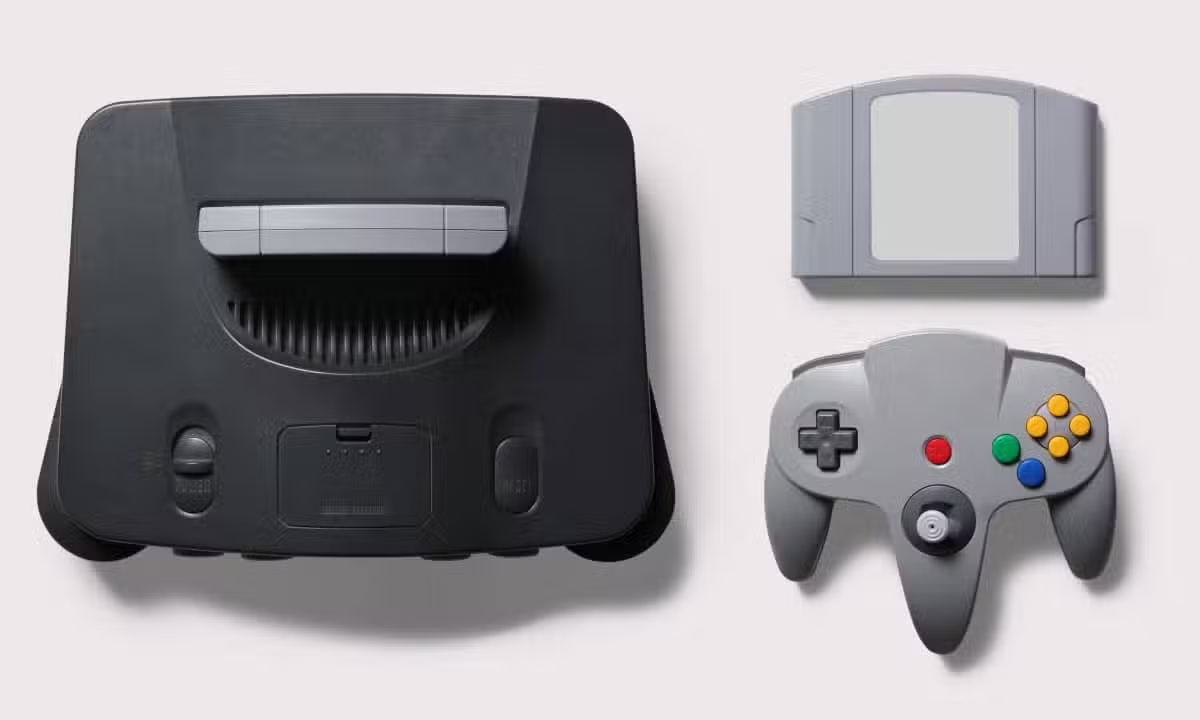
A new system version has just been made available by manufacturer Analogue for its latest table console. The data package highlights direct compatibility with the coveted Nintendo 64 wireless joystick, an accessory sold exclusively to subscribers of the Nintendo Switch Online service. With this implementation, players can now pair the device using only Bluetooth technology, leaving behind the obligation to plug third-party adapters into the device’s ports.
Hitting shelves in the last quarter of 2025, the equipment was designed to run classic cartridges from the 64-bit era using hardware-level reverse engineering, known as FPGA. The release of this software takes place in the first months of the machine’s useful life, quickly responding to a significant demand from the community of purists who wanted to use the Japanese brand’s official peripheral for a more nostalgic immersion.
##MV_EMB_0##
The file necessary to perform the upgrade is already hosted on the manufacturer’s servers, with completely free access. To apply the changes, video game owners need to transfer the data to a compatible memory card or perform the procedure by connecting the device to a computer via a USB cable.
What changes in practice with the arrival of firmware 1.2.0 to the video game
The backbone of this update lies precisely in perfect communication with the modern gamepad manufactured by Nintendo itself. This specific peripheral, which requires an active subscription to the Switch ecosystem to be purchased, recreates down to the smallest detail the trident-shaped casing, the layout of the buttons and the analogue sensitivity that marked the industry in 1996.
Aside from the issue of controls, engineers took advantage of the patch to resolve video communication failures that affected certain 4K televisions and HDMI signal splitters. Several buyers had experienced momentary image drops when using more complex home theater setups, a bottleneck that has now been resolved to deliver continuous, choking-free video transmission.
New system tools and audio fixes built into 3DOS
The device’s virtual environment, called 3DOS, received interesting improvements in the way it manages the user’s personal library. From now on, the software creates an internal database that tracks the hours spent on each adventure, saving these statistics permanently in memory even when the equipment is unplugged.
Another feature introduced concerns the maintenance of 8BitDo brand peripherals, which can now have their own firmware updated directly via the console’s USB ports. This direct bridge saves the consumer from having to plug the joysticks into a PC whenever the accessory manufacturer releases a bug fix.
The development team also delved into the original console’s complex sound system to eliminate noise and sound distortions that occurred in specific scenarios. The 64-bit video game used a very peculiar audio synthesis, similar to MIDI files, and the new code adjusts playback to avoid bursts in the heaviest musical tracks in the catalog.
Which joysticks are compatible with recreated classic hardware
Despite all the wireless innovations, the physical structure of the device maintains the iconic four front inputs to plug in the original controls from the 1990s. This design detail is essential to ensure that veterans can retrieve their accessories stored in the closet and play exactly as they did in their childhood.
- Official wireless gamepad from the Switch Online line, now with immediate Bluetooth pairing;
- Line of 8BitDo 64 controls, which operate both via USB cable and radio signal;
- Classic joysticks from 1996, which physically connect to the four ports on the front panel;
- 8BitDo modification boards, created to embed batteries and antennas in the housings of old controls.
This entire range of options ensures that the end consumer has complete freedom to decide whether they prefer the convenience of modern technology or the historical weight of cables tangled in the living room.
How FPGA technology recreates the original experience without using emulators
Unlike a computer or a Raspberry Pi running emulation software, the core of the system uses programmable chips that physically imitate silicon circuits designed in the 90s. The practical result of this engineering is the complete elimination of delay in commands and the guarantee that any tape, regardless of country of origin, works the first time.
To adapt the old polygonal graphics to current televisions, the machine intelligently resizes the image until it reaches 4K resolution, also offering filters that simulate old tube screens (CRT). The technological package is completed with internal dual-band Wi-Fi antennas and low-energy Bluetooth, setting the stage for future expansions.
The external design follows the brand’s minimalist and luxurious visual identity, and can be purchased in black or white. In the box, the customer already receives a properly configured memory card with the essential boot files and plenty of space to manage the save files.
The impact of the device on the growing market of old game collectors
The manufacturer already has a respected history within the historical preservation niche, having launched absolute sales successes such as portable and tabletop platforms focused on Game Boy and PC Engine. The company’s philosophy has always revolved around rejecting digital piracy and encouraging the use of physical media that players already have at home.
The 64-bit system library has almost four hundred works released during its original life cycle. Adventures that defined three-dimensional worlds, such as the journeys of the mustachioed plumber and the hero of Hyrule, continue to drive a parallel buying and selling market that generates millions annually.
The search for ways to play these classics on modern screens has never been higher. While the copyright holder bets on digital rentals linked to monthly subscriptions, hardware companies focused on enthusiasts hand over definitive ownership of the experience, creating healthy competition in the retro segment.
Step by step to safely apply the new operating system
Anyone who wants to take advantage of the new features needs to navigate to the manufacturer’s technical support tab and locate the version 1.2.0 data package. The technical prerequisite for the procedure is to have a pendrive or SD card formatted in FAT32 or exFAT standards, respecting the maximum reading limit of one terabyte.
The downloaded file should not be placed inside folders, but rather dropped at the root of the storage device. The next step requires the user to insert the media into the console completely turned off and, when pressing the power button, wait for the progress bar to automatically fill the screen.
Digital preservation experts always advise making a backup copy of game progress before altering the system’s core. Fortunately, the update architecture was designed to be fast and not overwrite the data stored on the device’s virtual memory cards.
Why the Japanese manufacturer’s wireless accessory attracts so many enthusiasts
The great asset of the modern official joystick is its tactile fidelity, delivering the same tension on the rear button springs and the exact inclination angle of the central lever. For those who grew up skinning their thumb in the minigames of the time, feeling the same mechanical resistance is a fundamental part of nostalgia.
Replacing the cable with an internal antenna brought unprecedented comfort, allowing you to play from the couch without the risk of tripping, while maintaining a quick response to commands. The internal lithium-ion battery is sized to handle weeks of casual gaming before requiring a recharge via USB-C cable.
The obstacle to purchasing this piece of hardware is its restricted sales model, costing around fifty-five dollars and requiring the buyer to prove that they are an active subscriber to Nintendo’s online services. This commercial barrier ends up transforming the item into a scarce object of desire on the resale market.
How the gaming community evaluated the recent changes to the device
Forums dedicated to old games were flooded with positive reports about the ease of turning on the video game and having the control synchronized, without any hassles. Removing intermediary adapters shaved precious milliseconds off response time, crucial in platform games that require precise jumps.
For the most discerning collectors, the aesthetics of the gaming environment matter as much as the software. Being able to leave the console on the shelf accompanied by a control that carries the official logo, without any hanging wires, raises the standard of the entertainment room to a museum display level.
The agile pace of this first major update reinforced initial buyers’ confidence in the brand. Delivering tools that were massively requested on social media during the pre-sales phase shows that the communication channel between engineers and the end public remains open and functional.
What innovations can still arrive in the Analogue 3D ecosystem
Analyzing the life cycle of the brand’s previous products, it is safe to say that the operating system will continue to receive refinements for years. The company’s portable model, launched more than three years ago, still has new processing cores and image filters to this day.
One of the most anticipated and debated features behind the scenes is the possible activation of Wi-Fi antennas to allow multiplayer matches over the internet. As the operating system is highly malleable, creating virtual tunnels to simulate two distant consoles being in the same room is a completely viable technical challenge.
The original 90s hardware was famous for its exotic peripherals like the vibration pack and voice recognition microphone. The expectation now is that the next firmware packages will be able to translate these complex signals so that modern joysticks can vibrate and interact with the classic ones in the same way as the originals did.