Apple reinvents Siri in iOS 27 for users who prefer focused, private AI, competing with ChatGPT By Beatriz
6 min read
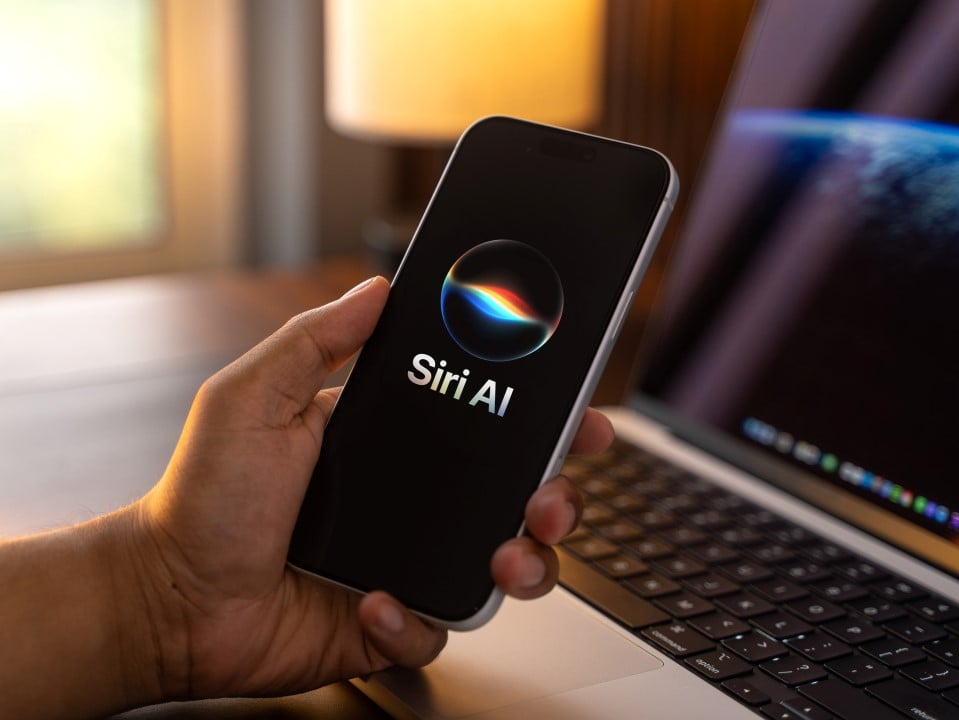 |
The new version of the Siri assistant, present in iOS 27, turns into a complete artificial intelligence chatbot, now capable of retrieving data from the user’s previous interactions, understanding the content displayed on the screen and performing actions within applications. The update also adds access to real-time world information and integrates it into its own app, allowing for two-way conversations.
This evolution positions the new Siri as a direct competitor to platforms such as ChatGPT, from OpenAI. To verify Apple’s assistant’s ability to replace ChatGPT on an iPhone, a practical test was carried out for a week using exclusively Apple’s chatbot application.
What is the availability and costs of services?
Siri AI is restricted for use on devices that support Apple Intelligence and operate on OS 27, including the iPhone 15 Pro and subsequent models. Additionally, the tool is available for iPads and Macs equipped with A17 Pro, M1 chips or more advanced processors, and may require interested parties to face a waiting list for installation.
On the other hand, ChatGPT works on iOS 17, iPadOS 17, macOS 14 (on Macs with an M-series chip) or later versions, which makes it accessible on a wider range of devices, including those that do not support Siri AI.
Both chatbots offer robust free options, with additional paid plans designed for users who require more advanced functionality. Apple’s solution makes extended cloud processing available to iCloud+ subscribers at no additional cost, while OpenAI charges monthly fees of US$8, US$20 and US$100 in the United States for its Go, Plus and Pro plans, respectively.
Which assistant is most useful for everyday tasks
Chatbots have become a reference for everyday questions. Both Siri AI and ChatGPT were trained with vast databases and can deliver real-time web search results. This makes them effective for many common questions, such as finding recipes, troubleshooting technical issues, researching products, or tracking game scores, although both can occasionally generate incorrect information and require verification.
A notable difference in daily use is Siri’s more formal tone, which avoids emojis and humor, focusing on delivering information directly. It also asks fewer unnecessary follow-up questions, which helps keep conversations more concise compared to ChatGPT.
When it comes to functions on the device itself, Siri AI has system privileges that are not accessible to other chatbots. It can set reminders and alarms, create calendar events, send messages and make calls to contacts, adjust settings and even perform actions within applications. With natural language understanding, the assistant became more useful for processing multiple commands simultaneously, something that ChatGPT cannot replicate due to the restrictions of Apple’s operating system, even though it has its own reminder function.
In a practical example, Siri AI can be asked to search for a location in an Instagram photo. After getting the answer, the user can ask to create a list of items to take, plot the route using Apple Maps and even play music that matches the destination. This ability to integrate search, online results and control of iPhone data and applications is a differentiator that ChatGPT does not offer natively.
Which tool offers the most customization
Both Siri AI and ChatGPT use user information to enhance their usefulness and relevance, but their approaches to this personalization differ significantly.
Siri AI has a unique advantage in the ability to access iPhone photos, files, emails, events, messages, Safari history, and notes to build a personal knowledge base. It’s impressive how it can remember details from the user’s digital history and access data that would be difficult to find manually.
However, at the time of evaluation, Siri AI does not keep a history of previous interactions with the user nor does it consider conversations saved in its dedicated app, unlike ChatGPT. There is no Memory function that allows you to instruct it to respond in a certain way or remember a specific detail about the user. ChatGPT, in contrast, allows you to customize the style of responses, including tone, warmth and brevity, adapting to ongoing use.
For users who don’t rely on AI in every aspect of their lives, Apple’s approach may be more advantageous. Many are looking for a chatbot that can quickly locate information in stored files, without caring about the tone of the conversation or the AI’s ability to “evolve” or demonstrate synthetic emotions, reinforcing the idea of an AI focused on functionality.
Comparison between voice and video modes
Siri AI and ChatGPT offer voice modes, but with different designs. Siri AI voice mode does not allow interruptions during a response to start a new interaction. In contrast, ChatGPT continues to listen while speaking, allowing the user to interrupt to adapt the conversation in a more fluid and natural way.
ChatGPT also innovates with a video mode, which allows you to ask questions about the environment in real time as if it were a video call with the chatbot. Siri AI, in turn, is limited to queries about static photos. Users who actively use ChatGPT’s voice and video modes will notice Siri AI’s limitations in this regard.
Generation of images and videos: which one stands out
In the field of media generation, Siri AI can now create somewhat realistic images, representing a significant improvement over the cartoonish designs of iOS 26. However, the quality of the images generated by Siri is considered inferior and even “nightmarish” compared to the results of ChatGPT.
Additionally, ChatGPT has the ability to generate videos, a feature that is not available in Siri AI. As such, those who rely on artificial intelligence for creating multimedia content will likely continue to opt for ChatGPT for now.
Advanced tools and features offered
ChatGPT also offers a range of advanced tools unmatched by Siri AI, such as the Atlas web browser for macOS, custom GPTs, health analytics and third-party app plugins, building an ecosystem of its own. While you can use ChatGPT in the new Siri app, this integration is limited to basic queries and does not offer the full set of functionality of the native app.
Privacy: which assistant offers greater security
Regarding privacy, Apple guarantees that, by default, Siri AI does not use user data to train its models, adopting an “opt-in” system for sharing information. ChatGPT, in contrast, requires the user to manually opt out of data collection and model training, setting up an “opt-out” system, which can lead many users to share their data with OpenAI without being aware of it. This distinction is crucial for users concerned about managing their personal information.
Final thoughts on chatbots
There are basically two categories of users of artificial intelligence chatbots: those who use it casually and those who use it intensively for work, entertainment, learning and other aspects of life.
For those who fall into the first category, Siri AI will probably be enough. Although the application is still somewhat simplified and the technology may present occasional flaws, it proves to be reliable for quick consultations, searching for personal data and controlling the iPhone, meeting the basic needs of many users.
However, for users who rely on ChatGPT for professional activities, media generation, or seek AI “companionship,” Siri AI alone will not be enough. Even among casual users, some may prefer ChatGPT’s additional features. The final perception is that the new Siri was developed with people who are afraid or averse to AI in mind, offering a more controlled and integrated alternative.