
NASA reactivates the New Horizons probe after 321 days of hibernation in deep space

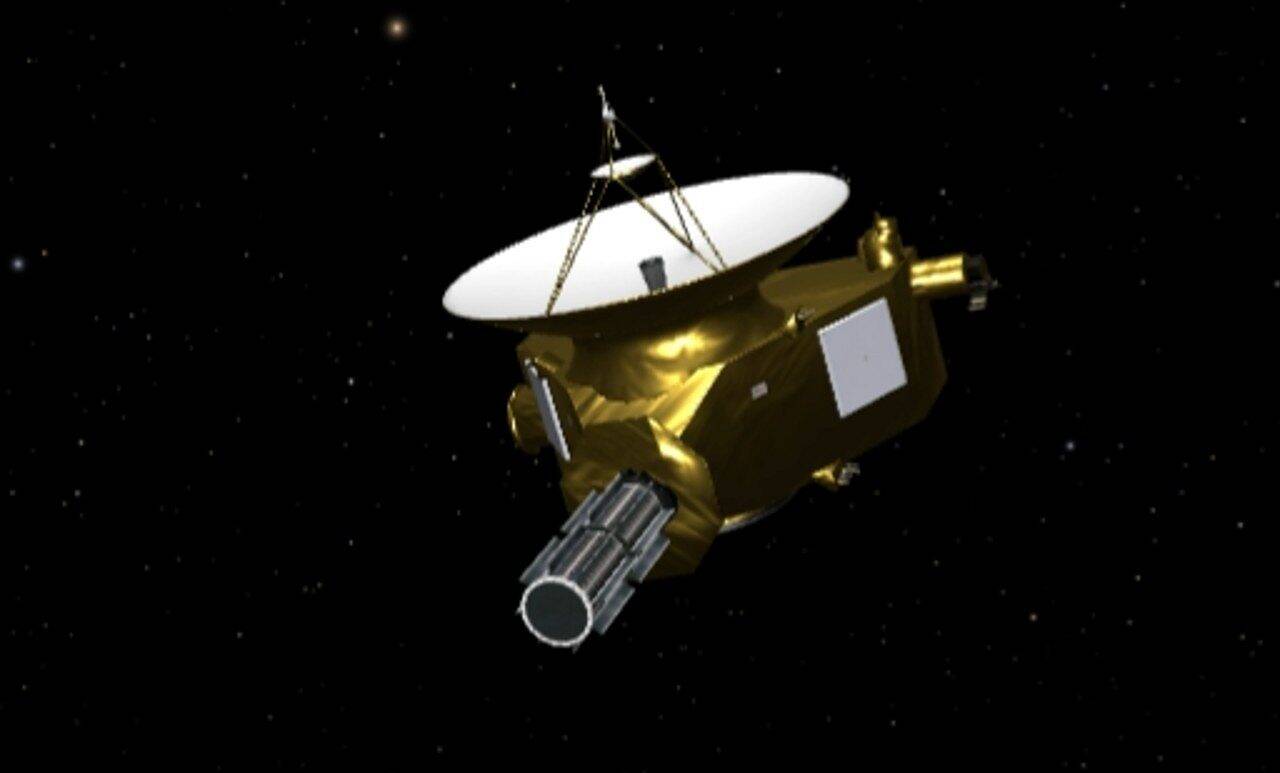
The New Horizons probe, from the American space agency NASA, which carried out the first detailed analysis of Pluto, returned to activity after a period of inactivity that lasted about a year in deep space.
This was the longest period of “sleep” ever recorded for New Horizons, totaling 321 days. Currently, the spacecraft is located at an approximate distance of 9.5 billion kilometers from Earth, which means that light takes about 0.37 days to travel this vast distance.
Although it appears that it responds instantly to ground commands, in reality, the probe takes approximately 8 hours and 52 minutes to receive an instruction. It is at this remote point, near the edge of the solar system, that New Horizons is preparing to resume its large-scale observations.
New Horizons probe completes longest period of inactivity
New Horizons entered hibernation mode on August 7, 2025. After executing commands previously stored in its onboard computer, the operations team at the Johns Hopkins University Applied Physics Laboratory confirmed the normal return to activity on June 23, 2026. The total of 321 days of hibernation marked the end of almost a year of inactivity.
For spacecraft that operate in deep space for long periods, it is common to turn off some instruments at times of less need for observation and communication. This practice aims to save energy and preserve the equipment. During its hibernation, New Horizons stopped receiving commands from Earth and transmitting large volumes of data.
However, the probe was not completely inactive. It continued to perform measurements of the solar wind, high-energy particles and space dust, storing the collected data. Additionally, it sent a weekly signal to Earth to indicate its status. The operations team confirmed that all status reports during the 321 days indicated normal conditions, which is crucial to ensuring mission integrity in such extreme environments.
Distance from the New Horizons probe makes communication with Earth difficult
New Horizons currently orbits at a distance of approximately 9.5 billion kilometers from Earth. This measurement is equivalent to around 0.37 light days, meaning light and radio waves take almost nine hours to cover this distance.
In this last resumption, the radio signal that confirmed the probe’s return to normal state took approximately 8 hours and 52 minutes to reach Earth. This demonstrates that real-time communication between the planet and the spacecraft is unfeasible due to time delay.
When sending a command from Earth, radio waves take about nine hours to reach the probe. The answer, in turn, requires another nine hours to return to our planet. Consequently, simply confirming the result of a single instruction requires approximately 18 hours of round trip travel.
To overcome these challenges, New Horizons has an autonomous control system. This functionality allows the probe to automatically enter a safe state if it detects an anomaly, without depending on immediate instructions from Earth. The autonomous system has also received upgrades to optimize power consumption and manage increased communication time as the probe moves further and further from the Sun, ensuring continued operation for decades.
New Horizons’ next steps: new data transmissions
After resuming activities, New Horizons will begin transmitting data about its health and safety to Earth. It will then send sequential data on solar wind, high-energy particles and cosmic dust collected by its three instruments during the period of inactivity. The “Alice” ultraviolet spectrometer will also be used to investigate the distribution of hydrogen gas in the most distant regions of the solar system.
The New Horizons probe was launched in January 2006. In July 2015, it made the first detailed observation of Pluto, and in January 2019, it successfully explored the Kuiper Belt object known as Arrokoth.
More than two decades after its launch, the probe continues to monitor the outermost regions of the solar system, advancing further and further from Earth.



