
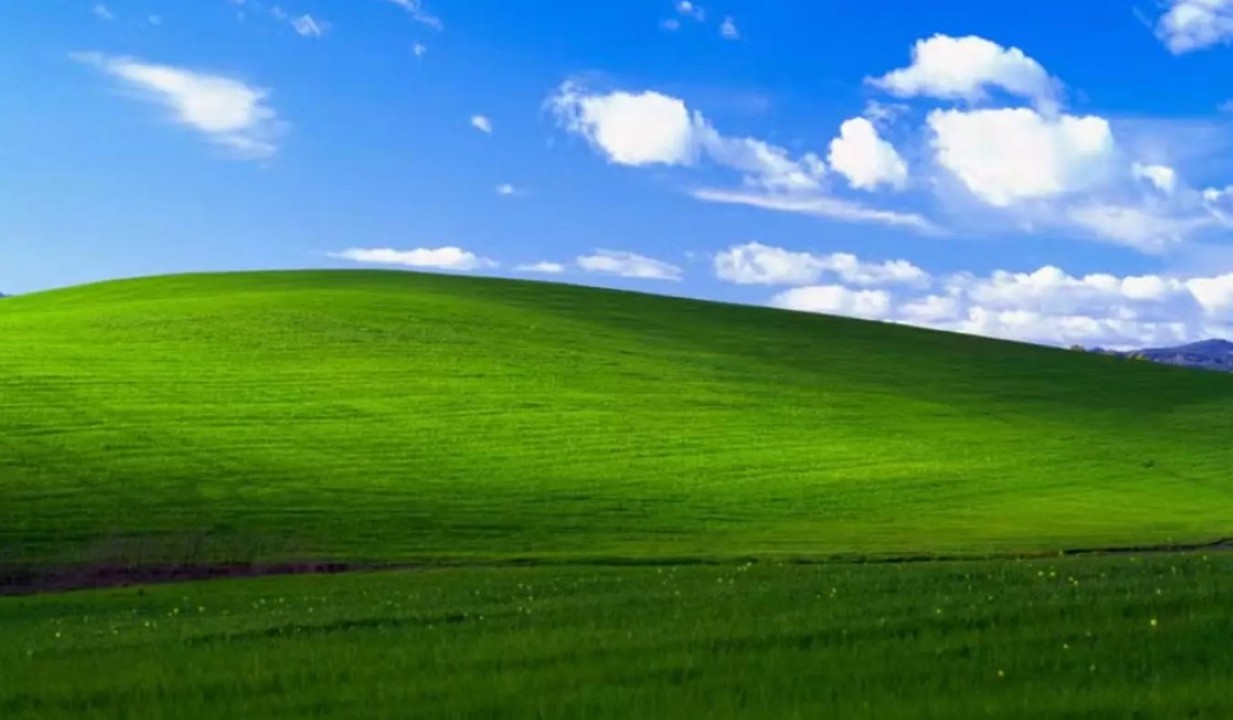
The hill that became a global icon as Windows XP’s default wallpaper, known worldwide as “Bliss,” has a drastically different look 30 years after its original capture. The vibrant green that marked the memory of millions of computer users gave way to earthy tones, with the appearance of new plantations and buildings. The photograph, captured in January 1996, turns three decades old on July 30, 2026, and current Google Street View images show how unrecognizable the landscape is.
How the image became a digital symbol

Named “Bliss”, which means “Happiness” in Portuguese, the analog photo was acquired by Microsoft and chosen as the main background for the Windows XP operating system, launched in 2001. Quickly, the image of a hill covered in green grass under a clear sky became one of the most recognizable symbols of the personal computer era. It is widely considered one of the most viewed photographs in history, marking a generation that grew up with technology.
Learn more: Nintendo releases in May 2026 bring nine games for Switch 2 and classic version
The story behind the iconic record
The author of the photograph is the American Charles O’Rear, a former photographer for the renowned National Geographic. He captured the scene in January 1996, during a trip between the cities of Napa and Sonoma, in California, United States. O’Rear reports that he stopped the car immediately after being surprised by the beauty of the intensely green hill just after a rain, deciding to record it using a Mamiya RZ67 analog camera.
The Context of Vibrant Color in California
Speaking to the Australian press, O’Rear explained that winter in the region is the period responsible for the lush greenery that characterized the photo. According to him, this vibrant hue has a limited duration, as the season’s typical storms leave the sky clear, creating the ideal conditions for capturing the perfect light. The photographer stated, precisely, that it was necessary to be “in the right place, at the exact moment” to achieve that unique result. The image, therefore, immortalized a brief moment of natural and seasonal perfection.
On the same topic: Nintendo releases in May 2026 bring nine games for Switch 2 and classic version
The evolution of the landscape over the decades
Current photographs, available on Google Street View, reveal a profound change in the appearance of “Bliss” Hill. The land, which in 2006 had already been covered in green vineyards, currently presents a more arid scenario at certain periods of the year, dominated by brownish tones. In addition to the natural changes resulting from the seasons, the area also shows the presence of new constructions and the advancement of agricultural activity. The landscape that seemed everlasting on the computer screen reflects the continuous transformations imposed by nature and human intervention, which shape the environment in a constant and irreversible way.
Contrast between digital memory and natural reality
This ever-changing landscape underscores an important contrast: while the “Bliss” photograph remains static, a digital time capsule of a specific moment, the physical reality of the hill evolves. The image captured the temporary lushness of a California winter, but the real life of the landscape is dynamic, influenced by climate cycles, land use and development. This phenomenon serves as a reminder of the ephemeral nature of natural beauty and the interconnection between man and the environment, contrasting digital permanence with the impermanence of the natural world.
Global curiosity and local tracking
The exact location of the photograph was publicly identified by the editor of the SFGate website, Grant Marek, and has since attracted the attention of curious people and internet enthusiasts from different parts of the world. The hill, which once represented an ideal of unchanging natural beauty accessible to all through a screen, continues to be observed. Its story unfolds in real time, showing how even globally famous landscapes are subject to the forces of nature and human development over time.