
Valve’s new console gains technical details and could hit the market this semester

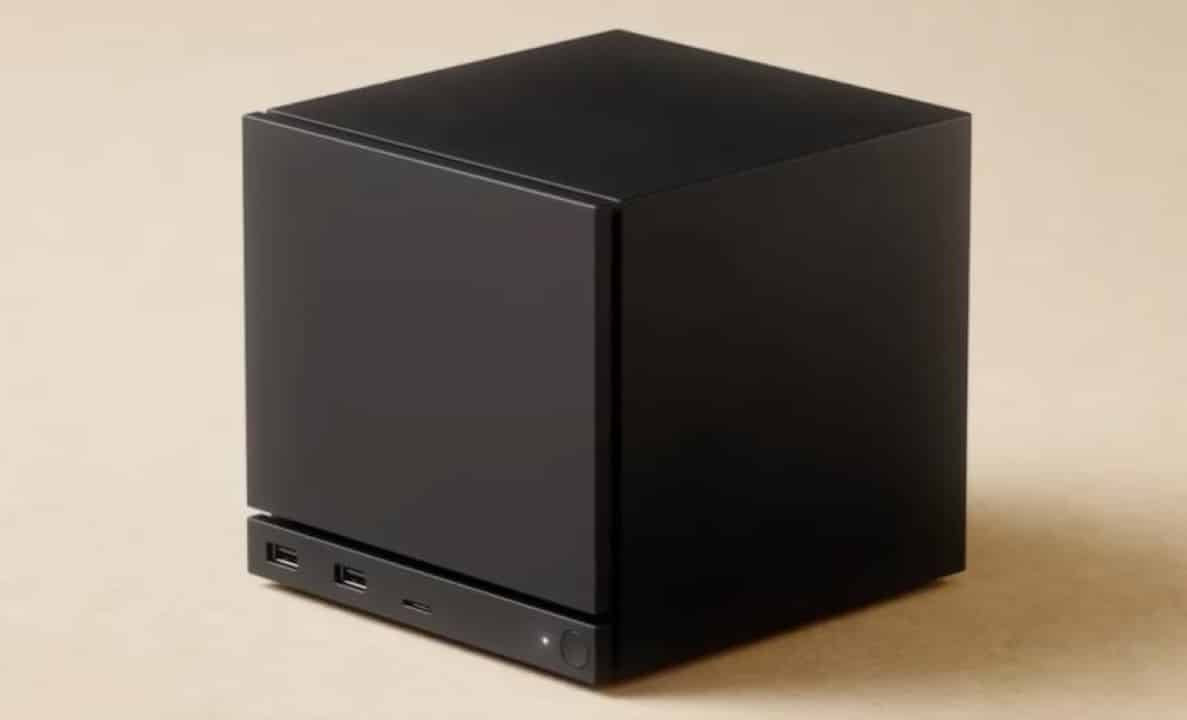
Although the North American manufacturer maintains absolute secrecy about the official values and the exact launch date of the long-awaited Steam Machine, recent signs show that the official reveal is very close. This week, customs records showed the arrival of approximately five tons of equipment classified as video game consoles in the company’s warehouses, coming from Chinese territory. Even though this quantity is not enough to supply global retailers immediately, the logistical movement indicates an acceleration in internal preparations. The corporation had already guaranteed that it would bring updates soon, keeping firm on its promise to make the device available to consumers by the end of the first half of 2026.
During a conversation with the IGN portal, Valve’s main programming officer, Pierre-Loup Griffais, confirmed that the developers are dedicated full-time to the project. According to the executive, the internal expectation is to release substantial news very soon to the community. With just under two months left until the end of June, the time window still allows the PC gaming giant to meet the initially established goal without having to announce a new postponement.

Reasons that explain the uncertainty regarding the arrival of the new device in stores
At the time the project was revealed to the public, in November 2025, the initial forecast pointed to a debut in early 2026, but this planning was changed to a wider window, focused on the first half of the year. To justify this change of route, executives mentioned the significant increase in the prices of RAM memory modules, in addition to other economic instabilities that have affected the global supply chain in recent months.
Through an official note published on its communication portal, the company reinforced that the intention to place three new hardware on the market by the middle of the year remains intact, but highlighted the need to define exactly the costs and dates before making a definitive announcement. It is worth remembering that the brand’s history shows an ability to act by surprise, as happened with the Steam Controller, which arrived on the shelves with just a few days’ notice, proving that the marketing strategy can be quite aggressive.
One factor that generates distrust among analysts is the continued difficulty in finding the Steam Deck in stock in several important regions, such as the British market. If the corporation already deals with logistical bottlenecks to manufacture and distribute the devices that are already in its current catalogue, structuring the mass production of a completely new hardware ecosystem tends to be a logistical obstacle of major proportions.
Financial projections indicate that the device will have premium category value
The price tag of the future console remains a closely guarded secret, however, previous statements from the board give clues about the product’s retail positioning. The official strategy is to charge an amount that is equivalent to that of a desktop computer with similar firepower, remaining competitive against desktop rivals. For comparison purposes, the PlayStation 5 Pro currently retails for £789.99 in the UK, while the Xbox Series X costs £499.
Calculations made by hardware experts indicate that assembling a PC from scratch with the same parts would require an investment of around £930. As the manufacturer negotiates gigantic batches of components and will ship a chip custom-made by AMD, it is likely that the final value passed on to the consumer will suffer a slight reduction. However, the recent upward adjustment in the price of the Switch 2, promoted by Nintendo, throws cold water on those who expected a low-cost machine on launch day.
The macroeconomic scenario shows that semiconductors and other electronic parts remain more expensive than the historical average. The good news is that the sector began to demonstrate a slight trend towards stabilization in prices, driven by the cancellation of several initiatives focused on artificial intelligence servers in the first months of 2026.
Technical details reveal focus on ultra-high resolution and image fluidity
The central concept behind this new bet is to create a simplified bridge so that PC users can enjoy their games directly on their living room television. The equipment will leave the factory running SteamOS, the same Linux-based platform that established the brand’s portable ecosystem, but with total freedom for the owner to format the disk and install Windows 11, transforming the console into a conventional computer.
The technical sheet confirmed by the manufacturer contains the following components:
- Processor developed in partnership with AMD, using Zen 4 architecture, equipped with 6 cores, 12 threads, operating at up to 4.8 GHz and with a power limit of 30W.
- Custom graphics chip from the AMD RDNA3 family, with 28 computing units, maximum sustained speed of 2.45 GHz and energy consumption of 110W.
- 16 GB main memory in DDR5 standard, accompanied by 8 GB of GDDR6 VRAM dedicated exclusively to video.
- Internal and universal power system, operating perfectly on electrical networks from 110V to 240V.
- Ultra-fast NVMe SSD internal storage options in 512GB or 2TB capacities.
- High-performance microSD card reader integrated into all device variants.
With this set of pieces, the official promise is to deliver an experience set at 60 frames per second in 4K resolution for the vast majority of current releases. When the system is faced with extremely heavy works, such as Cyberpunk 2077, the software will automatically activate image reconstruction tools using artificial intelligence, such as FSR (FidelityFX Super Resolution), ensuring that the frame rate does not drop.
How the equipment’s firepower positions itself in the current technological scenario
Analyzing the internal structure, it is clear that the project’s engineering prioritized visual quality above all else. By allocating 110W of power just to the graphics card, the company makes it clear that graphics are the main focus of the machine. Furthermore, the choice to combine cutting-edge DDR5 memories with separate VRAM modules indicates a huge effort to avoid any type of slowness in the exchange of information between the console’s brain and the graphics processor.
The native use of SteamOS provides a benefit that traditional console giants do not offer: an open source environment, free from corporate ties, where the player has the autonomy to download whatever they want. Unlike the first failed attempt at Steam Machines in 2015, which suffered from a lack of Linux-compatible games, today Proton technology perfectly translates Windows codes in real time, almost completely eliminating the risk of incompatibility with the immense library built over the last decade.
Despite all the technical potential, the persistent crisis in chip manufacturing cools sentiments about the number of units that will be available on the so-called launch day. Leaked information about containers arriving at American distribution centers proves that the wheels are turning, but the low registered tonnage points to a cautious strategy, where the product should debut only in selected countries before hitting shelves in the rest of the world.



