
SpaceX rocket puts new US government spy equipment into orbit

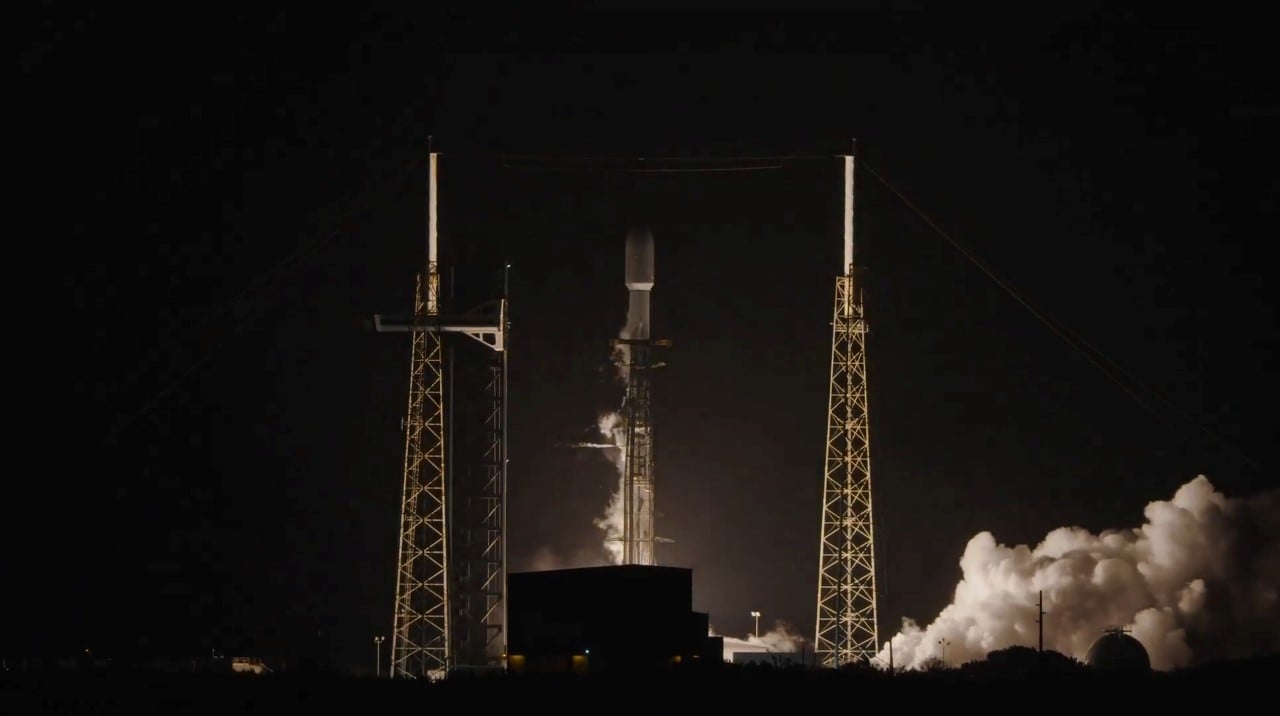
During the early morning hours of July 30, 2026, the sky over the American east coast was illuminated by yet another strategic defense operation. Elon Musk’s aerospace company successfully conducted the sending of highly classified intelligence equipment into Earth orbit. The procedure took place from military installations located in the state of Florida, reinforcing the Pentagon’s dependence on commercial orbital transport vehicles to maintain its global monitoring network.
Nighttime operation at Cape Canaveral reinforces national security
The Falcon 9 launch vehicle began its upward trajectory at exactly 3:10 am, considering the United States East Coast Time Zone (EDT). The takeoff took place at the Cape Canaveral Space Force Station, a complex that historically houses the country’s main territorial protection initiatives. This specific flight received the technical designation NROL-95, representing a direct demand from the National Reconnaissance Office (NRO), the federal agency responsible for designing, building and operating the government’s observation fleet.
As is customary in contracts involving the defense department, the technical specifications of the cargo transported remain strictly confidential. The government agency has not disclosed the exact function of the machinery, its final orbit or the instruments on board. Experts in cybersecurity and military tactics point out that artifacts of this nature are often used to intercept communication signals, track troop movements from opposing nations and capture images in very high resolution to supply the White House’s daily intelligence reports.
The curious animal symbolism adopted by the intelligence team
The only visual clue released by federal authorities was the official emblem representing the space campaign. The graphic art displays the figure of a ferret with a fierce expression, positioned against a dark starry background. Just below the illustration of the mammal, the designers included the famous phrase “We are the Champions”, in a direct reference to pop culture that seeks to convey a message of superiority and operational success in the zero gravity environment.
Representatives from the intelligence agency’s communications sector published a note detailing the choice of the mascot to appear on the mission’s uniforms and documents. The text describes the animal as an extremely intelligent creature, capable of materializing the agility and resilience required in inhospitable environments. The design’s features, which include a confident smile and a penetrating gaze, were designed to reflect a victorious spirit in a scenario where courage meets exploration of the unknown.
In addition to the central figure, the adoption of the musical motto carries a motivational weight for the professionals involved behind the scenes. The project management explained that the audacious quote serves to symbolize the feeling of camaraderie and collective pride shared by all the engineers, analysts and military personnel who dedicated months of work to this endeavor. This union of efforts is considered fundamental to the success of tasks that require millimeter precision and zero tolerance to mechanical or software failures.
Changing strategy in American space espionage
The sending of the NROL-95 artifact marks the fourth time in 2026 alone that the reconnaissance agency has used the services of the private company to position its assets in space. In previous months, the NROL-105, NROL-172 and NROL-179 missions also depended on the power of the Falcon 9 engines. The main geographical difference is that the three predecessor flights departed from Vandenberg Space Force Base, a military complex located on the coast of California, ideal for insertions into polar orbits that cover the entire globe.
This entire accelerated launch schedule is part of a drastic change in American military doctrine, focused on building a “proliferated architecture”. For decades, the United States depended on gigantic satellites, which cost billions of dollars and took years to build, making them easy targets in an eventual space conflict. The new format seeks to create a web made up of hundreds of smaller, much cheaper and interconnected pieces of equipment, ensuring that the destruction or failure of one or two units does not compromise the continuous surveillance network.
Schedule of missions carried out in the current year
To understand the pace of modernization of the American defense fleet throughout 2026, it is necessary to observe the sequence of successful operations coordinated between the public sector and the private sector. The calendar demonstrates an unprecedented frequency of tactical deployments:
- NROL-105 Mission: Carried out in January, inaugurating the monitoring network expansion calendar from the west coast.
- NROL-172 Mission: Executed in May, continuing the formation of the constellation of interconnected small satellites.
- NROL-179 Mission: Completed in June, also utilizing California’s military infrastructure to achieve the desired orbital inclination.
- NROL-95 Mission: Launched at the end of July, temporarily transferring operations to the Cape Canaveral complex in Florida.
This flight rate proves the maturity of the reusable space transportation system, which allows the government to maintain a constant and updated presence above the Earth’s atmosphere without blowing the annual budget allocated to the armed forces.
Hardware recovery and live imaging outage
Another early morning technical milestone occurred about eight and a half minutes after the initial ignition of the engines on the launch pad. The rocket’s first stage completed its main burn, separated from the upper module and began a controlled descent back to the Earth’s surface. The booster landed safely in a designated landing zone at Cape Canaveral. Records from the aerospace company confirmed that this was the seventh time this specific cylinder had traveled to space and returned intact, generating massive savings in materials and manufacturing time for future missions.
Those who followed the official broadcast on the internet noticed an abrupt change in the schedule shortly after the landing of the main stage was confirmed. The real-time image display was summarily terminated, cutting off any view of the second stage carrying the secret equipment. This media blackout meets a strict security requirement from the National Reconnaissance Office, which prohibits the public capture of visual or telemetry data that could reveal the final speed, separation altitude or the exact insertion trajectory of its espionage tools.



