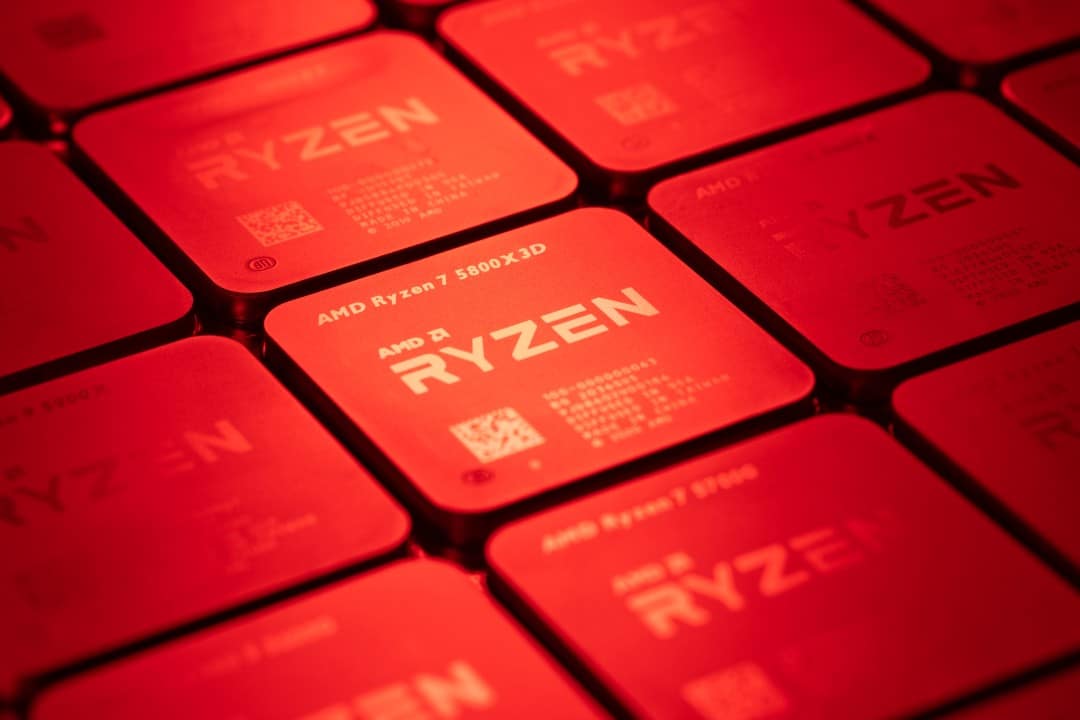
Semiconductor manufacturer AMD has officially announced the return of one of its most acclaimed components, now in a commemorative format. With launch scheduled for June 25th and a suggested price of $349, the processor returns to the market to celebrate the tenth anniversary of the AM4 platform, strictly preserving the hardware characteristics seen at its debut in 2022.
Bringing the component back to shelves required a complex behind-the-scenes task force. As manufacturing methods have advanced significantly in recent years, the company needed to restructure the way 3D V-Cache stacking is done. According to brand executive David McAfee, simply reactivating the assembly line was impossible, requiring an entirely new design to bring the chip in line with current TSMC factory standards.
Structural changes behind the scenes in manufacturing
Based on the Zen 3 microarchitecture, the component delivers eight physical cores and 16 threads of execution. Frequencies operate at 3.4 GHz in standard mode, reaching peaks of 4.5 GHz when fully demanded. The big difference is in the fast access memory, which totals 100 MB — with 96 MB dedicated to the L3 cache, allocated vertically to save physical space on the silicon —, while the projected thermal consumption remains at around 105 watts.
All this internal restructuring was motivated by the natural evolution of three-dimensional memory overlay techniques. The engineers were tasked with adapting the layout of the circuit so that it could be printed on modern machines, ensuring that the end consumer would not feel any practical difference. As a result of this effort, the performance delivered today is exactly the same as the piece made available in April 2022.
The strategy targets people who built their computers a few years ago and do not want to change the entire system. Thousands of gamers still use cards equipped with X570, B550 or even the veteran B450 chipsets. The fact that this base continues to receive unprecedented support, even with the existence of the AM5 generation, highlights a rare longevity by technology industry standards since its emergence in 2016.
Items included in the commemorative hardware box
To mark the festive date, the packaging gained an exclusive visual identity that highlights the first decade of the ecosystem. An interesting new addition to the conventional package is the addition of a Carbice Ice Pad, a high-performance thermal interface built from carbon nanotubes. Historically, this type of premium accessory was restricted to pre-built computers by specialized companies such as CyberPowerPC.
As was the case in previous waves of this high-performance segment, the traditional heatsink is not included with the product. The buyer will have to provide their own cooling system that is compatible with the motherboard fitting. Furthermore, the absence of an integrated graphics chip makes it mandatory to install a dedicated video card to generate an image on the monitor.
- Structure based on eight Zen 3 cores with 16 processing threads
- Turbo frequency of up to 4.5 GHz combined with a thermal consumption of 105W
- 100MB fast memory capacity utilizing V-Cache 3D stacking
- Full compatibility with DDR4 RAM modules in the AM4 ecosystem
- Factory lock on the multiplier, which prevents manual overclocking changes
Chip behavior in games and heavy tasks
The legendary status achieved by this model is due to its unique ability to play electronic games with extreme fluidity. The presence of a massive block of L3 cache drastically reduces internal communication time, increasing the frame rate per second in software sensitive to this specification. During its golden age, independent evaluations proved that it easily outperformed rival Intel’s more expensive alternatives.
Reaching the year 2026, the piece continues to deliver solid results for those who play in Full HD and Quad HD resolutions. When paired with mid- or high-end graphics accelerators, the system does not suffer from bottlenecks that harm the experience in the overwhelming majority of modern titles. For owners of more modest processors, such as the Ryzen 5 3600 or the 5600G APU, the change results in an immediate leap in fluidity.
The manufacturer’s central objective with this relaunch is to create a viable financial bridge for those who prefer to postpone the transition to DDR5 memories and newer cards. The price set at $349 shows a significant cut compared to the $449 charged at the original premiere. In specific markets, such as retail in India, some preliminary listings already indicated even more aggressive values, approaching US$310.
Historical importance of the computer platform
Completing ten years of continuous activity is an extraordinary feat in the world of hardware. Introduced alongside the first generation Ryzen in 2016, the dock has housed multiple different architectures over time. This survival transformed the brand into a model to be followed in the PC market, contrasting sharply with the competition, which historically requires motherboards to be changed every two generations of processors.
The choice to specifically revive this member of the 5000 family for the celebration was not by chance. He went down in history as the pioneer in desktops to use three-dimensional cache technology, establishing a new level of demand for machines focused on digital entertainment. Its return directly embraces the community that values long-term investment and prefers to get the most out of its current setups.
Technology sector analysts interpret this maneuver as a masterstroke for business. The initiative ensures that the previous ecosystem continues to generate revenue, while the new generation AM5 naturally gains traction. Furthermore, the abundance of low-priced used DDR4 memory and motherboards on the second-hand market makes building a PC on this basis extremely inviting.
Practical impacts for those who decide to purchase
Consumers who purchase the ten-year commemorative edition will take home exactly the same computing power as the classic version. The company has not implemented any increases in operating frequencies or improvements in energy management. The true difference of the package lies exclusively in the custom box for collectors and the inclusion of the high conductivity thermal interface.
Official distribution begins on June 25th, the date on which the main retail chains around the world should start selling their stocks. The product registration in inventory systems uses the same number as the original model, but accompanied by an identification label that proves that it is a special edition.
All this movement consolidates the manufacturer’s promise to respect the consumer’s money by offering prolonged support. Even with cutting-edge technologies dominating the showcases, alternatives like this make specific improvements possible without the need to discard the entire computer. In the end, the veteran chip proves that it still has plenty of room for those who prioritize the relationship between cost and benefit when playing.