Document registered by Sony reveals unprecedented accessory with interactive display for future consoles
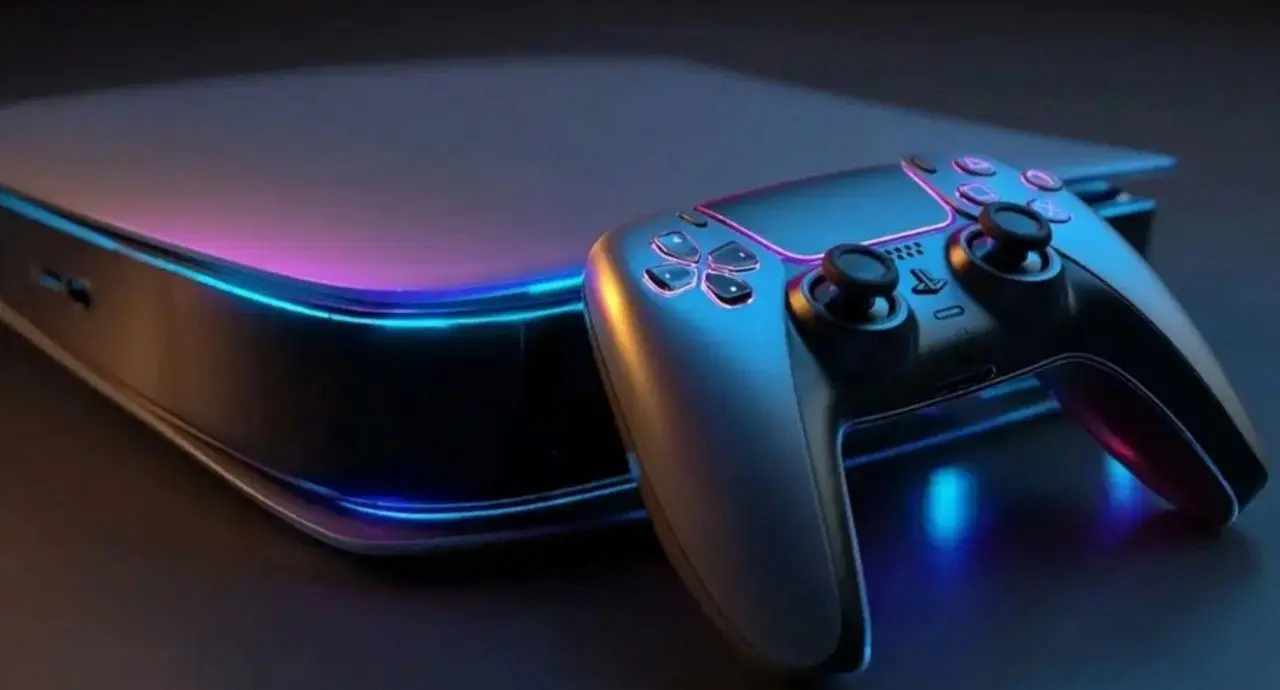
An official intellectual property registration submitted by the Japanese manufacturer on July 19, 2026 brought to light a hardware concept that promises to change the dynamics of player interaction. The technical file describes a peripheral equipped with an interactive display, suggesting a technological leap compared to the models offered in the current generation of consoles. The documentation points to an ecosystem where the command equipment is not just used to send actions to the video game, but acts as a centralized hub for the user’s personal information.
Synchronization with smartphones and management of interruptions during matches
The main functionality described in the architectural project is direct communication between the peripheral and users’ cell phones. According to the schemes presented, the built-in display would have the ability to mirror essential alerts, such as phone calls, text messages and third-party application updates. This approach attempts to solve a chronic problem in modern digital entertainment: the breakdown of immersion caused by the need to check your phone with every vibration or notification sound in the physical environment.
On the same topic: New Sony technology indicates change in PlayStation 6 cooling
To prevent the player from missing crucial moments of an online match or an intense narrative, the engineers devised an intelligent interruption system. The console’s software would be programmed to freeze the action on the main television screen at the exact moment the individual touched the control display to read a message or answer a call. This automation creates a fluid bridge between everyday digital life and the game’s virtual environment, ensuring full control over the pace of the experience.
Design evolution and departure from the current standard established by the PS5
The implementation of a functional display represents a severe break with the design philosophy adopted in the standard PlayStation 5 equipment. The model sold today has a centralized tactile surface, which allows swipe and click commands, but is completely devoid of light emission or image formation. The new concept would transform this visually dead area into a dynamic and colorful interface, capable of transmitting complex data without relying on the television user interface.
Historically, the video game industry has flirted with similar ideas, showing that the search for a second screen in the player’s hands has been a long time coming. Sega’s late Dreamcast used the VMU, a small memory card with a liquid crystal screen fitted to the controller, while Nintendo invested heavily in the Wii U’s GamePad, which had a large display. The Japanese giant’s recent project seems to seek a middle ground, offering practical communication utility without transforming the accessory into a heavy tablet with an ephemeral battery.
Technical resources mapped in the manufacturer’s documentation
Thorough analysis of the patent file reveals layers of engineering focused on consumer convenience. The planned ecosystem requires a robust wireless network architecture to keep three devices — console, controller and cell phone — constantly exchanging data packets with almost zero latency.
Full coverage: Latest News (EN)
See Also

Joey Chestnut’s win marks 18th Nathan’s Contest title with 66 hot dogs

August sky: 9 unmissable astronomical events, with solar eclipse and meteor shower

Louvre chooses architects for new Mona Lisa suite and plans expansion of visitors
- Capacitive touch surface capable of recognizing complex gestures and multiple touches for fluid navigation in mirrored phone menus.
- Low-power communication module dedicated exclusively to pairing with mobile devices, operating in parallel with the video game connection.
- Automated pause protocol that sends a pause command to the central processor within milliseconds of detecting touch on the display.
- Adaptive graphical interface that adjusts the size of fonts and icons depending on the urgency of the alert received and the available space on the screen.
This entire technical infrastructure aims to keep the individual’s attention focused on their hands, eliminating the friction of having to let go of the equipment to interact with the outside world. The complexity of miniaturizing these components without compromising the traditional ergonomics of joysticks is one of the biggest engineering obstacles suggested by the document, requiring batteries with higher energy density and more efficient heat dissipation systems.
History of innovations and breaking paradigms in the peripherals line
The Asian corporation has a recent history of discarding consolidated brands in favor of technological innovation. The transition from the classic family of controls, which accompanied players for four generations in a row, to the current model proved that the company is willing to take ergonomic and marketing risks. The introduction of highly precise vibration motors and variable resistance back buttons has changed the public’s expectation of physical feedback during interactive entertainment.
This corporate behavior leaves room for multiple interpretations regarding the fate of the new registration. The market is speculating whether the next hardware iteration will be a conservative evolution, maintaining the current nomenclature with a numeric suffix, or whether there will be a new complete break in visual and functional identity to accompany the arrival of a future desktop platform, once again redefining the industry standard.
The gap between recording ideas and manufacturing commercial products
In the world of technology, submitting technical schematics to regulatory bodies is standard defensive practice. Electronics conglomerates spend millions annually to ensure ownership of abstract concepts, preventing competitors from using similar mechanics in their ecosystems. An overwhelming portion of these diagrams end up archived in research and development laboratories, serving only as a patent portfolio and demonstration of inventive strength.
There is a possibility that screen mirroring technology could be targeted at specific consumer niches. The project could very well be the basis for accessibility-focused equipment, helping people with hearing impairments receive intense visual alerts about in-game and real-life events, or even a luxury model aimed at professional competitors who need to manage live broadcasts and community chats directly from their hands.
Follow: all about games market
The company’s management maintains a strict policy of absolute silence regarding leaks of intellectual property and government records. Without a formal announcement at industry conferences or press releases, the direct association of this interactive display with the brand’s sixth generation of desktop consoles remains restricted to the field of hypotheses formulated by enthusiasts and analysts in the consumer technology sector.