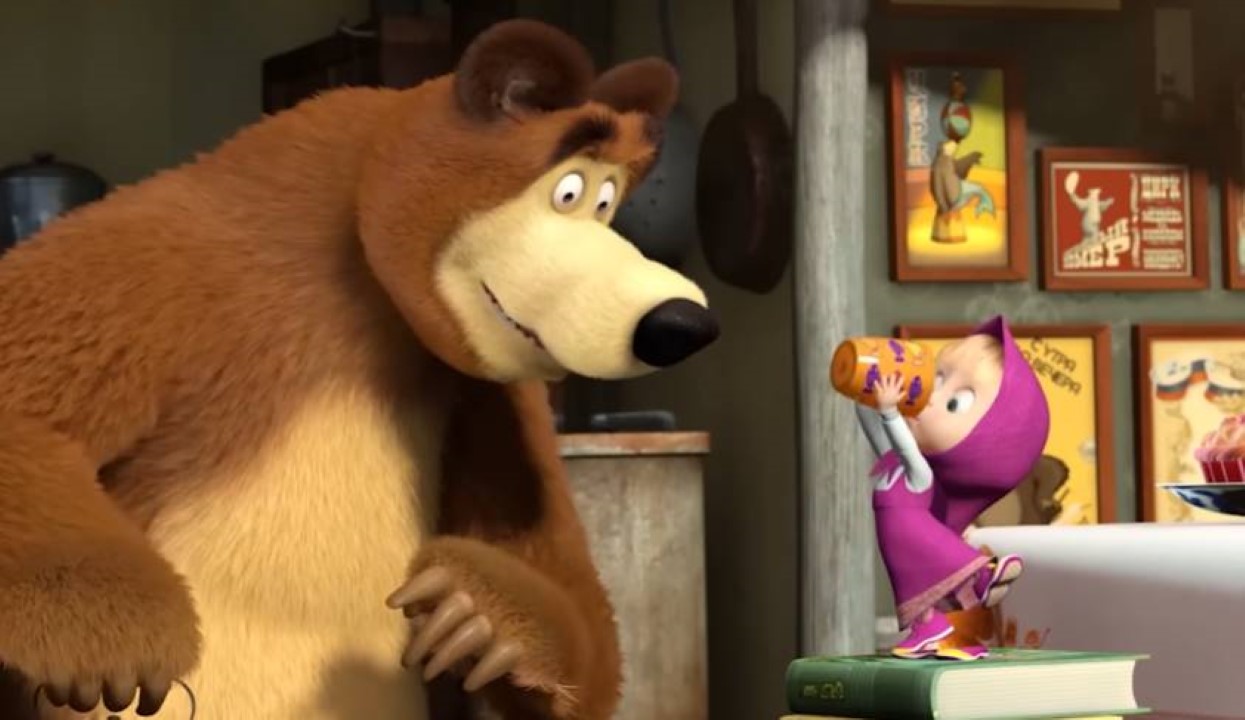
The popular cartoon “Masha and the Bear”, of Russian origin, has turned into an unexpected battleground in the complex culture war between Russia and Ukraine. The animation, known and watched by millions of children around the world, was included in a “cancellation” guide developed by Ukraine on August 3, 2026. This movement reflects the extent of the conflict, which now affects even cultural products aimed at children.
Understanding the “soft power” strategy in culture
The inclusion of a seemingly innocent cartoon on a “cancellation” list reveals the depth of “soft power” strategies in times of conflict. Children’s cartoons, music and other forms of entertainment can subtly carry cultural messages and values that promote the image of a nation. In the context of the war, Ukraine interprets the widespread acceptance of “Masha and the Bear” as a form of Russian influence, seeking to neutralize its impact. The universality of the themes and the apparent innocence of the production mask its origin, which makes it an effective tool for cultural projection.
The global popularity and Russian origin of animation
“Masha and the Bear” has gained a huge fan base in several countries, with episodes translated into dozens of languages and billions of views on video platforms. The series, produced in Russia, tells the adventures of a mischievous girl named Masha and her friend Bear, a former circus artist. Its simple plot and captivating characters made it a worldwide phenomenon. However, for Ukraine, this global popularity amplifies the reach of what they consider Russian cultural propaganda, justifying boycott action.
Ukrainian cancellation guide details
The cancellation guide drawn up by Ukraine is not just restricted to “Masha and the Bear”. It serves as a guideline for identifying and combating cultural products that, according to Ukrainian authorities, convey narratives or values that support the Russian agenda. The initiative aims to deconstruct the positive perception about these products, alerting the population and encouraging the rejection of content that could, directly or indirectly, strengthen Russia’s image or undermine the Ukrainian war effort. This type of action highlights how culture becomes a field of ideological dispute.
Other Russian cultural products in the crosshairs and implications
In addition to animation, other Russian cultural manifestations have been closely scrutinized and, in some cases, boycotted by nations in conflict with Russia. The list includes music, films, television programs and even sporting or artistic events that have a strong connection with the Russian State.
- Freedom of cultural expression in times of war.
- The limit between art and propaganda.
- The economic and social impact on cultural producers.
- The formation of national identity through media consumption.
This complex scenario highlights that the battle is not limited to military fields, but extends deeply into the cultural sphere, where narratives and perceptions are shaped and disputed.